At exactly 7:13 on a Monday morning, the people of Bellweather lost the ability to lie.
Nobody noticed immediately.
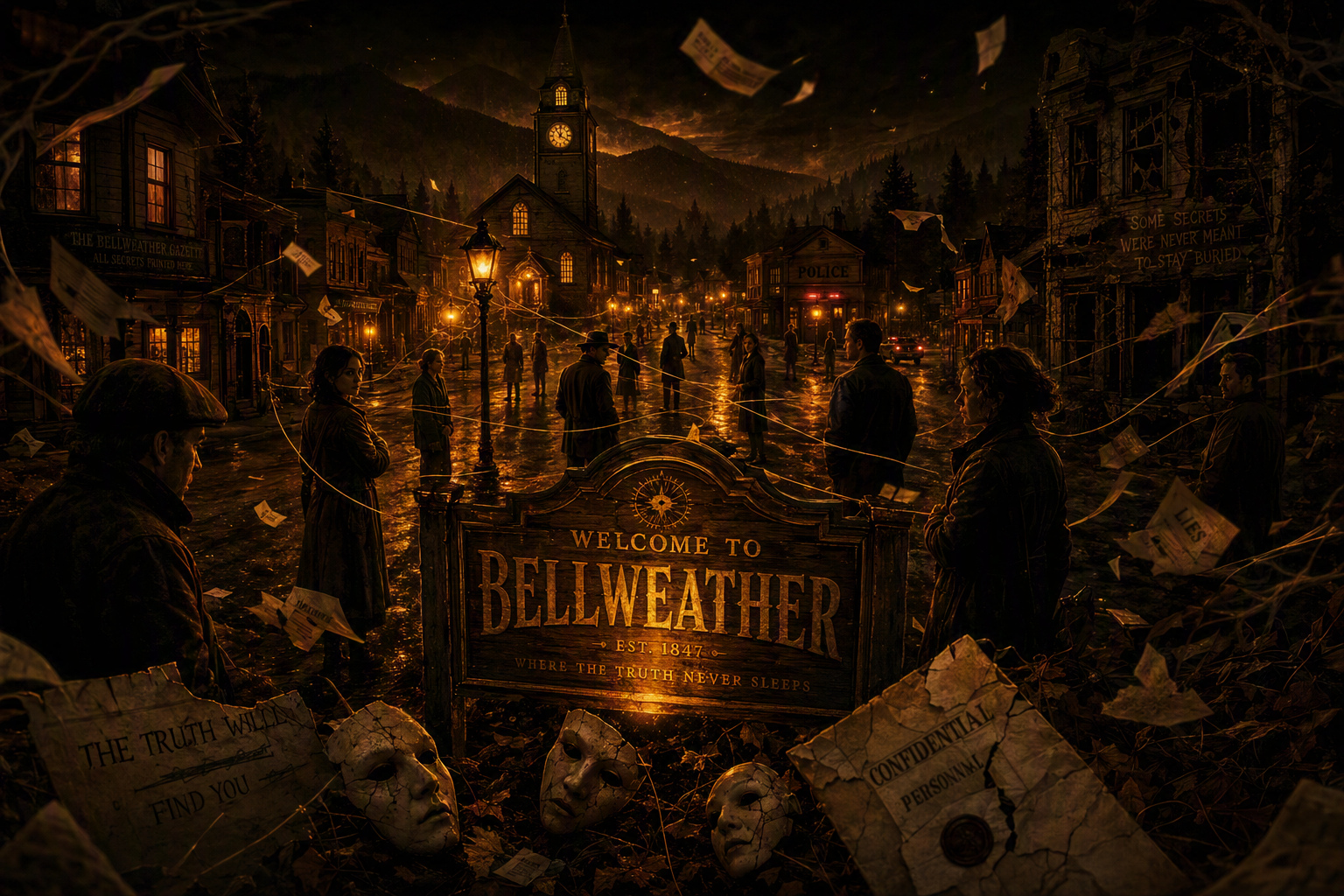
Bellweather was a small town surrounded by green hills, old forests, and exactly one road that led anywhere interesting. Its population was 4,812, although the wooden sign at the entrance still said 4,796 because the mayor insisted replacing it would be “an unnecessary expense.”
The mayor had actually forgotten to order a new sign.
For eleven years.
The first person to discover the problem was a baker named George Miller.
His wife, Helen, walked downstairs wearing a bright yellow dress and turned around in front of him.
“Does this make me look younger?”
George opened his mouth.
His brain screamed:
YES. SAY YES.
Instead, he heard himself say:
“No. You look like an angry sunflower.”
Silence.
Helen stared at him.
George stared at Helen.
Their fourteen-year-old daughter, Lucy, slowly lowered her spoon into her cereal.
“Oh,” Helen said.
George went pale.
“I didn’t mean—”
“Yes, you did.”
“No, I—”
George tried again.
Nothing came out.
He physically could not finish the sentence.
Helen narrowed her eyes.
“Do you like my cooking?”
George began sweating.
Lucy stood up.
“I think I’ll eat breakfast somewhere else.”
“Sit down,” both parents said.
Lucy sat down.
Helen folded her arms.
“Well?”
George looked toward the ceiling as though God might provide an emergency exit.
“Your soup is good.”
Helen smiled.
“Thank you.”
“Everything else is terrible.”
The smile disappeared.
And that was how Bellweather’s strangest day began.
1. A Very Honest Morning
By eight o’clock, chaos had spread across town.
At Bellweather Elementary School, Mrs. Cooper asked her class whether everyone had completed their homework.
Twenty-three children simultaneously said:
“No.”
One added:
“I told my mother I finished it.”
Another said:
“My father did mine.”
A third raised his hand.
“I copied Daniel’s.”
Daniel looked offended.
“You told me you only wanted to check question seven!”
“I lied.”
“No, apparently you didn’t.”
At Bellweather Café, customers suddenly became unusually specific.
“How’s the coffee?” the owner asked.
“Burnt.”
“And the sandwich?”
“Too expensive.”
“Then why do you come here every morning?”
“Because I’m lonely.”
The owner stopped.
“So am I,” she replied.
They stared at each other for several seconds.
“Would you like another coffee?”
“Yes.”
“It’s still going to be burnt.”
“I know.”
At the police station, Officer Briggs asked his partner whether he had eaten the doughnut Briggs had been saving.
“Yes.”
“You said a raccoon took it!”
“I panicked.”
“We don’t even have raccoons in the station.”
“I know.”
By nine thirty, Bellweather had experienced six breakups, three spontaneous resignations, seventeen family arguments, one canceled wedding and a surprisingly productive town council meeting.
For the first time in Bellweather’s history, every politician answered every question directly.
Mayor Thomas Reed was standing in front of reporters when somebody asked:
“Mayor Reed, did you actually read the town’s new 312-page budget proposal?”
“No.”
The crowd gasped.
“Did anyone on the council read it?”
The mayor looked behind him.
“No.”
Half the council suddenly became extremely interested in their shoes.
“Then who wrote it?”
“Margaret.”
Everyone turned toward Margaret, the mayor’s seventy-two-year-old secretary.
She sighed.
“I copied most of it from another town.”
“Which town?”
“Brighton.”
“Isn’t Brighton three times larger than Bellweather?”
“Yes.”
The mayor rubbed his forehead.
“This is going to be a very long day.”
He had no idea how right he was.
2. The Woman Who Noticed Something Strange
Dr. Evelyn Shaw was Bellweather’s only psychologist.
By ten o’clock, her waiting room was full.
People weren’t suddenly more mentally unwell.
They simply had nowhere else to go.
“My husband says he never liked my brother.”
“My wife admitted she married me partly because I owned a house.”
“My son says he hates football.”
“My best friend says my novel is boring.”
“My boss admitted nobody knows what my job actually is.”
Evelyn listened patiently.
Then something occurred to her.
“Wait.”
Everyone stopped talking.
“Can any of you lie?”
They looked confused.
Evelyn pointed toward a man named Peter.
“Peter, tell me the sky is green.”
Peter laughed.
“The sky is…”
His face tightened.
“The sky is…”
Nothing.
He couldn’t say it.
“Interesting.”
Evelyn tried herself.
“My name is…”
She intended to say Elizabeth.
“My name is Evelyn Shaw.”
Her stomach dropped.
This wasn’t unusual honesty.
Something was preventing them from saying things they believed were false.
But then Evelyn noticed something even stranger.
“What about opinions?” she asked.
A woman shrugged.
“I think Mayor Reed is handsome.”
Everyone turned toward her.
“What?”
She blushed.
“I’ve thought that since 2009.”
“Please,” Evelyn said, “let’s stay focused.”
She walked toward the window.
Outside, Bellweather looked normal.
Cars moved along Main Street.
The church bell rang.
Someone was shouting outside the bank.
Nothing physically seemed different.
Then Evelyn remembered something.
Her sister lived twelve miles away.
She grabbed her phone and called her.
“Anna?”
“Hey. What’s wrong?”
“Can you say something false?”
“What?”
“Just tell me you’re the Queen of England.”
Anna laughed.
“Fine. I’m the Queen of England.”
Evelyn froze.
“Say it again.”
“I’m the Queen of England.”
Everyone in the waiting room went silent.
The phenomenon wasn’t global.
It wasn’t even regional.
It was Bellweather.
Something had happened specifically to their town.
3. The Boundary
By noon, Evelyn, Officer Briggs and Mayor Reed were driving toward the edge of town.
They stopped beside the old wooden sign.
WELCOME TO BELLWEATHER
POPULATION: 4,796
THE FRIENDLIEST TOWN IN THE VALLEY
Briggs pointed at the slogan.
“That’s definitely a lie.”
Nobody laughed.
Evelyn stepped beyond the sign.
Nothing happened.
She turned around.
“My name is Susan.”
The words came easily.
Mayor Reed’s eyes widened.
Evelyn stepped back toward Bellweather.
“My name is Susan.”
Her throat locked.
She couldn’t finish naturally.
They tested it several times.
Inside Bellweather, lies were impossible.
Outside Bellweather, they could lie normally.
The boundary was almost perfectly circular.
Mayor Reed stared toward town.
“So we’re trapped inside some kind of honesty bubble?”
“We aren’t trapped,” Evelyn said. “We can leave.”
“That’s worse.”
“How?”
“People can come in.”
Nobody spoke.
Then Briggs whispered:
“And ask questions.”
4. The Questions Begin
By two in the afternoon, the news had reached the internet.
At first nobody believed it.
Then videos appeared.
THE TOWN THAT CAN’T LIE?!
I ASKED 100 STRANGERS THEIR BIGGEST SECRET
BELLWEATHER HONESTY CHALLENGE
Cars began arriving.
Journalists came first.
Then influencers.
Then lawyers.
Then people who simply wanted answers.
A woman drove six hours to confront her boyfriend.
“Did you cheat on me?”
He stared at her.
“Yes.”
She slapped him.
A businessman brought his partner into town.
“Did you steal money from the company?”
“Yes.”
Police officers from neighboring counties started discussing whether suspects could legally be questioned inside Bellweather.
Parents brought teenagers.
“Where were you Friday night?”
Teenagers responded by refusing to leave their cars.
Within hours, Bellweather had transformed from a quiet town into the most valuable interrogation room on Earth.
But Evelyn was worried about something else.
People could not lie.
That did not mean they had to speak.
And it did not mean they knew the truth.
Those differences mattered.
A person could be honestly wrong.
A person could stay silent.
A person could misunderstand a question.
Truth, Evelyn realized, was more complicated than simply removing lies.
Then, at 4:26 p.m., the first dangerous secret came out.
5. The Missing Girl
Seventeen years earlier, a nine-year-old girl named Emily Carter had disappeared from Bellweather.
The case had never been solved.
Her photograph still hung inside the police station.
Every year, someone left flowers beneath it.
Emily’s mother had died without learning what happened to her daughter.
Now a journalist stood outside the station broadcasting live.
He approached an elderly man walking down the street.
His name was Arthur Cole.
Arthur had lived in Bellweather his entire life.
The journalist asked:
“Do you know what happened to Emily Carter?”
Arthur stopped walking.
His face became completely white.
Officer Briggs saw it immediately.
“Arthur?”
The old man looked at him.
“Do you know?”
Arthur’s lips trembled.
“Yes.”
Everything changed.
Within minutes, Arthur was sitting inside the police station.
Evelyn watched from behind the glass.
Briggs sat across from him.
“What happened to Emily?”
Arthur stared at the table.
“I can’t tell you.”
“You can.”
“No. I mean I won’t.”
That was the loophole.
Bellweather forced honesty.
It did not force confession.
Briggs leaned closer.
“Did you hurt her?”
“No.”
“Did you kill her?”
“No.”
“Do you know who did?”
Arthur closed his eyes.
“Yes.”
“Are they alive?”
A long pause.
“Yes.”
“Do they still live in Bellweather?”
Arthur’s hands began shaking.
“Yes.”
Outside the interview room, Evelyn felt cold.
Briggs asked the next question slowly.
“Is that person aware that you know?”
Arthur looked toward the dark window.
“Yes.”
Then the electricity went out.
6. Darkness
The entire police station went black.
Someone shouted.
A chair fell.
Briggs reached for his flashlight.
“Arthur, stay where you are!”
Then came the sound of breaking glass.
By the time the emergency lights turned on, Arthur was gone.
The window behind him had been smashed.
Outside, people were screaming.
Mayor Reed rushed into the room.
“The whole town’s lost power.”
“Accident?” Briggs asked.
The mayor’s expression answered before he spoke.
“No.”
“How do you know?”
“Because the backup system was manually disabled.”
Someone wanted Bellweather dark.
Someone who knew Arthur might talk.
For the first time that day, people stopped laughing about honesty.
Doors were locked.
Curtains were closed.
Neighbors looked at neighbors differently.
Somewhere among 4,812 people was a person connected to the disappearance of Emily Carter.
And that person couldn’t lie.
7. The Old Water Station
Evelyn remembered something Arthur had said years earlier.
He had worked at Bellweather’s abandoned water station.
The facility sat near the northern forest, closed since 2010.
She told Briggs.
They drove there immediately.
Arthur’s car was parked outside.
Inside, they found him sitting on the floor.
Alive.
Terrified.
“You shouldn’t have come,” he said.
Briggs lowered his flashlight.
“Arthur, we’re trying to protect you.”
“No. You’re trying to find the truth.”
“Aren’t those the same thing?”
Arthur looked at him sadly.
“No.”
Evelyn crouched beside him.
“Arthur, why won’t you tell us?”
“Because once you know, you can’t unknow it.”
“What happened to Emily?”
Arthur began crying.
“She didn’t die.”
Briggs froze.
“What?”
“She ran away.”
“Why?”
Arthur looked toward Evelyn.
“Because she was afraid of someone.”
“Who?”
Arthur shook his head.
“I promised her.”
“Arthur, Emily would be twenty-six now.”
“I know.”
“You’ve known where she was for seventeen years?”
“Yes.”
“Is she alive?”
“Yes.”
Evelyn felt relief.
Then Arthur added:
“At least she was three weeks ago.”
Briggs stared.
“You’ve been speaking to her?”
“Yes.”
“Why didn’t she come home?”
Arthur’s answer was almost a whisper.
“Because the person she was afraid of is still here.”
A noise came from outside.
Footsteps.
Briggs drew his weapon.
“Who’s there?”
A figure appeared in the doorway.
Mayor Reed.
He was breathing heavily.
Everyone stared at him.
“What are you doing here?” Briggs asked.
The mayor looked at Arthur.
“Stopping something that should have stayed buried.”
8. The Truth About Emily
Briggs stepped between Reed and Arthur.
“Did you hurt Emily Carter?”
“No.”
“Did you threaten her?”
“No.”
“Were you the person she was afraid of?”
“No.”
Evelyn frowned.
Something didn’t fit.
“Then why are you here?”
Reed looked exhausted.
“Because I’m protecting her.”
Arthur looked up.
“You promised.”
“I know.”
Evelyn suddenly understood.
“Emily wasn’t afraid of Mayor Reed.”
“No,” Arthur said.
“Then who?”
Silence.
Evelyn looked between them.
“Is the person still alive?”
“Yes.”
“Still in Bellweather?”
Reed answered.
“Yes.”
“Do they know Emily is alive?”
“No.”
“Would telling the truth put Emily in danger?”
“Yes.”
And there it was.
For the first time that day, Evelyn understood the real problem.
Everyone had assumed truth was automatically good.
But some truths could destroy people.
Some secrets protected victims.
Some silence was mercy.
Bellweather hadn’t become morally perfect.
It had simply lost one human ability.
The ability to lie.
And perhaps, Evelyn thought, there were moments when lying was not cowardice.
Perhaps sometimes it was kindness.
9. The Choice
By midnight, electricity returned.
Arthur disappeared from public view.
The police announced only that the Emily Carter investigation had been reopened.
Journalists demanded answers.
They didn’t receive them.
Then something unexpected happened.
At 7:13 the next morning, exactly twenty-four hours after the phenomenon began, Bellweather returned to normal.
George Miller looked at his wife over breakfast.
Helen was wearing another new dress.
“Well?”
George hesitated.
“You look beautiful.”
Helen smiled.
Then she narrowed her eyes.
“Is that true?”
George looked at her.
For the first time in twenty-four hours, nobody could know for certain.
Across town, people tested their restored ability.
“The coffee is excellent.”
“I love your haircut.”
“I was stuck in traffic.”
“Your email went to spam.”
“I’ll pay you tomorrow.”
Bellweather returned to normal remarkably quickly.
Perhaps too quickly.
But something had changed.
People now knew exactly how often they lied.
And exactly why.
Some lies protected themselves.
Some protected others.
Some avoided embarrassment.
Some created it.
Some were cruel.
Some were kind.
And some truths, people discovered, could be more dangerous than lies.
Epilogue
Three months later, Evelyn received a postcard.
There was no return address.
On the front was a photograph of a small coastal village somewhere far away.
On the back were seven words:
Thank you for knowing when not to ask.
It was signed:
Emily.
Evelyn smiled.
Then she noticed something else.
Beneath Emily’s message, written in tiny handwriting, was another sentence.
It wasn’t an accident. Someone caused that day.
Evelyn stopped smiling.
She turned the postcard over again.
In the corner of the photograph stood a familiar wooden sign.
She hadn’t noticed it before.
It read:
WELCOME TO BELLWEATHER
But the photograph wasn’t Bellweather.
Evelyn stared at it for a long time.
Then her phone rang.
Unknown number.
She answered.
“Hello?”
A woman’s voice whispered:
“Dr. Shaw?”
“Yes.”
“Tomorrow morning, whatever happens…”
The woman paused.
“…don’t believe everything you hear.”
The call ended.
Evelyn slowly lowered the phone.
Outside her window, the church clock began to ring.
Once.
Twice.
Three times.
And somewhere beneath Bellweather, something that had been silent for seventeen years switched on again.
THE END