Some inventions change the world quietly. Electricity, the telephone, the internet… But some inventions change people’s daily habits. Coca-Cola is exactly that kind of invention.
Today, this drink can be found in almost every corner of the world—restaurants, stadiums, cinemas, picnics, and even on long road trips. But the story of this global giant actually began in a small pharmacy laboratory, with a simple experiment by a pharmacist.
The date was May 8, 1886. No one knew that this day would mark the beginning of a new era in beverage history.
🧪 A Pharmacist’s Experiment: How It All Started
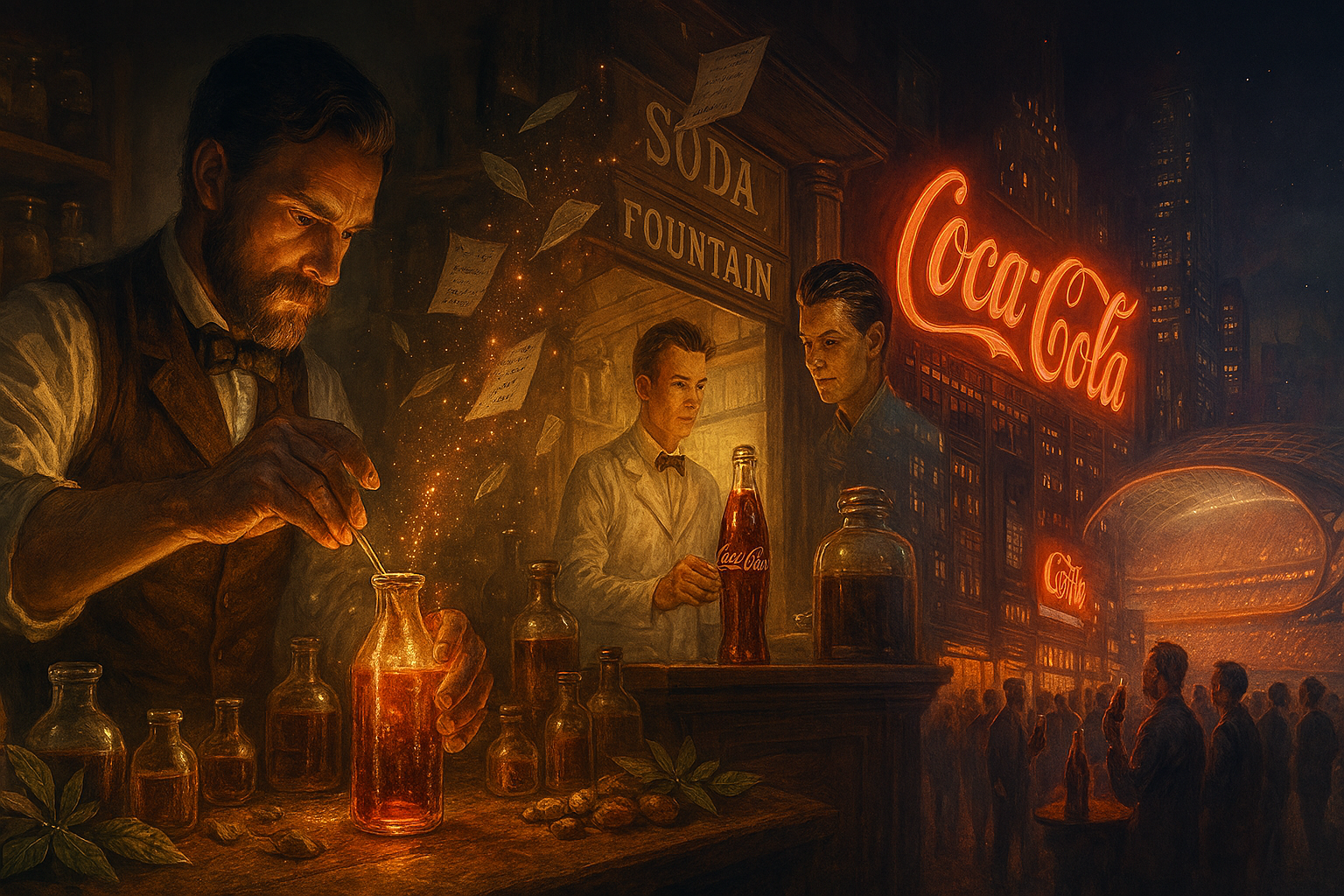
At the center of this story was John Stith Pemberton, an American pharmacist.
In the late 19th century, pharmacies weren’t just places that sold medicine—they were also social gathering spots. Pharmacists worked like today’s chemists, creating various syrups and tonics.
Back then, people were looking for solutions to common problems:
Headaches
Nervous exhaustion
Stress
Lack of energy
Many pharmacists developed herbal syrups to address these issues. Pemberton was doing exactly that.
In his lab, he prepared a caramel-colored syrup made with various plant extracts, sugar, and flavorings. This syrup was originally intended to be sold as a medicinal tonic.
But fate had a slightly different plan.
🥤 A Small Accident: Carbonated Water
Pemberton’s syrup was meant to be mixed with plain water. But one day, an employee accidentally mixed it with carbonated water.
The result was surprising:
Fizzy
Refreshing
Much tastier than ordinary syrups
This small accident led to the birth of one of the most iconic beverage brands in history.
As with many great inventions, a happy accident played a key role.
🧠 The Name Coca-Cola and the First Branding Strategy
The name of the drink didn’t come from Pemberton—it came from his bookkeeper, Frank Mason Robinson.
Robinson noticed the two key ingredients in the formula:
Coca leaves
Kola nuts
He combined these words to create the name Coca-Cola.
But Robinson’s contribution didn’t stop there.
The famous curvy Coca-Cola logo, recognized by millions worldwide today, was also designed by Robinson.
In other words, Coca-Cola’s:
Name
Logo
Brand identity
all came from the creativity of a single bookkeeper.
🏪 First Sale: The Modest Beginning of a Legend
Coca-Cola was first sold at Jacob’s Pharmacy in Atlanta.
The initial price:
👉 5 cents
It may sound funny today, but many beverages at that time were sold for similar prices.
On the very first day, the sales were modest:
Only 9 cups
Yes, a beverage now consumed by billions only caught the attention of a handful of customers on its first day.
Sometimes, great stories start with small numbers.
👨🔬 The Inventor: Who Was John Stith Pemberton?
Pemberton was no ordinary pharmacist.
Born in 1831, he was:
A chemist
A pharmacist
A true inventor at heart
During the American Civil War, he was injured and suffered from long-term pain. This led him to work on pain-relief and tonic-type remedies.
Many historians believe that his personal experiences influenced the development of Coca-Cola.
Pemberton was not only trying to create a tasty drink, but also a tonic that provided energy.
Sadly, he passed away before Coca-Cola became a global success.
Yet his invention left a lasting mark on history.
🏭 Coca-Cola’s Rise to a Global Brand
The real growth of Coca-Cola came thanks to businessman Asa Griggs Candler.
Candler bought the rights to the beverage and launched a very aggressive marketing strategy.
Some of the steps he took are still studied in marketing courses today:
Distributing free Coca-Cola coupons
Advertising on city walls
Placing Coca-Cola signs in pharmacies
Expanding the product across the United States
Thanks to these strategies, The Coca-Cola Company quickly became a global brand.
🌍 Coca-Cola Goes Global
By the early 1900s, Coca-Cola was no longer just an American product—it became recognized in different parts of the world.
Today, Coca-Cola:
Is sold in over 200 countries
Is consumed at around 2 billion servings per day
Is one of the most recognized brands in the world
The brand not only produces beverages but also contributed to the development of modern advertising.
For example, Santa Claus’s red-and-white costume is strongly associated with Coca-Cola ads for many people.
💡 The Benefits of Coca-Cola in Everyday Life
Coca-Cola is not a medicine, but it has some practical effects in daily life:
Energy and Alertness
The caffeine content can help reduce feelings of fatigue.
Social Culture
It is often chosen in restaurants, social gatherings, and celebrations.
Food Pairing
Pairs well with hamburgers, pizza, French fries, and many other foods.
Cultural Impact
It has created a shared beverage culture worldwide.
😄 Little-Known Fun Facts
There are many interesting facts about Coca-Cola:
1️⃣ Secret Recipe
The original Coca-Cola formula is still kept a secret. A copy is said to be stored in a special vault in Atlanta.
2️⃣ First Advertising Slogan
“Tasty and Refreshing.”
3️⃣ One of the Most Recognized Words in the World
Research suggests that “Coca-Cola” is the second most recognized word globally. The first is, as you might guess, “OK.”
🧠 The Big Lesson from This Invention
The story of Coca-Cola teaches us several important lessons:
Great ideas can be born in small labs
Accidents can sometimes open the door to inventions
Success requires not only invention but also smart marketing
A simple syrup prepared by a pharmacist has transformed into a brand that touches billions of lives today.
And perhaps the most beautiful part of this story is:
The ideas that change the world are sometimes born
not in massive labs,
not in billion-dollar projects,
but in the experiments of a curious individual.
Who knows…
Perhaps the next great invention is currently being stirred in someone’s kitchen. 🥤✨