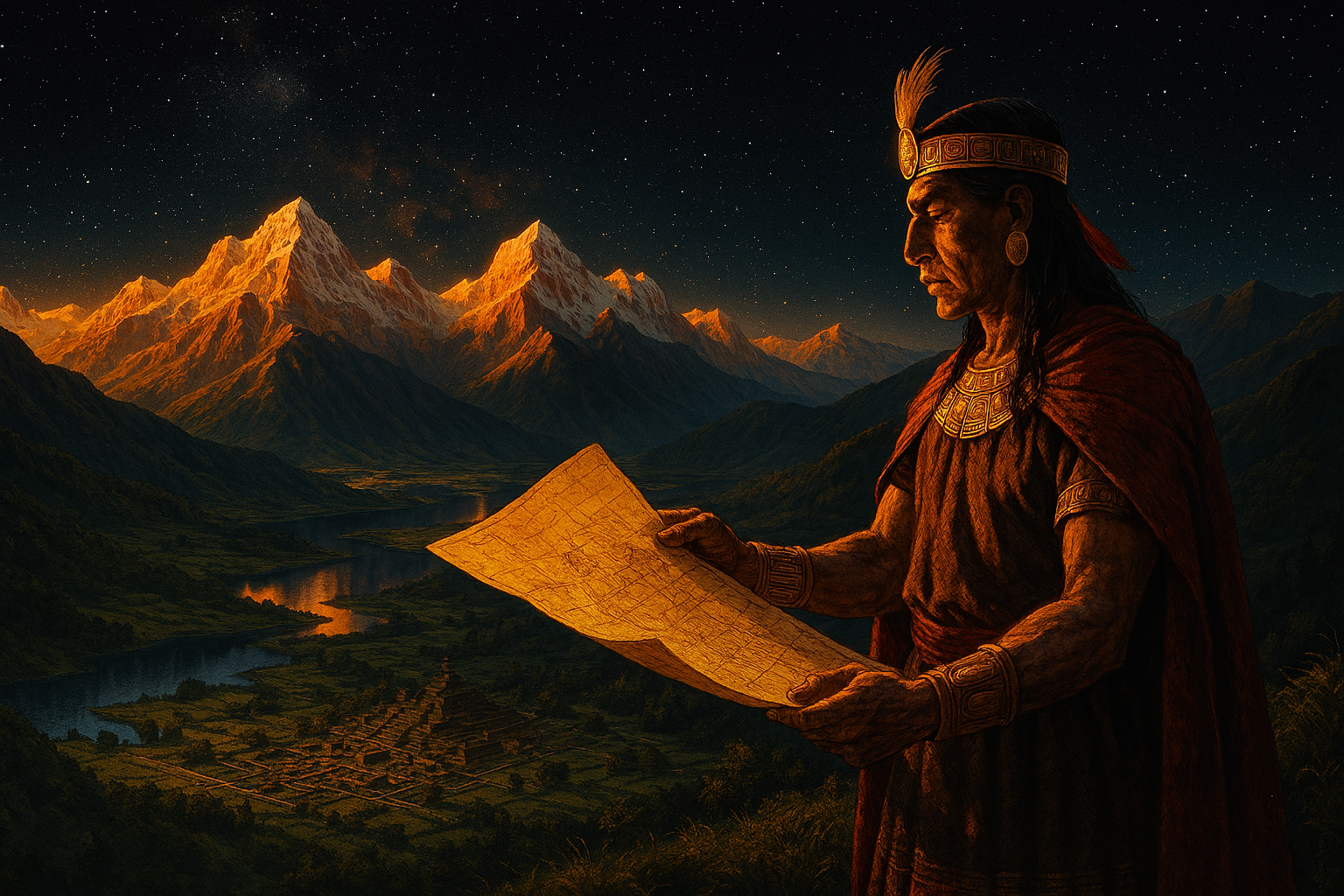
Imagine this: the mid-15th century, high peaks of the Andes Mountains, lush green valleys, and crystal-clear lakes… Right at this spot, in the heart of modern-day Peru, the Inca Empire rises. It was not just an empire, but also an engineering marvel, a cultural treasure, and a civilization dancing with the sun! Ready? Let’s dive in!
1. From Small Beginnings to a Vast Empire: The Rise of the Inca 🏹
The Incas started as a small tribe in the Cusco Valley. But don’t be fooled by their calm appearance; this tribe lived by the motto, “start small, dream big.”
Founding Figure: Pachacuti – A true genius of strategy and city planning. He came to power in 1438 and transformed Cusco from a simple city into the heart of a vast empire.
Expansion Strategy – Instead of constant warfare, they unified neighboring tribes through diplomacy and marriage alliances. Integration, not conflict, was their secret to growth.
Tip: If you ever travel back in time, take note of Pachacuti’s approach: “Work together, govern wisely, and harness culture.”
2. Engineering Wonders: Dancing with Stones 💎
Inca architecture was not only grand but also incredibly resilient. For them, stone was not just a building material—it was art.
Stone Craftsmanship – Stones were carved so precisely that not even a knife could slip between them. Earthquake? No problem; Inca stones were naturally flexible and shock-resistant.
Machu Picchu – One of the world’s most famous ancient cities. Beyond awe-inspiring tourists, it showcased advanced water systems, terrace farming, and road networks that became engineering lessons for centuries.
Roads and Bridges – With up to 25,000 km of stone roads, the empire stayed connected despite the rugged Andean terrain. Stone bridges, suspension bridges, and terraces made transportation efficient and reliable.
Practical Insight: Inca stonework still inspires modern engineers. If you want to learn earthquake-resistant construction, study Machu Picchu closely.
3. Social Order and Economy: The State Plans Everything 👑
Inca society was a kind of “ancient social engineering.” Everyone had a role, and everyone had responsibilities:
Mit’a System – A mandatory labor system where villagers worked for the state for a set period. This built roads, bridges, temples, and agricultural terraces.
Agricultural Wonders – Terrace farming made mountains fertile. Crops like potatoes, maize, and quinoa fed the people and stocked state granaries.
Economy and Record-Keeping – Instead of money, the Incas used quipu (knotted cords) to track numbers, taxes, and inventory. A single wrong knot could throw the entire empire into crisis!
Tip: If you travel back in time, observe a day in the life of an Inca villager. How society operates, how long each task takes—every detail is a lesson.
4. Culture and Religion: Children of the Sun ☀️
At the heart of the Inca worldview were the sun and nature. The Sun God Inti was not just sacred but the source of life itself.
Temples and Rituals – Gold wasn’t just wealth; it was a sacred symbol. Golden temples and statues reflected sunlight and demonstrated the empire’s power.
Festivals and Celebrations – Seasonal and harvest rituals were celebrated with dancing, singing, and giving thanks to nature.
Practical Insight: When you see a golden Inca artifact, remember it’s not just precious metal—it represents a belief system that has lasted thousands of years.
5. Benefits and Legacy: As Valuable as Gold 🌿
The Inca Empire stood out not just for power and gold, but for its cultural and technological legacy:
Agriculture and Water Management – Terraces and irrigation channels turned mountains into fertile farmland. Modern agricultural engineering still draws lessons from them.
Language and Culture – Quechua and some rituals are still alive in South America today. The Incas live on, not just in history books but in living cultures.
Architectural Marvels – Earthquake-resistant stonework and planned cities continue to inspire engineers worldwide.
6. The Dance of Gold and Shadow: The End ⚖️
But every rise has its limits. In 1533, Spanish conquistadors, driven by greed for gold, arrived in Cusco and destroyed the Inca Empire.
Powerful but Fragile – Gold and power made the Incas both wealthy and a target.
Legacy Lives On – Machu Picchu, roads, the Quechua language, and cultural rituals keep the memory of the Incas alive.
Lesson: Power isn’t measured only by land or gold. Culture, engineering, social order, and harmony with nature are just as valuable.
Bonus: Fun Inca Facts 😄
Inca roads were so wide that armies could march hundreds of kilometers in a single day. GPS? Who needs it!
Gold wasn’t just wealth—it was a material that “sang” to the sun.
Earthquake-resistant stone walls are still a mystery to engineers today.
The Inca Empire, with its power, culture, engineering, and gold, remains one of history’s most fascinating civilizations. Most importantly, it shows us that history isn’t just the past—it’s a treasure to understand today and inspire tomorrow.