🔎 Introduction: Not Just a Garment, but Humanity’s Battle with Cold
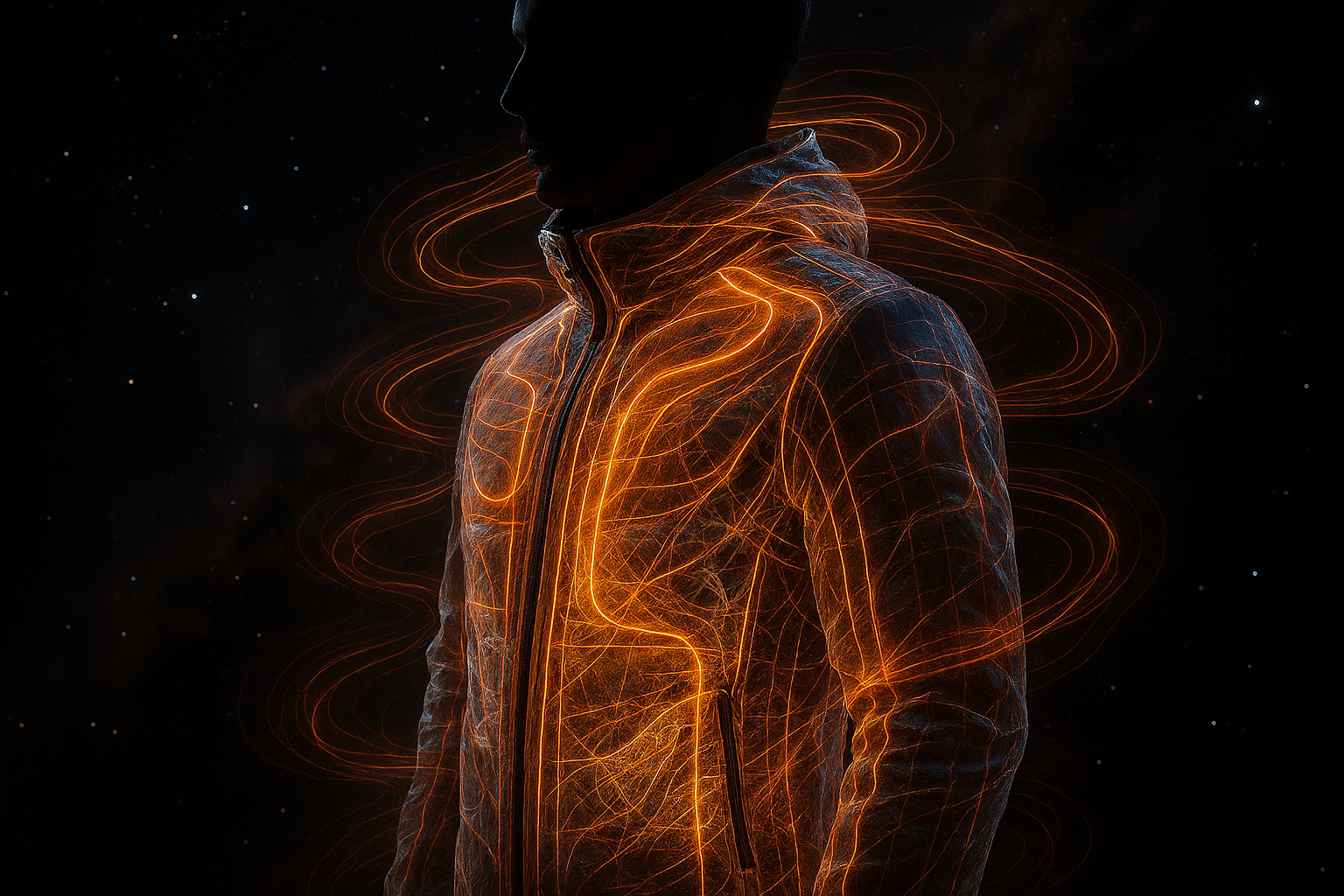
A jacket hanging in your wardrobe… At first glance, it seems ordinary. But look a little closer, and you’ll realize it holds within it a story of thousands of years of evolution, science, and culture.
A jacket is not merely a piece of clothing created to protect from the cold.
It is a tangible reflection of humanity’s struggle against nature, the structure of societies, and the advancement of technology.
Inside the jacket you wear today, there exists:
The survival instinct of early humans
The craftsmanship of medieval tailors
The production power of the Industrial Revolution
The engineering of modern science
—all at the same time.
🏕️ Before the Jacket: Primitive Protection and Early “Upper Garment” Experiments
The story of the jacket begins with the very concept of clothing itself.
For early humans, clothing was:
👉 Not about aesthetics, but a matter of survival.
Communities living in cold climates used animal skins to protect their bodies. These skins were:
Draped over the shoulders
Sometimes tied
But mostly did not fit the body properly
This created a significant problem:
👉 Heat loss.
From modern physics, we know that body heat is lost through:
Air movement (convection)
Direct contact (conduction)
Radiation
Primitive garments could not effectively prevent this loss.
🔬 A Critical Turning Point
Humanity realized:
👉 “Clothing that fits the body keeps you warmer.”
This realization was the first scientific and design step toward the invention of the jacket.
🧵 The Middle Ages: The Birth of Tailoring and Early Jacket Forms
During the Middle Ages, clothing evolved from mere protection into design and craftsmanship.
Tailoring advanced significantly:
Fabric cutting became systematic
Measurement techniques emerged
Garments began to be shaped according to the body
👕 Early Jacket-Like Garments
Doublet: A fitted, padded upper garment
Jerkin: A leather, usually sleeveless outer garment
These are considered the direct ancestors of the modern jacket.
🎯 Why Is This Important?
Thanks to these designs:
A controlled air layer formed between body and garment
This air layer provided thermal insulation
The “layering system” we still use today was born in this era.
👑 17th–18th Century: Jacket = Status, Power, and Identity
In this period, the jacket became more than a necessity—it turned into a social statement.
For the aristocracy, jackets represented:
Power
Wealth
Clear social status
🎩 Features
Luxurious fabrics like velvet and silk
Gold buttons
Intricate embroidery
Long, elaborate cuts
Styles such as:
Frock coat
Tailcoat
formed the foundation of today’s formal jackets.
👉 The jacket now answered the question:
“Who are you?”
⚙️ Industrial Revolution: The Democratization of the Jacket
Beginning in the late 18th century, the Industrial Revolution transformed the jacket from an elite symbol into something accessible to everyone.
🏭 What Changed?
Mass production began
Fabric costs decreased
Standard sizing emerged
👷 New Types of Jackets
Worker jackets (durable and practical)
Military jackets (functional and protective)
Everyday jackets
🪖 Military Influence
Most modern jackets have military origins:
Multi-pocket designs
Durable fabrics
Weather-resistant structures
Today’s outdoor jackets largely inherit their DNA from military designs.
🧪 Scientific Evolution: How Does a Jacket Keep You Warm?
The effectiveness of a jacket is rooted in science.
The main principle:
👉 Slow down heat loss and retain warm air inside
🔬 Heat Retention Mechanisms
Insulation
Fibers or down trap air
Air is one of the best natural insulators
Reduction of Convection
Windproof structures
Prevent air circulation
Moisture Management
Wicks sweat away
Prevents heat loss caused by dampness
🧵 Modern Materials
Polyester fibers
Down (goose feathers)
Gore-Tex (waterproof yet breathable)
👉 In short:
A jacket is essentially a portable microclimate system around your body.
🌍 20th Century: Explosion of Fashion, Function, and Identity
The 20th century is when the jacket gained identity.
🎬 Cultural Transformation
Cinema
Music
Youth movements
gave jackets new meanings.
🧥 Iconic Jackets
Leather jacket → freedom and rebellion
Blazer → urban elegance
Bomber jacket → military style
Parka → extreme weather protection
The jacket became more than protection:
👉 It became a form of expression
🔥 Today: Jackets Empowered by Technology
Today, jackets have evolved into technological products.
🚀 Innovations
Heated jackets (battery-powered)
Smart fabrics
Waterproof yet breathable membranes
Some models:
👉 Can adapt to your body temperature
🌱 Sustainability
Recycled materials
Vegan alternatives
Eco-friendly production
🤯 Little-Known Interesting Facts
The zipper was initially considered a failed invention
Leather jackets were originally designed for pilots
The word “blazer” comes from bright (blazing) jackets
The number of pockets in military jackets was strategically planned
The first modern parkas were developed for polar expeditions
🧠 Conclusion: A Simple-Looking Great Invention
A jacket…
It may seem like just a piece of clothing. But in reality, it is:
A product of humanity’s struggle with nature
A mirror of social structures
An application of science and engineering
A carrier of cultural identity
When you wear a jacket today:
👉 You’re not just keeping warm.
👉 You’re carrying history, science, and culture.
💡 Impact on Our Lives
Made living in cold climates possible
Increased productivity
Shaped fashion and identity
Driven technological innovation
And perhaps most importantly:
👉 It made humanity one step stronger against nature.
🔚 One Final Question
The next time you wear your jacket, ask yourself:
“Is this just a piece of clothing… or a story of thousands of years of humanity?”