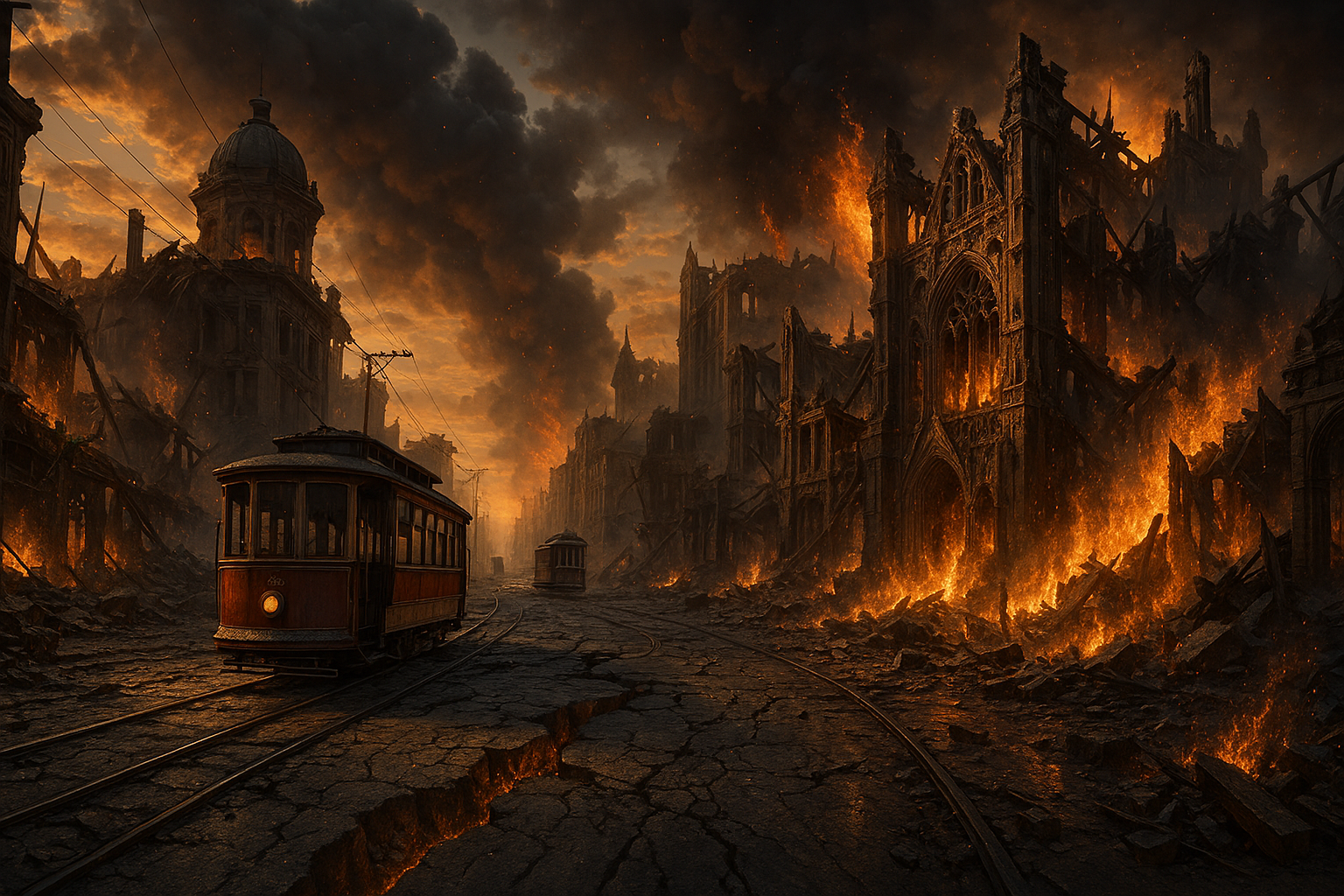
April 1906… San Francisco was a city shining with the charm of its golden age. Streetcars rattled smoothly along the tracks, the sea breeze from the harbor drifted through the streets, and life buzzed in cafés and theaters. But at 5:12 a.m. on April 18, nature delivered a harsh reminder: “This city is not yours—I’m still here.”
The earthquake measured 7.9 in magnitude, shaking the city as if it were made of soft clay. But the truly striking part is this: the greatest destruction did not come from the earthquake itself, but from the fires that followed. Yes, the quake cracked buildings and shattered streets, but the city soon found itself battling flames. It is estimated that about 80% of San Francisco was destroyed.
🏛️ The Moment of the Disaster: When the Earth Shook
In the early morning hours, while most people were asleep, the ground began to tremble. Buildings shook violently, cracked, and some collapsed instantly. Electricity and gas lines were damaged, causing fires to spread rapidly. Streetcars derailed, bridges cracked, and people often had no idea what to hold on to as the city moved beneath their feet.
The shaking: It lasted about 45–60 seconds, during which many people described the sensation as being inside a chaotic amusement ride.
Cracks and ground shifts: The earth folded like a giant torn carpet; in some places the ground split open, bursting water and sewer lines.
Fires: Especially in the city center, fires started by gas leaks, kitchens, and businesses quickly spread and became even more destructive than the quake itself.
💡 Tip: When studying historical disasters, remember that post-earthquake fires often cause as much or even more damage than the quake itself. Modern cities design firebreaks and emergency systems to prevent this.
📚 Historical and Social Impact
The earthquake was not just a natural disaster—it shook the social, economic, and cultural structure of the city as well.
A revolution in urban planning: After the destruction, San Francisco was rebuilt with stronger, safer structures. Steel and reinforced concrete became foundations of modern earthquake engineering.
Emergency and insurance systems: Insurance companies reconsidered the concept of earthquake insurance, and people learned the importance of preparing for disasters.
Community solidarity: The catastrophe brought neighbors together. People built temporary shelters in the streets while aid organizations quickly mobilized.
Media and documentation: Photographers and journalists documented the disaster, and the media of the time played a crucial role in showing the true scale of the devastation.
💡 Lessons and Benefits
Earthquakes are natural disasters, but history also shows the lessons they leave behind.
Engineering breakthroughs: Buildings are now designed not only to be beautiful but also resilient and safe.
Education and awareness: People learned what to do during earthquakes—simple steps like staying away from heavy furniture or taking shelter in safe spaces can save lives.
Crisis management: After the disaster, the city rebuilt itself and developed modern emergency management systems.
📝 Practical tip: For those living in earthquake zones, the 1906 example is still instructive. Small preparations can save lives during major disasters: an emergency kit, a communication plan, and knowing safe areas.
⚠️ Damage and Destruction
Deaths: Official figures estimate around 3,000 people died, though some estimates suggest the number may have reached 6,000.
Homelessness and economic loss: Thousands were left without homes, and the city’s economy suffered a severe blow.
Cultural loss: Books, artworks, and historic buildings were destroyed. The city was reduced to a massive field of rubble.
🔍 Historical Impact and Interesting Details
The earthquake affected not only San Francisco but the entire United States. Insurance companies and government policies changed as a result.
Cities began to rebuild with more organized urban planning and stronger structures.
An interesting detail: during the quake, some people described the experience as a “mini amusement park ride,” while others made humorous but dangerous mistakes. For example, some pet owners risked their lives trying to rescue their pets during the shaking! 🐶😅
🌟 Unusual and Lighthearted Notes
The earthquake and fires did not simply press a “reset button” for San Francisco. Instead, they taught people creativity, resilience, and cooperation. The city rose from its ashes and laid the foundations of modern architecture and urban planning.
💡 Fun fact: After the disaster, rebuilding the city felt almost like a massive city-simulation game. People redesigned streets, buildings, and bridges—but this time with far greater respect for nature.
✅ Conclusion
The 1906 San Francisco Earthquake was not only a devastating disaster but also a powerful lesson for humanity. No matter how frightening nature can be, people have always found ways to rebuild, learn, and grow stronger together.
Disasters shape not only the past but also the present and the future. Cities and communities that prepare themselves can manage such crises and emerge with fewer losses.