
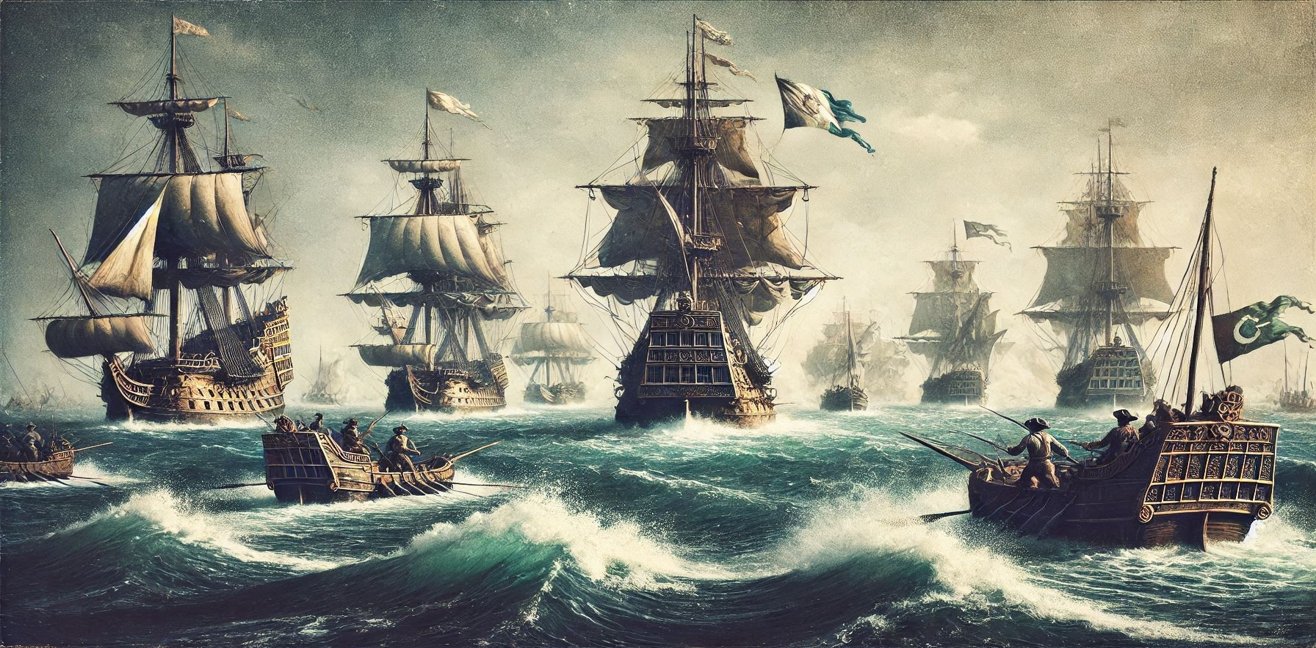
The Battle of Djerba, a brilliant example of the Ottoman Empire’s naval power, took place in 1560 in the Adriatic Sea. Under the command of Piyale Pasha, the Ottoman fleet achieved a major victory against the powerful naval forces of the Republic of Venice. This victory became an unforgettable milestone in the Ottoman Empire’s naval history.
Background of the Battle
In 1560, the Ottoman Empire’s naval forces were advancing against the Venetians in the Adriatic Sea. The Republic of Venice, at that time, was a significant naval power in the Adriatic and was frequently in conflict with the Ottomans. Djerba Island, with its strategic location, was one of the central points of these conflicts.
The Development of the Battle
The Ottoman fleet, under Piyale Pasha’s strategic mastery, encountered the Venetian fleet near Djerba Island. Piyale Pasha effectively organized his fleet and launched a bold attack against the Venetians. During the naval battle, the Ottoman ships inflicted heavy damage on the Venetians and dealt a crushing defeat to the rival fleet.
The Impact of the Results
The Battle of Djerba was a significant victory that demonstrated the Ottoman Empire’s naval power and strategic capabilities. This victory solidified the Ottoman fleet’s dominance in the Adriatic Sea and dealt a severe blow to the Republic of Venice. It also remains a shining page in the Ottoman Empire’s naval history.
The Battle of Djerba marks a key turning point in the history of the Ottoman Empire’s naval power and strategic prowess. This victory is one of the significant achievements in the Ottoman Empire’s naval history and serves as a monument to the strength of the Ottoman fleet.


