Medieval Europe had a mindset very different from today’s modern state systems. States were not divided by clear borders; instead, they were shaped by religion, dynastic rule, feudal bonds, and personal loyalty. In this complex world, some rulers were not only administrators but also figures who changed the intellectual direction of an entire era.
Otto III is one of those figures. Despite his short life, he challenged Europe’s political imagination and attempted to redefine the very idea of “empire.”
In this article, we will examine his story not only as a biography, but as an intersection of politics, religion, philosophy, and society.
👑 Otto III: The Identity of a Young Emperor
Otto III was born in 980, at a time when Europe was already politically fragmented. Losing his father at an early age pushed him directly into the world of power and governance.
Accession to the throne: Crowned king as a child (around age 3)
Imperial coronation: Crowned by the Pope in 996
Death: 1002 (at age 21)
What made him remarkable was not his age, but his intellectual scale. Otto III possessed a political vision far beyond his years.
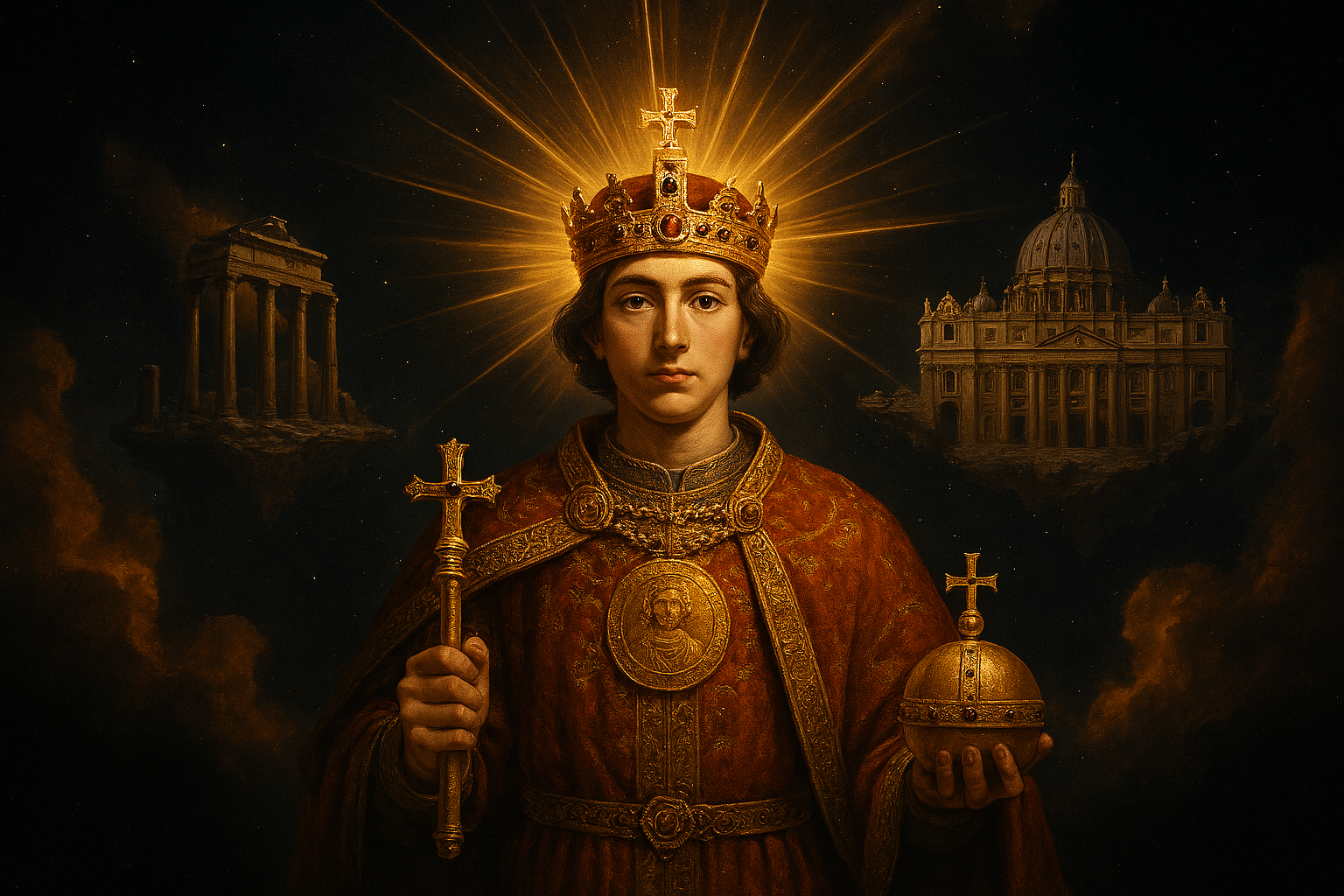
He saw himself not merely as a German king, but as the continuation of the Roman Empire and the central leader of the Christian world.
🏰 The Holy Roman Empire: Not a State, but a System
Holy Roman Empire was not a nation-state in the modern sense. It was a highly complex structure that cannot be explained using today’s concept of a centralized country.
⚙️ 1. Decentralized power structure
Local dukes, princes, and bishops held significant power
Imperial authority was not uniform across the territory
⛪ 2. Religious legitimacy
Imperial authority was believed to come from God
The Pope played a key role in legitimizing the emperor
🏛️ 3. Roman legacy
The claim of being the “continuation of Rome” was symbolic
But it was far removed from the actual centralized Roman system
Therefore, the empire was not a state in the modern sense, but rather an “idea of empire.”
🧠 Otto III’s Great Vision: Rebuilding Rome
Otto III’s most extraordinary feature was not military, but ideological.
His goal was:
“To restore the order of ancient Rome through Christianity.”
This project is historically known as:
“Renovatio Imperii Romanorum” – The Renewal of the Roman Empire
🔥 Three pillars of his vision:
1. The idea of a universal empire
He believed Europe could be governed from a single center.
2. The symbolic return of Rome
Rome was not just a city, but the heart of world order.
3. The fusion of religion and politics
The Pope and the Emperor had to operate within a unified system.
From a modern perspective, this was highly ambitious. Otto III was essentially claiming:
“The world can be united under a single political and religious order.”
⛪ The Fine Line Between Religion and Politics
In the Middle Ages, religion and politics were inseparable. However, Otto III attempted to push this relationship further.
⚖️ His model:
Pope → Spiritual leader
Emperor → God’s representative on Earth
Although this system seemed coherent in theory, it created deep tensions in practice.
Because the fundamental question was:
“Where does true authority come from?”
This question later shaped:
Conflicts between Popes and Emperors
Reform movements
Political fragmentation in Europe
⚔️ Political Reality: Clash Between Ideal and Feudal World
Otto III’s greatest problem was the gap between his vision and reality.
🏰 Reality:
Feudal lords acted independently
Local powers limited central authority
Loyalty was personal rather than institutional
🧩 Otto’s vision:
A centralized universal empire
Absolute authority
Roman order restored
When these two worlds collided, the result was inevitable:
The imperial vision constantly faced resistance.
🌍 Impact on Europe
Although Otto III lived briefly, his influence lasted much longer.
1. Strengthening the imperial ideal
The idea of a universal European order remained alive.
2. Symbolism of Rome
Rome continued to represent political legitimacy.
3. German imperial tradition
Later German emperors continued to claim Roman heritage.
4. Church–state conflict
One of the greatest tensions of medieval Europe took shape.
🧠 Philosophical Perspective: Unity and Power
Otto III’s vision was not only political but also philosophical.
He was trying to answer:
“Can humanity be unified under a single order?”
This question is still relevant today:
Globalization
International law
The European Union
All can be seen as modern responses to the same idea.
But history teaches us:
Creating unity is easier than sustaining it.
✔️ Achievements
Otto III should not be seen as a failed ruler. He:
🏛️ 1. Redefined the idea of empire
Strengthened the ideological legacy of Rome.
⛪ 2. Proposed a new model for Church–state relations
Reframed the relationship between Pope and Emperor.
🧠 3. Contributed to European political thought
Kept the idea of universal order alive.
❌ Criticisms
However, Otto III was also criticized:
⚠️ 1. Excessive idealism
He underestimated real political dynamics.
⚠️ 2. Ignoring feudal realities
He misjudged the resistance of local powers.
⚠️ 3. Risk of instability
His centralization vision could provoke conflict.
🕯️ Early Death and Alternative History
Otto III died at the age of only 21.
This early death leaves behind a major historical “what if?” question:
If he had lived longer:
Could a stronger centralized empire have emerged?
Could Europe have unified earlier?
Would Church–state conflicts have developed differently?
Or alternatively:
More internal wars
More intense power struggles
Earlier fragmentation of Europe
History remains silent here—but that silence is meaningful.
🧩 Conclusion: A Young Emperor, a Lasting Idea
Otto III shows us that:
History is not only the story of events, but the story of ideas.
Holy Roman Empire became the stage for these ideas:
a fragmented, contradictory, yet extraordinarily influential political laboratory.
Otto III lived briefly, but thought long.
And sometimes, history remembers not those who live long, but those who think far.