The Shattering of an Empire from Within: The Tragic End of a Reformist Dream
🎬 1. A Sultan, a Dream, and a Collapsing Order
History does not always tell the story of great wars.
Sometimes, it tells the story of a single moment.
May 20, 1622 is exactly such a moment.
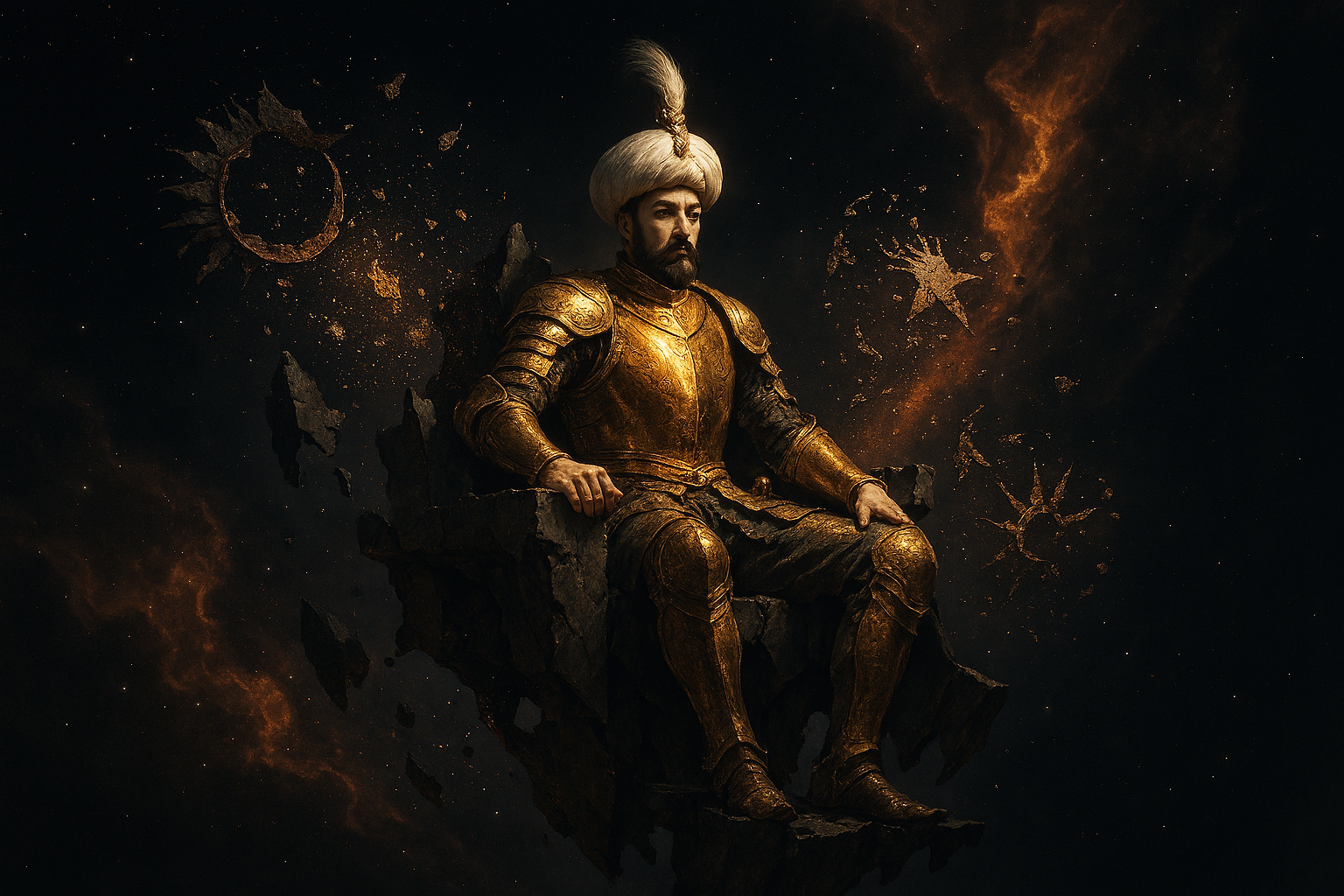
On the Ottoman throne sits a young sultan: Osman II (Young Osman).
He is only 18 years old.
But his mind is far beyond his age.
His dream is simple:
“To rebuild a collapsing order.”
But history delivers a harsh lesson:
Every attempt to “rebuild” meets the resistance of the old system.
And so begins his story:
the clash between an ideal and imperial reality.
🏛️ 2. Historical Background: An Empire Cracking from Within
By the 17th century, the Ottoman Empire was no longer in its classical age of glory.
Three major crises dominated the state:
⚔️ 1. Military crisis
Prolonged wars
Undisciplined Janissary Corps
Failure to modernize the army
💰 2. Economic crisis
Currency devaluation (akçe losing value)
Breakdown of the timar system
Rising palace expenditures
🧠 3. Institutional crisis
Court factions
Bureaucratic conflict
Struggle between religious and military authority
When Osman II ascended the throne, he did not inherit a crown.
He inherited a crisis system.
👑 3. A Reformist on the Throne: Osman II’s Mindset
Osman II was not only a ruler, but also an early modern reform-minded thinker.
His core belief was:
“The state cannot survive with old methods.”
This idea formed around three pillars:
🧭 A. Rational state governance
Removal of incompetent appointments
Strengthening central authority
⚔️ B. Military reform
Discipline of the Janissaries
Creation of a more professional army
🏛️ C. Limiting palace power
Reducing court intrigue
Administrative purification
Today these ideas sound logical.
But in the 17th century, they were revolutionary.
⚔️ 4. Reform Attempts: A One-Man Struggle Against the System
Osman II’s reforms were not just theoretical.
He took concrete steps:
🪖 A new army project
According to some sources, he aimed to:
Replace the Janissaries with new troops from Anatolia
Build a more disciplined structure
Introduce European-style military training
🏰 Plan to leave Istanbul
He even considered leaving the capital:
Establishing a new power base in Anatolia
Breaking the influence of the palace system
This was a radical idea:
If the capital changes, the balance of power changes.
🧠 5. Philosophical Dimension: Idealism vs Political Reality
Osman II’s story is a classic political philosophy conflict:
🟢 Idealism
The state can be governed by reason
Systems can be fixed through reform
Justice can be rebuilt
🔴 Realism
Power holders resist change
Institutions protect themselves
Reform is perceived as a threat
The key question is:
“If a leader is right, why does he fail?”
The answer is simple:
Politics is not only about truth — it is about power balance.
⚖️ 6. Social and Political Dynamics: The Invisible State
The Ottoman Empire was not a single-center system.
It was shaped by four major forces:
👑 The Palace
⚔️ The Janissaries
🕌 The Religious Scholars (Ulema)
📜 The Bureaucracy
When Osman II attempted reforms, he effectively challenged all four at once.
As a result, reform stopped being policy —
and became a survival struggle.
🔥 7. May 20, 1622: The Peak of the Rebellion
On the morning of May 20, 1622, Istanbul was no longer an ordinary city.
In the streets:
Janissaries
Rebels
Anti-palace groups
were mobilizing.
⚔️ The course of the rebellion
The Grand Vizier was killed
The palace was surrounded
The central administration collapsed
Osman II attempted to escape.
But he was captured.
And history breaks at this moment:
For the first time, an Ottoman sultan was deposed by his own army.
This was not just a rebellion.
It was the empire consuming itself from within.
👤 8. Who Was Osman II? The Psychology of a Leader
Osman II can be described as:
🧠 Intellectual traits
Intelligent
Strategic thinker
Quick decision-maker
⚔️ Leadership traits
Reformist
Brave
Risk-taking
⚠️ Weaknesses
Inexperienced
Struggled with political balance
Lacked institutional support
His tragedy is simple:
He had correct ideas, but acted too quickly in the wrong conditions.
🌍 9. Impact on World History
This event is not only Ottoman history.
It also had global implications:
📌 1. Military class becoming political power
It showed that armies are not just military forces —
they can become political actors.
📌 2. Early modern state crises
Similar processes were happening in Europe:
English Civil War
Rise of absolutism in France
The Ottoman case parallels these transformations.
📌 3. Reform–resistance model
Today, political science still studies this case.
⚖️ 10. Benefits and Damages
✔️ Possible benefits (historical lessons)
Reform necessity became visible
Military-politics relationship was redefined
State structure became subject of analysis
❌ Damages
Central authority weakened
Internal rebellions increased
Reform delayed
Political instability deepened
🇪🇺 11. Effects on Europe
Osman II’s death also had indirect effects on Europe:
Ottoman internal instability increased
European states became more confident in Eastern politics
The perception of the Ottoman Empire as “invincible” weakened
Long-term result:
It contributed to Europe’s rise in the global power balance.
🧪 12. Alternative History: What If He Had Succeeded?
History invites a powerful question:
“What if Osman II had completed his reforms?”
Possible scenarios:
Modernization could have started 200 years earlier
The Janissary system could have been abolished
The Ottoman central state could have remained stronger
Power balance with Europe could have shifted
But history is written not by possibilities — but by outcomes.
🧠 13. Philosophical Perspective: The Meaning of Tragedy
The essence of this event is:
“No matter how correct an idea is, it cannot survive without a strong structure.”
Osman II teaches us:
Power = idea + institution + time
Missing even one collapses the system
🎯 14. Conclusion: A Young Emperor, a Lasting Idea
Osman II was killed.
But his ideas survived.
His story leaves us with this truth:
“Reform is not only courage; it is the art of timing and strategy.”
Osman II did not fail.
He simply arrived too early.
And history often forgives everything —
except those who speak the truth at the wrong time.