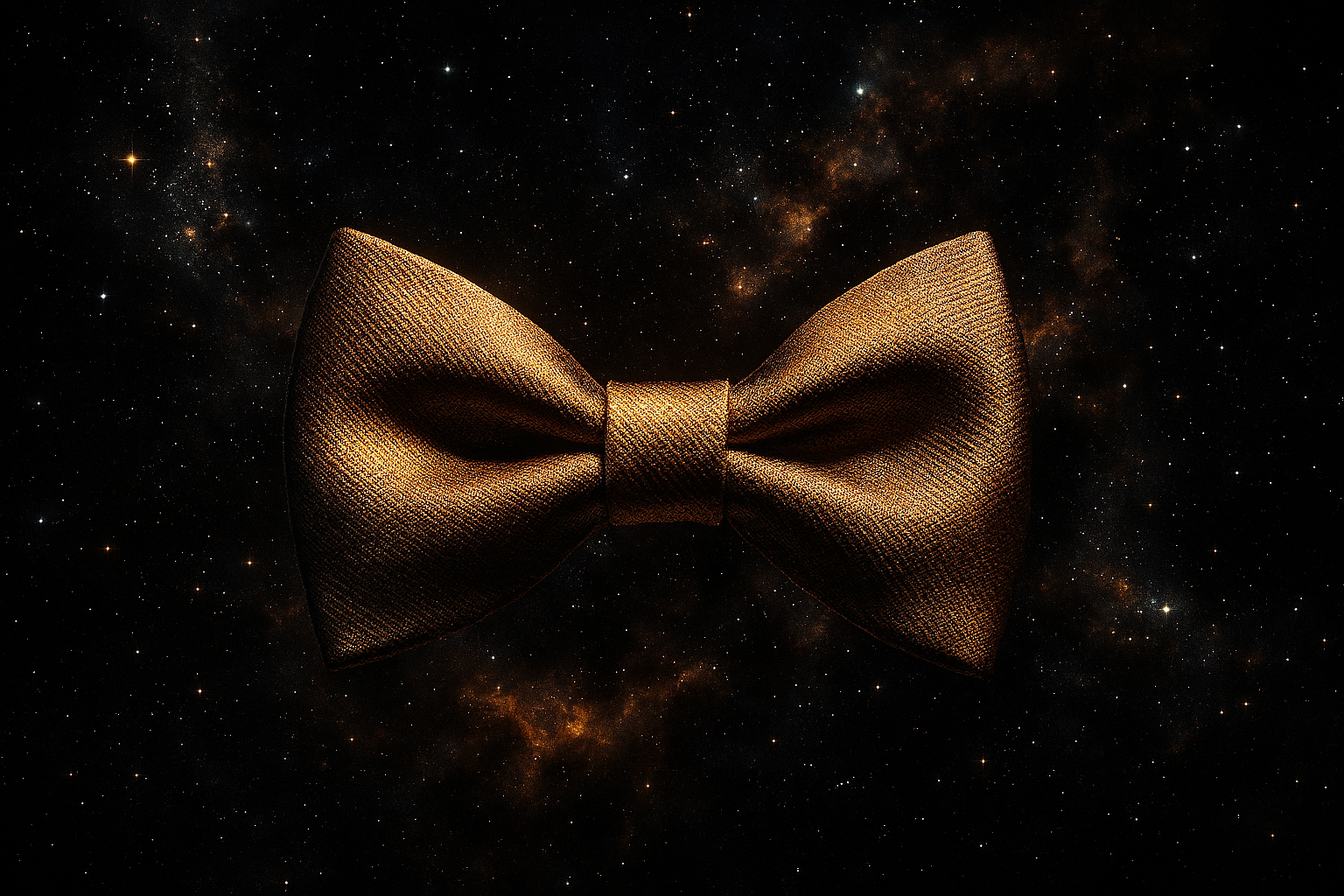
Some inventions change the world.
Others change the way we look at it.
The bow tie belongs to the second group.
It didn’t invent electricity. It didn’t launch rockets. It didn’t build the internet… Yet it changed posture, perception, and personal style. Who would have guessed that a small piece of fabric could function as a “charisma booster”?
If you’re ready, let’s take a graceful journey through the history, origins, transformation, and cultural impact of this small yet powerful invention.
🏹 From the Battlefield to the Palace: The Birth of the Bow Tie
The origins of the bow tie date back to the 17th century. During the Thirty Years’ War, Croatian soldiers tied a piece of cloth around their necks to hold their shirt collars together.
The purpose was simple: practicality.
But this military detail soon made its way to France — and everything changed.
During the reign of Louis XIV, fashion at the royal court was at its peak of extravagance. Members of the court noticed the Croatian neck cloth and thought, “That looks elegant.” In that very moment, a practical battlefield solution transformed into an aristocratic fashion revolution.
The French called it “cravate,” derived from the word “Croate” (meaning Croatian). This was the foundation of the modern necktie — and eventually, the bow tie.
So yes, the bow tie’s DNA carries both war and royalty. Discipline and grandeur.
👑 From Necktie to Bow Tie: How It Evolved
In the 18th and 19th centuries, neckwear diversified. Large, elaborate ties became fashionable for a while.
But not everyone wanted to look the same.
Some sought something:
Simpler.
Sharper.
More minimal.
That’s where the bow tie emerged.
It evolved as a more compact, geometric version of the necktie. Especially when paired with a tuxedo, it became a staple of formal evening wear. By the late 19th century, the bow tie symbolized something clear:
“I follow the rules — but I choose my own style.”
🧠 Bow Tie and Charisma: The Psychological Effect
A bow tie is not just aesthetic — it’s powerful in terms of perception.
Studies show that accessories drawing attention to the face increase eye contact in communication. The bow tie does exactly that.
It creates a symmetrical form at neck level, enhancing facial features. It can:
Balance narrower face shapes
Emphasize the jawline
Make the neck appear more elegant
It’s no coincidence…
Think of Albert Einstein. His slightly wild hair combined with a bow tie forms an iconic “genius silhouette” in our minds. The bow tie became associated with intellect and originality.
Or consider James Bond. The tuxedo plus bow tie combination visually encodes sophistication and controlled danger.
A bow tie is more than an accessory. It is an image tool.
🎩 Its Social Meaning Through the Ages
In 19th-century Europe, clothing signaled social class. The bow tie was especially popular among:
Academics
Artists
Opera and theatre circles
Diplomatic gatherings
Wearing a bow tie subtly communicated:
“I belong to cultured society.”
In the 20th century, the bow tie developed two identities:
The ultra-formal tuxedo essential
The intellectual style symbol
That’s why you might see it on a groom one day and a university professor the next.
🪡 The Technical Side: Small but Skillful
Bow ties are typically produced in three main forms:
Self-tie
Pre-tied
Clip-on
🔹 Self-Tie Bow Tie
This is the true classic. Tying your own bow tie takes about 1–2 minutes — though your first attempt may lead to the classic, “Why isn’t this symmetrical?!” moment.
Pro tip:
Learning from a video tutorial is often easier than practicing in front of a mirror.
Perfect symmetry is not required. Slight asymmetry actually looks more natural.
🔹 Pre-Tied Bow Tie
Practical and safe. Ideal for weddings, formal events, and quick styling solutions.
✨ The Benefits of a Bow Tie (Yes, There Are Real Ones)
It doesn’t dip into your food.
A necktie may risk a soup accident. A bow tie? Never.
Minimal yet striking.
It occupies little space but creates strong impact.
It guarantees originality.
If there are 20 neckties and 1 bow tie in a meeting room… Guess who gets remembered?
Timeless appeal.
It has survived for over 200 years — and it’s still relevant.
It signals confidence.
Wearing a bow tie takes character.
🕰 The Modern Evolution
In the mid-20th century, bow ties became less common in daily fashion as neckties dominated. Yet they never disappeared.
With the retro revival of the 1980s, the bow tie regained popularity. Today, it appears in:
Vintage outfits
Wedding attire
Artistic and creative communities
Even casual combinations
It’s no longer just black.
Velvet, wooden, knitted, floral, patterned…
The bow tie evolved — but never lost its essence.
🎯 Practical Style Tips
If you have a smaller face, avoid oversized bow ties.
Busy shirt + busy bow tie = visual chaos.
With a tuxedo, black is timeless and safe.
For casual outfits, knitted bow ties create a softer look.
If you wear a bow tie, stand tall. Bow ties don’t cooperate with slouching.
And most importantly:
If you wear a bow tie, don’t forget to wear confidence with it.
🎀 Conclusion: A Small Knot, A Big Statement
The bow tie is not an engineering marvel.
But it is a marvel of style engineering.
From battlefield to palace, from academia to wedding halls — its journey spans centuries.
Think of an invention that began as a practical collar solution…
And evolved into a symbol of character.
That is the bow tie.
A small piece of fabric.
Filled with history, culture, and courage.
Now look in the mirror.
Is your suit ready?
Maybe what’s missing isn’t something big…
Just a small knot. 🎀✨