Hey there, history buffs, medicine enthusiasts, and curious minds! 👋
Welcome back to the blog! If you take a quick look inside your bathroom cabinet right now, odds are high that you’ll spot a little plastic bottle or a blister pack filled with small, white, plain-looking tablets. Aspirin.
We pop them for headaches, back pain, fevers, and hangovers without giving them a second thought. It feels like a modern everyday commodity, doesn’t it? But before it became a cheap over-the-counter staple, this modest little chemical was a bitter tree bark chewed on by ancient civilizations, a catalyst for the birth of Big Pharma, a trophy in the Treaty of Versailles, and a lifesaving drug that literally traveled to the Moon.
Grab your favorite warm drink, settle in, and let’s take a deep, comprehensive dive into how a humble tree transformed into a multi-billion-dollar global pharmaceutical empire! 🧪✨
🌿 From Willow Bark to Modern Tablet: Nature’s Original Pharmacy
Long before modern cleanrooms, clinical trials, and synthetic chemistry, nature was running the ultimate pharmaceutical lab.
Thousands of years ago, long before humans even understood what a cell or a molecule was, our ancestors figured out that the natural world held remedies for their aches and fevers. Clay tablets from ancient Sumeria dating back to 2400 BCE mention using the leaves and bark of the willow tree for inflammation. The ancient Egyptians took it a step further: the famous Ebers Papyrus (circa 1500 BCE)—one of the oldest known medical documents on Earth—explicitly recommends willow bark as a relief for musculoskeletal pain.
Even Hippocrates, the legendary “Father of Medicine,” wrote extensively about brewing a bitter tea made from willow bark (Salix alba) to help women manage the agonizing pain of childbirth and to bring down high fevers around 400 BCE.
The Scientific Mystery: Why did willow bark work? Nature packed it with an organic bitter compound called salicin.
Fast forward to the 19th century—the golden age of chemistry. In the 1830s, European scientists managed to isolate salicin from willow bark and later converted it into salicylic acid.
Great news for medicine, right? Well… yes and no.
While salicylic acid was a miracle worker against pain and inflammation, it was an absolute nightmare for the digestive system. It tasted horrendous, caused severe nausea, and literally eroded the lining of the stomach. Taking salicylic acid felt like drinking battery acid—it cured your joint pain, but left you doubled over in stomach cramps.
Enter Felix Hoffmann, a brilliant young German chemist working at the Bayer company in 1897. Legend has it that Hoffmann was driven by personal empathy: his father suffered from crippling rheumatoid arthritis, but could no longer stomach the agonizing side effects of salicylic acid.
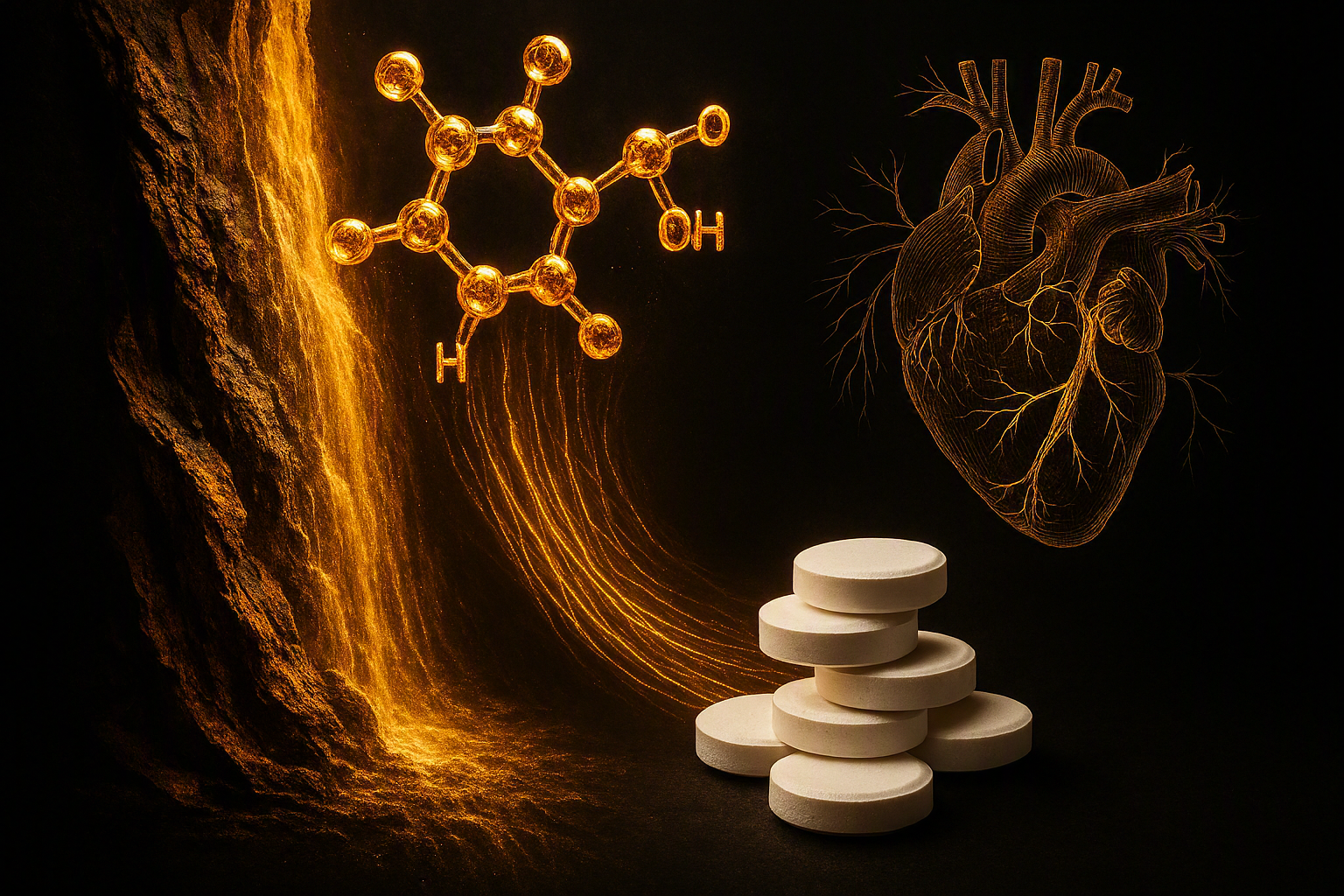
Determined to find a solution, Hoffmann searched through past chemical experiments and successfully acetylated the salicylic acid molecule. By adding an acetyl group, he created acetylsalicylic acid (ASA).
The result? A chemical compound that kept all the pain-fighting, fever-reducing power of the original plant, but was dramatically gentler on the human stomach. Modern pharmacology had officially arrived.
🏭 Bayer’s Industrial Rise: Building a Global Monopoly
You would think Hoffmann’s boss at Bayer, Heinrich Dreser, would have celebrated immediately. Oddly enough, he initially dismissed acetylsalicylic acid, fearing it would weaken the heart! But after rigorous testing proved just how safe and effective ASA actually was, Bayer went all-in.
In 1899, Bayer officially registered the brand name Aspirin.
Ever wondered where that word actually comes from? It’s a clever bit of 19th-century branding:
A stands for Acetyl.
SPIR comes from Spiraea ulmaria (meadowsweet), a plant that naturally contains salicin.
IN was the standard naming suffix for medicines at the time.
Bayer didn’t just invent a drug; they essentially invented modern pharmaceutical marketing. Instead of selling raw chemicals to local apothecaries, Bayer distributed small glass bottles containing standardized Aspirin powder directly to physicians and pharmacists worldwide, ensuring quality control and brand recognition. By 1915, they revolutionized packaging again by releasing it in convenient, over-the-counter stamped tablets.
The Geopolitics of a Pill 🌍
Aspirin became so insanely lucrative that it became a casualty of global war. During World War I, the Allied forces realized Germany held a virtual monopoly on this essential medicine. When Germany was defeated, the 1919 Treaty of Versailles included a fascinating clause: Bayer was forced to surrender its trademark rights for “Aspirin” as part of war reparations in the United States, the UK, and France.
That is why today, “aspirin” is a generic term written with a lowercase “a” in many parts of the world, though Bayer remains a global chemical powerhouse whose empire was largely built on this single white pill.
🩸 Beyond Pain Relief: The Blood-Thinning Miracle
For over half a century, the medical community assumed aspirin was simply a good painkiller and fever reducer. Nobody fully understood how it worked on a cellular level until the 1960s and 70s, when researchers made a revolutionary discovery: aspirin profoundly alters how human blood behaves.
The Medical Breakdown 🔬
Here is what happens inside your bloodstream when you swallow an aspirin:
The Enzyme Target: Aspirin irreversibly inhibits an enzyme named cyclooxygenase-1 (COX-1).
Stopping the Signal: COX-1 is responsible for producing thromboxane A2, a chemical that acts like glue for your blood platelets.
The Anti-Clotting Effect: By blocking thromboxane, aspirin prevents platelets from clumping together.
In simple terms: it thins your blood.
This discovery fundamentally reshaped cardiology. Doctors realized that a low daily dose of aspirin (often called “baby aspirin” or 81 mg) could prevent blood clots from forming inside narrowed arteries, drastically lowering the risk of secondary heart attacks and ischemic strokes.
This breakthrough was so massive that British pharmacologist John Vane was awarded the Nobel Prize in Physiology or Medicine in 1982 for revealing precisely how aspirin works inside the human body.
💡 Practical Survival Tip: If you ever suspect that you or someone near you is experiencing a heart attack, emergency medical guidelines frequently recommend chewing (rather than swallowing whole) an adult 325 mg uncoated aspirin while waiting for paramedics. Chewing breaks down the tablet instantly, allowing it to enter the bloodstream within minutes to stop blood clots from worsening! (Always consult a healthcare provider regarding your individual health risks).
👑 “The Most Famous Pill in History”
To call aspirin “famous” is an understatement. It is woven into the very fabric of 20th-century history:
🚀 Outer Space: When Apollo 11 took off for the Moon in 1969, NASA packed Aspirin into the astronaut medical kit. Neil Armstrong and Buzz Aldrin literally carried aspirin to the lunar surface!
📖 Guinness World Record: It earned a spot in the Guinness Book of World Records as the most frequently consumed painkiller on the planet, with estimates suggesting humans have consumed over a trillion tablets since its inception.
🇪🇸 The 1918 Pandemic: During the devastating Spanish Flu outbreak, aspirin was prescribed en masse worldwide to manage high fevers (though high dosages back then sometimes led to accidental toxicity, teaching medicine crucial lessons about dosage control).
⚠️ Modern Takeaway & A Word of Caution
Despite being over a century old, aspirin remains a cornerstone of therapy. However, modern pharmacology has taught us that even historical miracles require respect and caution:
Stomach Vulnerability: Because blocking the COX-1 enzyme also reduces the protective mucous lining inside your stomach, long-term or high-dose aspirin use can cause stomach ulcers or gastrointestinal bleeding.
Never Give to Children: Aspirin should never be given to children or teenagers recovering from viral illnesses (like the flu or chickenpox). It is strictly linked to Reye’s Syndrome—a rare but potentially fatal condition causing severe brain and liver swelling.
Wrapping It Up!
From ancient Egyptian doctors brewing bitter willow bark tea, to German industrial chemists modifying molecules for an ailing parent, to astronauts landing on the Moon, Aspirin’s journey is nothing short of extraordinary.
It stands as a testament to human ingenuity—proof that when we take a hint from nature and refine it with science, we can change the course of human health forever.
What surprised you most about Aspirin’s history? Did you know about its journey to the Moon? Drop your thoughts in the comments below, and don’t forget to share this post with your fellow history and science enthusiasts! 👇