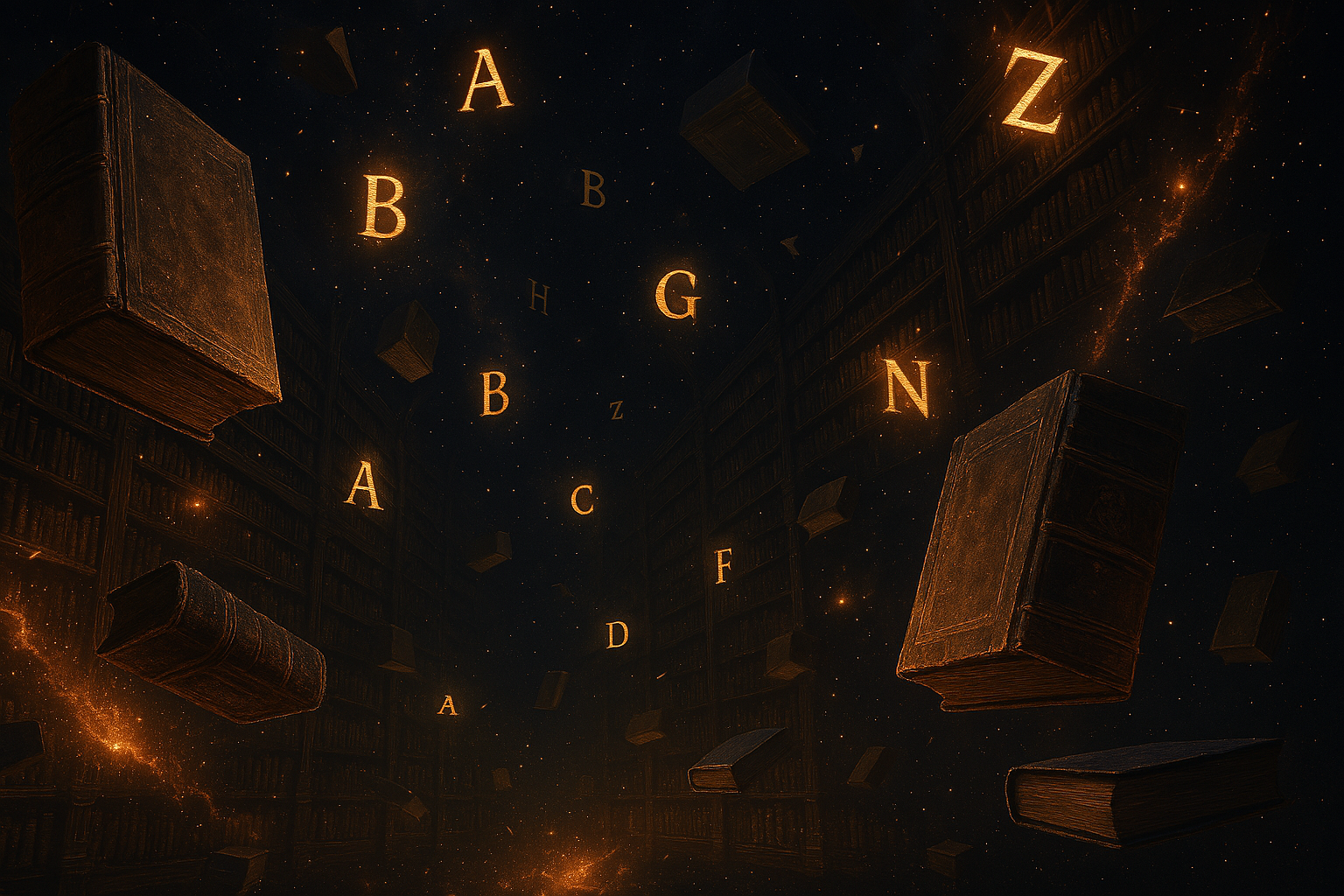
When we think about human history, most people imagine great inventions like the wheel, the printing press, the internet, or electricity. Yet sometimes, the greatest revolutions do not happen with loud machines but with silent pages. 📖
The dictionary is exactly such a revolution. ⚡
Fixing the meaning of a word, explaining it, and connecting it with other words… At first glance, it may seem simple, but in fact, this is humanity’s effort to organize thought 🧩
A dictionary does not only define words; it structures thinking, categorizes the world, and enables communication 🌍💬
Now let’s explore this journey of the “invention of the word treasury” step by step 🚀
🧠 1. The Birth of the Dictionary Idea: Why Did Humans Start Collecting Words?
The origin of dictionaries was not a planned invention but a chain of necessity 🔗 From the moment humans began speaking, they faced the same problem:
👉 “Do people use the same word with the same meaning?” 🤔
🧠 First motivation: Solving meaning confusion
In early communities:
The same object had different names 🪵🌿
Word meanings varied from region to region 🗺️
Misunderstandings happened in trade 💰❌
For example:
One merchant might say “gold,” while another meant a different metal 🪙
👉 This led people to ask:
“How can we fix the exact meaning of a word?” 💡
📚 Second motivation: Education needs
Students struggled to learn words 📖
Teachers created explanation lists 🧑🏫
Contact with foreign languages increased 🌍
🏛 Third motivation: Governance and law
Laws had to be clearly understood ⚖️
A standardized official language became necessary 🏛
👉 Thus, the idea of the dictionary was born:
The need to fix words into a single meaning 📌
🏺 2. The First Dictionaries: Word Lists of the Ancient World
Early dictionaries were not alphabetical like today. They were more like “word catalogs” 📋
🏺 Mesopotamia: Language archives on clay tablets
The Sumerians and Akkadians created:
Occupation lists 🧑🌾
Agricultural tools 🌾
Animal names 🐂
Administrative terms 🏛
👉 This system can be considered the first “database” 💾
🇨🇳 China: The “Erya” and conceptual lexicons
Words were grouped by topics 🧩
Nature, animals, human behavior 🌿🐯
Used to explain Confucian texts 📜
👉 The key difference:
Not only words, but concepts were organized 🧠
🇬🇷 Ancient Greece: Philosophy and language combined
Word meanings were debated 🗣️
The concept of “logos” was developed 📖
The relationship between language and thought was studied 🧠
✝️ 3. The Middle Ages: Dictionaries Meet Religion and Science
In the Middle Ages, dictionaries became not just lists, but authoritative texts 📜
✝ Latin dictionaries in Europe
Language of the Church ⛪
Language of science 🔬
Language of education 🎓
🕌 Language dictionaries in the Islamic world
Arabic grammar studies ✍️
Word origin research 🧬
Poetry explanations 🎤
👉 This period strengthened the scientific foundations of lexicography 📚
📘 4. The Birth of the Modern Dictionary: The Samuel Johnson Revolution
👨🏫 Who was Samuel Johnson?
Writer ✍️
Poet 📜
Linguist 🧠
📖 1755: The great dictionary revolution
40,000+ words 📚
Definitions ✍️
Example usages 💬
Literary quotations 📖
👉 The dictionary became a “scientific work” 🔬
🔬 5. The Scientific Side of Dictionaries: What Is Lexicography?
👉 Lexicography 📚
Its tasks:
Word origin analysis 🧬
Meaning change tracking 🔄
Usage analysis 📊
Recording new words 🆕
🧬 Why does language change?
Society changes 🌍
Technology evolves 📱
Culture transforms 🎭
🌍 6. The Impact of Dictionaries on Humanity
🎓 Education
Literacy increased 📖
Language learning became easier 🌍
🧠 Mind
Conceptual thinking developed 💡
Abstract thinking improved 🧠
🌍 Culture
Languages were preserved 🗣️
Cultural memory strengthened 📜
📱 7. The Digital Age: The Dictionary in Our Pocket
Mobile applications 📱
Artificial intelligence 🤖
Instant translation 🌍
👉 The dictionary is now a living assistant 💬
💡 8. Interesting Facts
Oxford Dictionary: 600,000+ words 📚
Early dictionaries were not alphabetical 📋
New words are added years later 🆕
Even “selfie” entered dictionaries later 📸
🌟 9. Conclusion: Organizing Words Means Organizing the World
A dictionary:
Organizes language 🧩
Clarifies meaning 🎯
Shapes thought 🧠
Preserves culture 🌍
But most importantly:
👉 A dictionary does not only explain words…
👉 It changes how humans perceive the world 💭✨
Learning the meaning of a word may seem like a small step… but in reality, it opens a new door in the mind 🚪
A dictionary is not the key to language; it is the map of human thought. 🧠🗺️