Some inventions send rockets into the sky.
Some invent the internet.
And some save your life the moment you realize your pants have ripped just as you’re leaving the house.
The safety pin steps in at exactly this point.
It doesn’t want a Nobel Prize,
it doesn’t wait for applause,
and it never takes the stage.
But in the most critical moments, it’s there.
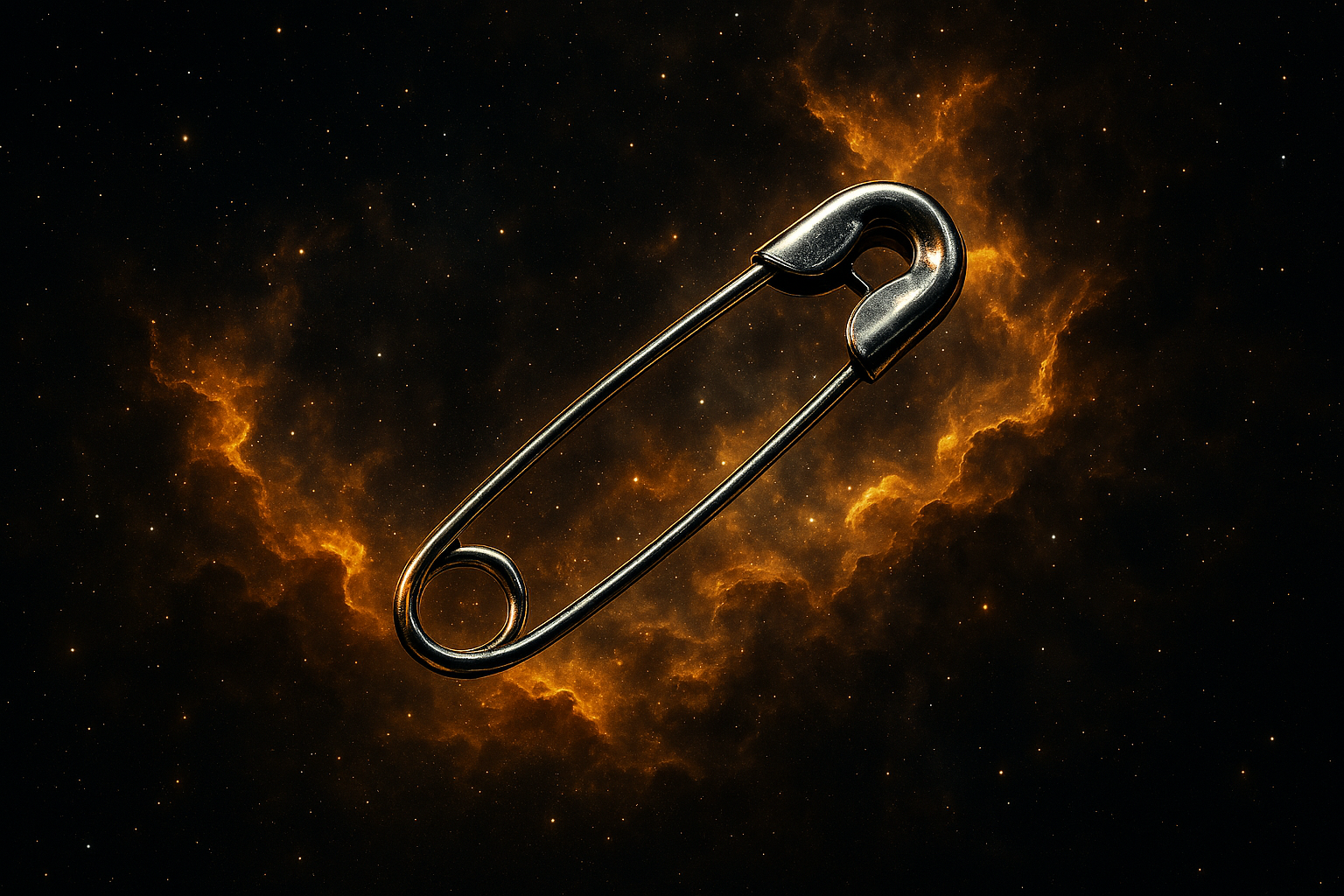
🧷 What Is a Safety Pin?
(A Metal “Plan B”)
Simply put, the safety pin is the metal embodiment of humanity’s
“this will do for now” philosophy.
It’s made from a single piece of wire, yet inside it carries:
Mechanical intelligence
A safety system
Flexibility
Durability
Its difference from a regular pin is this:
The safety pin thinks about you, too.
It doesn’t poke you.
It doesn’t open on its own.
It doesn’t cause drama in your bag.
That’s why it’s not just a tool, but a source of psychological comfort.
🧠 Why Did Humanity Need the Safety Pin?
Throughout history, humans have always needed to fasten things:
Clothing
Cloth
Fabric
Labels
Loose pieces
But old pins were:
Dangerous
Unreliable
Risky to carry
So yes, there was a solution—but it could come at the cost of blood.
The safety pin was born from one simple thought:
“Can’t this be done more safely?”
And yes, it could.
👤 Walter Hunt: The Man Who Accidentally Made History
The inventor of the safety pin, Walter Hunt,
didn’t wake up one morning thinking, “I will change the world.”
In 1849:
He had a 15-dollar debt
He urgently needed money
He had nothing but a piece of wire
He sat down and played with the wire.
Bent it. Twisted it. Turned it into a spring.
What emerged was:
A pin that covered its sharp tip
Locked itself
And was safe to use
He patented it.
Sold it for 400 dollars.
Paid off his debts.
And he probably thought:
“Not bad.”
But what he had actually done was this:
He had invented one of the most widely used rescue tools of daily life.
⚙️ How Does a Safety Pin Work?
(Genius Hidden in Simplicity)
The secret of the safety pin is its spring mechanism.
The wire is stretched → energy is stored
The tip enters its housing → it locks
Pressure is released → it closes
This system is the ancestor of the logic used today in:
Door locks
Clips
Industrial fasteners
👉 Practical fact:
The safety pin is a perfect example of “flexible but controlled” design.
That’s why it’s still used today, almost unchanged.
🧷 What Is It Used For?
(The Official List and the Unofficial Truth)
Official uses:
Clothing repair
Baby products
Label attachment
Textile production
Unofficial but life-saving uses:
Broken zippers
Snapped straps
Fallen buttons
Camping accidents
Backstage disasters
👉 Golden tip:
A person who carries a safety pin in their wallet
is a person prepared for life.
🌟 Benefits
(What More Can One Piece of Metal Do?)
⏱️ Saves time
🧠 Creates solutions in moments of panic
🧷 Gives hope to those who can’t sew
🎒 Fits anywhere
🎭 Creates the miracle of “this will do for now”
That’s why the safety pin is
the ancestor of minimalism.
🎨 Art, Fashion, and the Safety Pin
At some point, the safety pin:
Stopped being just a tool
Started becoming a message
🎸 In music:
A symbol of rebellion in punk culture
A statement of “I’m against the rules”
A staple of stage costumes
🎭 In art:
Minimalist sculptures
Industrial design examples
Themes of “temporariness”
👗 In fashion:
Accessories on clothing
Earrings and brooches
A sense of “raw aesthetics”
Something once considered “improper”
became an icon.
🎶 The Safety Pin and Music Culture
In punk and alternative music, the safety pin represents:
Lawlessness
Rawness
Honesty
It isn’t polished.
It isn’t hidden.
It stands exactly as it is.
Just like good music.
🎈 The Final Safety Pin
The safety pin teaches us this:
Big solutions don’t always come from big inventions.
Sometimes a small piece of wire saves an entire day.
Walter Hunt wanted to pay off a debt.
But without realizing it, he gave humanity this:
An idea of rescue that’s ready whenever it’s needed.
And even today, it still waits quietly:
In drawers
In bags
Backstage
Right in the middle of life
Because it knows:
One day, it will be needed again. 🧷✨