Imagine this…
The 1920s, cars were just beginning to appear on streets 🚗
Speed? Around 25 mph (40 km/h)! People actually felt like they were “flying” at that speed.
But the problem was serious: in collisions, people were thrown forward, seriously injured, and sometimes killed.
At that time, someone asked:
“Could we create something to keep people secured to their seats?”
And thus, the seatbelt was born.
🎩 The Geniuses Behind the Invention and Historical Context
The seatbelt wasn’t invented by a single person—it’s the result of decades of development:
🏎️ 1911 – George Cayley:
British aviation pioneer who proposed a simple belt system to secure pilots in airplanes. Not for cars yet, but it introduced the idea of “securing humans.”
🏎️ 1959 – Nils Bohlin:
Swedish engineer at Volvo, developed the three-point seatbelt, still in use today.
Bohlin’s goal was simple:
“Cars are getting faster, but humans are still fragile.”
🏎️ 1960s – Sweden:
Seatbelts became standard.
🏎️ 1970s – USA:
Some states made wearing seatbelts mandatory.
💡 Interestingly, early drivers found seatbelts uncomfortable.
“Restricting my freedom!” they complained 😅
⚙️ How a Seatbelt Works (Science and Practical Tips)
A piece of fabric and a metal buckle may seem simple, but the seatbelt uses brilliant physics:
🏎️ Distributes force:
During a crash, the body doesn’t take impact in just one spot—it spreads the force across the chest, shoulders, and hips.
🏎️ Stops rapid motion:
Keeps the body secured to the seat, protecting the head and torso.
🏎️ Reduces injury risk:
Seatbelts clearly reduce serious injuries by 50–60%.
💡 Practical tip:
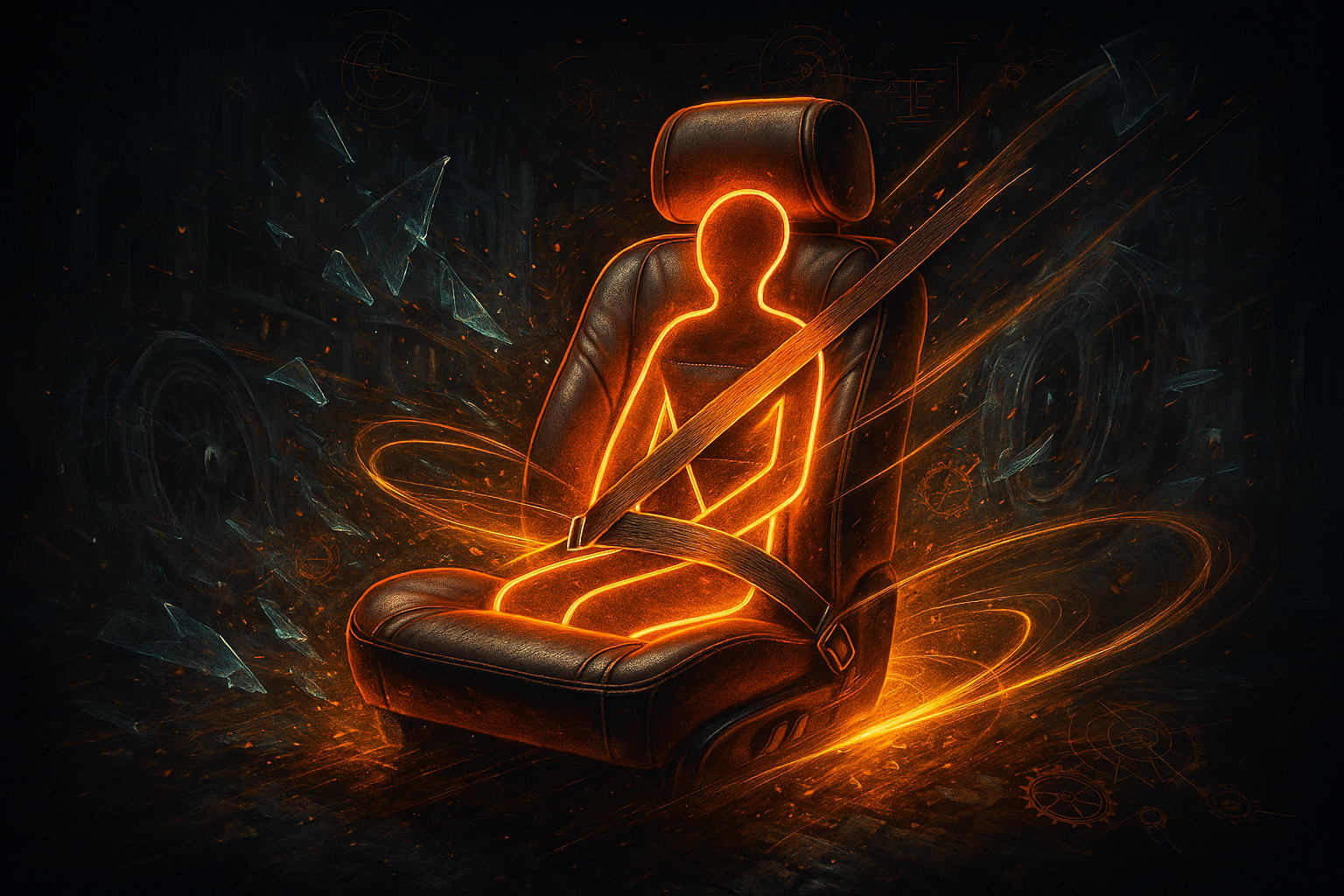
When wearing a seatbelt, make sure it’s positioned correctly:
🏎️ Shoulder belt should cross the middle of your shoulder
🏎️ Lap belt should rest over your hips, not your stomach
🏎️ These small details can save your life.
🏎️ Historical Context: What if Seatbelts Didn’t Exist?
Cars of that era: heavy, weak brakes, stiff steering.
🏎️ Crash = serious injury
🏎️ Low speeds, but bodies were unprotected
🏎️ Passengers usually unrestrained
This is where the seatbelt came in:
🏎️ Secures the body during a crash
🏎️ Protects the head and torso from glass, the steering wheel, and other vehicles
🏎️ Dramatically reduces risk of death or severe injury
Back then, not wearing a seatbelt was seen as “fashionable” or “more comfortable.”
Today, it’s a life-saving standard.
😄 Seatbelts and Humor
🏎️ Early drivers found them restrictive:
“Limits my freedom!” 😅
🏎️ In movies, seatbelts are often shown flying off or ignored—but in reality, they save lives
🏎️ They prevent dramatics during crashes and give you a second chance
💡 Life lesson:
Sometimes the simplest inventions make the biggest difference.
🌍 Global and Modern Impact of the Seatbelt
🏎️ Millions of lives are saved every year thanks to seatbelts.
🏎️ Some countries still impose fines for not wearing one.
🏎️ Modern cars combine airbags and seatbelts for maximum safety.
💡 Mini tip:
Even with airbags, always wear your seatbelt! Otherwise, the airbag alone can’t fully protect you.
🧪 Evolution and the Future
The seatbelt hasn’t stopped evolving:
🏎️ Automatic belts: Tighten automatically when the door closes
🏎️ Adaptive belts: Adjust firmness depending on crash conditions
🏎️ Smart sensors: Customize fit based on passenger size and weight
Today, a seatbelt is no longer just a strip of fabric—it’s a high-tech lifesaver.
😎 Conclusion: Protecting Life Starts with a Simple Invention
The seatbelt shows us:
👉 A simple idea → can save millions of lives
👉 Slight discomfort → worth saving your life
👉 Small invention → huge impact
Next time you get in a car:
🏎️ Buckle up
🏎️ Stay safe
🏎️ And smile 😄
That little strap keeps you alive—even if you don’t realize it.