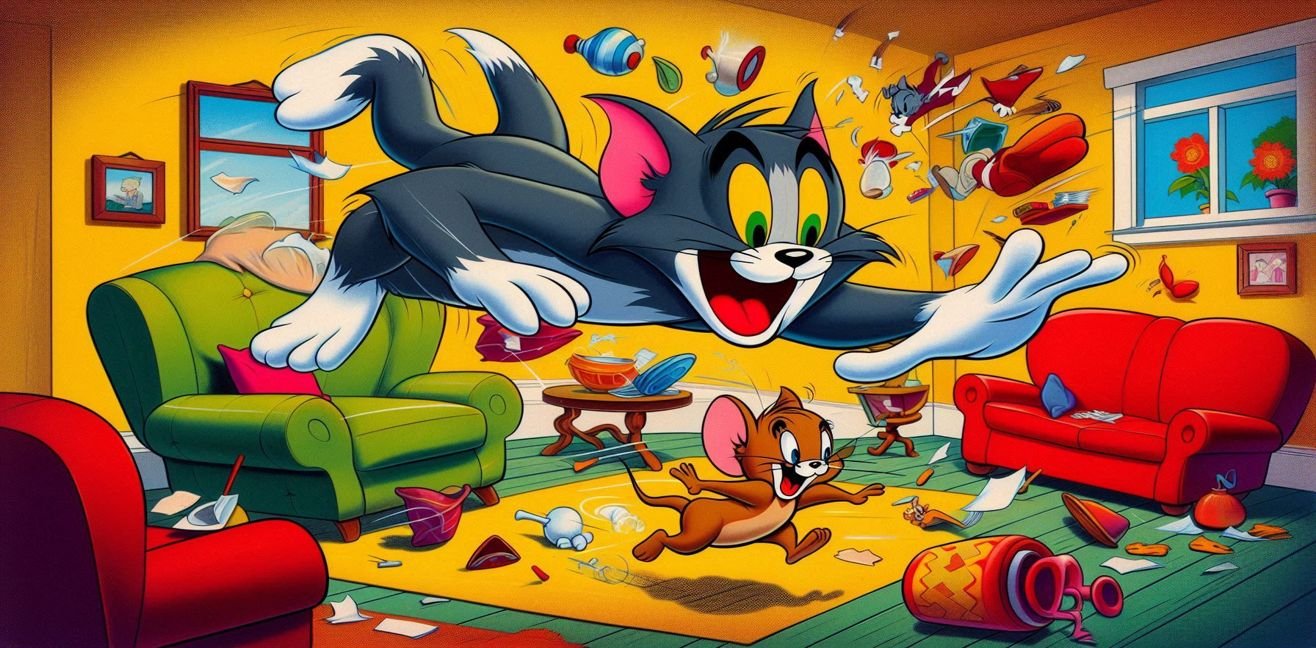
The most famous chase in cartoon history… A cat and a mouse, a house, and a never-ending battle. But Tom & Jerry is more than just a simple “cat-and-mouse” story. This is a masterpiece that stretches from the golden age of animation to the anatomy of humor and the peaks of visual cleverness. 🎬💥
📜 The Genius Creators: Hanna and Barbera
Tom & Jerry was created by William Hanna and Joseph Barbera in 1940 for MGM.
- William Hanna: A genius in storytelling and character physics.
- Joseph Barbera: A master of humor, synchronized sound, and visual storytelling.
The duo laid the foundation for classic comedy cartoons, skillfully blending silent visual humor. Fun fact, my love 💖: In the first episodes, there was almost no dialogue—everything was conveyed through music, sound effects, and motion. So Tom’s “Mrrr” or Jerry’s mischievous look told the whole story!
😂 The Mathematics of the Endless Chase
Why does Tom and Jerry’s battle never end? Because:
Contrasting Characters
- Tom: Muscular, clumsy, always planning but usually failing.
- Jerry: Small, agile, clever, and able to anticipate every trap.
Creative Traps and Strategy
- Tom comes up with a new plan in every episode.
- Jerry counters in “strategic genius mode”, not by accident.
- Every trap teaches viewers a lesson in tactics and problem-solving.
Timing and Rhythm
- Every action is synchronized with the music.
- Quick transitions and explosions maximize visual comedy.
Psychological Humor
- Viewers empathize with Jerry and feel sorry for Tom, but neither gives up.
- It teaches patience, persistence, and strategic thinking. 🧠✨
So, my love, even if Tom’s plan fails, the next episode brings a new trap. This is endless motivation in cartoon form! 💪
🎨 Animation Techniques and Visual Cleverness
Tom & Jerry’s success isn’t just in the story—it’s in the technical genius of animation:
- Over-the-top physics: Impossible things in real life become possible in cartoon physics. For example, Tom spinning in mid-air, crashing into a wall, and then getting up to continue.
- Expression and mime mastery: Characters convey everything through facial expressions, glances, and body language, even without dialogue.
- Color and contrast: Backgrounds and character colors match the pace of the action.
- Silent storytelling: Humor is guaranteed through effects and music in non-dialogue scenes.
- Voice and sound effects: “Boing!”, “Crash!”, “Zing!” add character to the action. 🎵
In some episodes, the music was composed to follow the exact tempo of the action, which is the secret of their rhythmic humor. 😂
🌍 Cultural Impact and Universality
- Tom & Jerry were loved not just in America, but worldwide.
- From the 1940s to the 1960s, they produced Oscar-winning shorts.
- Their influence continued through video games, series, and films.
- The “cat-and-mouse” metaphor is often referenced in humor and strategy literature.
- Generations have learned patience, creativity, and humor through Tom & Jerry.
😂 Funny Facts and Storytelling Tips
- Every failed plan by Tom demonstrates the trial-and-error method.
- Jerry’s cunning teaches children analytical thinking.
- In some episodes, Tom and Jerry team up against common enemies, delivering a humorous strategic lesson.
- Viewers laugh while also learning the lesson: Plan B is always an option. 😎
✨ Final Words: Life Lessons from Tom & Jerry
Tom & Jerry remind us:
- Obstacles (like a “Bluto”) will always appear in life.
- With creativity and strategy (like Jerry), you can overcome any challenge.
- Humor and fun make stressful situations more bearable.
- Most importantly: Never give up and always try a new plan!
My love 💖 The comedic battle of a cat and a mouse is entertaining, educational, and full of life lessons.
So next time you face a tough situation, remember: There’s a Jerry cleverness and a Tom perseverance inside all of us! 🐱🐭💪😂