Think about the last song you listened to. Did you search for it on your favorite streaming app? Was it recommended by an algorithm? Did you discover it through a TikTok video or a friend’s playlist?
If the answer is yes, you’re part of one of the biggest revolutions in music history.
Not too long ago, enjoying music meant buying CDs, downloading MP3 files, or waiting for your favorite song to play on the radio. Today, millions of songs are available instantly from almost anywhere in the world. Music streaming has completely transformed how we discover, listen to, share, and even create music.
But streaming isn’t just about convenience—it has reshaped the entire music industry. From independent artists reaching global audiences to AI-powered recommendations introducing us to hidden gems, streaming has forever changed the way music connects with people.
Let’s explore how this incredible transformation happened. 🌍
📀 A Quick Look Back: Life Before Streaming
To appreciate today’s music landscape, it’s worth remembering how things worked before streaming became mainstream.
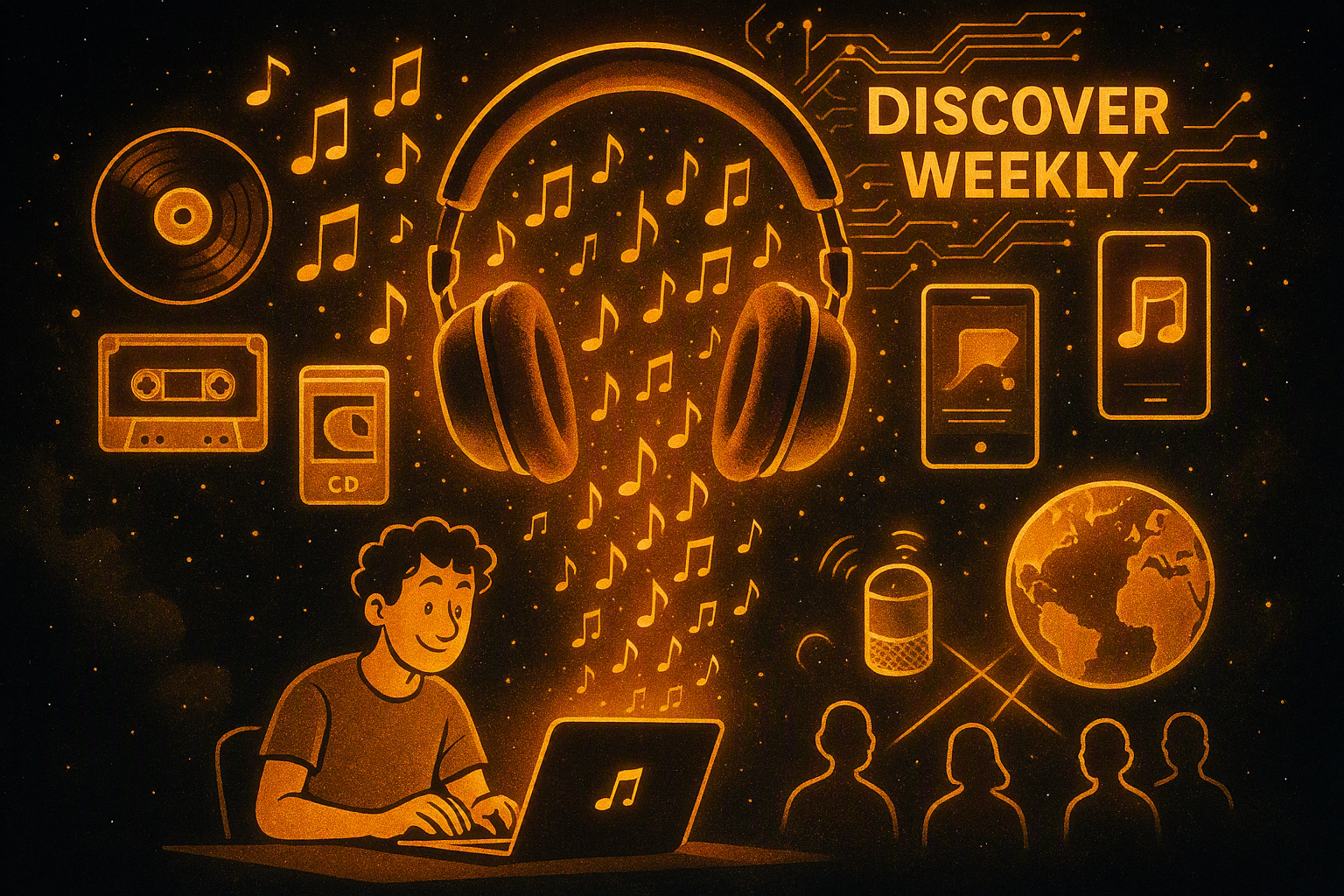
🎶 Vinyl Records
Vinyl records dominated much of the 20th century. They offered rich sound quality and beautiful album artwork, but they were fragile, expensive, and not exactly portable.
📼 Cassette Tapes
Cassette tapes made music portable. Suddenly, people could create mixtapes, listen in cars, and carry their favorite albums around.
💿 Compact Discs (CDs)
The CD revolution brought cleaner digital sound and quickly became the world’s favorite music format during the 1990s and early 2000s.
💻 MP3 Downloads
Then came MP3 files. Services like iTunes allowed users to purchase individual songs instead of entire albums. While revolutionary, listeners still had to buy and store their own music libraries.
Streaming would soon change everything.
🌐 The Birth of Music Streaming
Streaming introduced a simple but powerful idea:
Instead of owning music, you could access almost every song ever recorded whenever you wanted.
This completely changed consumer behavior.
Rather than purchasing ten albums each year, listeners suddenly had millions of songs available through a monthly subscription or even for free with advertisements.
Today, cloud technology, high-speed internet, and smartphones make instant listening possible almost everywhere.
⭐ Why Streaming Became So Popular
Several factors fueled streaming’s rapid growth.
🎵 Unlimited Libraries
Instead of carrying thousands of songs on a device, users gained access to enormous catalogs containing millions of tracks.
💸 Affordable Pricing
Monthly subscriptions often cost less than buying one or two albums.
🔄 Multi-Device Access
You can start listening on your phone, continue on your laptop, and finish on your smart speaker without missing a beat.
🤖 Personalized Recommendations
Streaming platforms learn your listening habits and recommend music based on your preferences.
It almost feels like having your own personal DJ.
🤖 Algorithms: Your New Music Curator
One of streaming’s biggest innovations isn’t the music itself—it’s the recommendation system.
Modern platforms analyze:
⏭️ Songs you skip
🔁 Songs you replay
🎶 Genres you enjoy
🕒 Listening times
Favorite artists
Playlist habits
Using machine learning and artificial intelligence, these systems create personalized playlists that often introduce listeners to artists they might never have discovered otherwise.
Popular features include:
🎧 Daily Mixes
🌟 Discover Weekly
🚀 Release Radar
🎭 Mood playlists
Genre stations
For many listeners, algorithms have replaced traditional radio stations.
🌍 Independent Artists Finally Have a Global Stage
Streaming dramatically lowered the barriers to entry.
Years ago, artists often needed:
Record labels
Physical album distribution
Radio promotion
Large marketing budgets
Today, independent musicians can upload songs directly to streaming platforms and potentially reach millions of listeners worldwide.
This has created opportunities for:
Bedroom producers
Singer-songwriters
Small bands
International artists
Niche genres
Many successful musicians built loyal fan communities without major record labels.
📱 The Rise of Viral Music
Social media and streaming now work hand in hand.
A 15-second clip on TikTok, Instagram Reels, or YouTube Shorts can suddenly turn an unknown song into an international hit.
Sometimes older songs even return to the charts decades after their original release.
This has changed how artists promote music, with many creating content specifically designed for short-form video platforms.
🎶 Playlists Became the New Radio
Radio stations once determined what millions of people heard each day.
Today, playlists have taken on a similar role.
Editorial playlists created by streaming platforms, influencer-curated collections, and user-generated playlists can all introduce listeners to new music.
Landing on a popular playlist can dramatically increase an artist’s visibility and streaming numbers.
🤖 Artificial Intelligence Is Changing Music Discovery
AI is becoming increasingly important in the streaming ecosystem.
It helps:
🎵 Recommend songs
📂 Organize playlists
🔍 Identify listening patterns
🌟 Improve search results
Suggest emerging artists
Personalize user experiences
Some platforms are also experimenting with AI-generated playlists based on simple prompts like:
“Relaxing music for a rainy afternoon.”
As AI continues to evolve, personalized listening experiences are likely to become even more sophisticated.
🎛️ How Streaming Changed Music Production
Streaming has influenced not only how we listen but also how songs are created.
Many producers now focus on:
Strong openings that capture attention quickly
⚡ Shorter song lengths
⏱️ Faster hooks
🎯 Replay value
🔁 Consistent release schedules
Because listeners can skip songs instantly, artists often aim to make an impression within the first few seconds.
💰The Business Side of Streaming
Streaming created entirely new revenue models.
Instead of relying mostly on album sales, artists now earn income through:
🎶 Streaming royalties
👕 Merchandise
🎤 Live performances
🤝 Fan memberships
Brand partnerships
Crowdfunding
While royalty payments remain a topic of debate, streaming has undeniably expanded global exposure for countless artists.
🎧 Benefits for Listeners
Streaming offers numerous advantages.
⚡Instant Access
Millions of songs are available anytime.
🔍 Better Discovery
Finding new artists has never been easier.
🎶 Personalized Experiences
Recommendations improve over time.
📥Offline Listening
Many premium subscriptions allow downloaded music for travel or areas with limited internet access.
🔄 Cross-Platform Convenience
Switch between devices effortlessly.
⚠️ Challenges of the Streaming Era
No technology is perfect.
Streaming also presents challenges.
💸 Lower Revenue Per Stream
Many artists argue that payments per stream remain relatively low.
🌊 Oversaturation
Thousands of new songs are uploaded every day, making it harder for artists to stand out.
🤖 Algorithm Dependence
Success increasingly depends on recommendation systems rather than traditional promotion.
⏭️ Short Attention Spans
Listeners often skip songs quickly, encouraging shorter and more immediate songwriting styles.
💡Practical Tips for Music Lovers
Want to get more from your streaming experience?
🔍 Explore Beyond Recommendations
Algorithms are helpful, but occasionally search for artists manually.
📜 Create Your Own Playlists
Organizing music by mood, activity, or season makes listening more enjoyable.
🌍 Support Independent Artists
Follow them, save their songs, attend concerts, and purchase merchandise whenever possible.
🎧 Listen in High Quality
If your device supports it, enable high-quality audio settings for a richer listening experience.
🎶 Try New Genres
Challenge yourself to discover music outside your usual preferences—you might find a new favorite.
🎤 Tips for Aspiring Musicians
If you’re planning to release your own music:
Build a consistent release schedule.
Develop an engaging social media presence.
Encourage fans to save your songs to playlists.
Focus on authentic storytelling.
Invest in quality recordings.
Connect directly with your audience through live streams and behind-the-scenes content.
Learn basic music marketing alongside songwriting.
Talent is important, but consistency often makes the biggest difference.
🔮What Does the Future Hold?
Streaming continues to evolve rapidly.
Emerging trends include:
AI-powered music recommendations
Spatial and immersive audio
Higher-quality lossless streaming
Interactive listening experiences
Virtual concerts
Mixed reality performances
Better tools for independent creators
The future may become even more personalized, allowing every listener to enjoy a truly unique musical journey.
🌟 Final Thoughts
Music streaming has done much more than replace CDs and MP3 players—it has fundamentally redefined the relationship between artists and listeners. With virtually unlimited access to songs from every corner of the world, discovering new music has never been easier or more exciting.
At the same time, streaming has opened doors for independent creators, encouraged innovation in music production, and transformed how songs are promoted and shared. While challenges such as fair artist compensation and intense competition remain, the overall impact has been overwhelmingly positive.
As technology continues to advance through artificial intelligence, immersive audio, and smarter recommendation systems, the music industry will keep evolving. One thing, however, is unlikely to change: people will always seek music that inspires, comforts, and brings them together—and streaming has become one of the most powerful ways to make that connection possible.