Pause for a moment.
Look around.
The metro, the bus, the street, the café…
Everyone is going somewhere, yet no one is really there.
Headphones on, eyes lost in space.
This is not a disconnection.
This is a choice.
Humanity found a small but powerful weapon against a noisy world:
The Walkman and headphones.
This article will, in an entertaining, educational, creative, and unconventional way, explore:
How the Walkman was born
Why headphones are more than just an accessory
The role of music in human psychology
How public transportation was completely transformed
How to use headphones more consciously in daily life
If you’re ready, let’s turn the volume down a little… 🎶
🎧 What Is the Walkman? (The Moment Music Broke Its Chains)
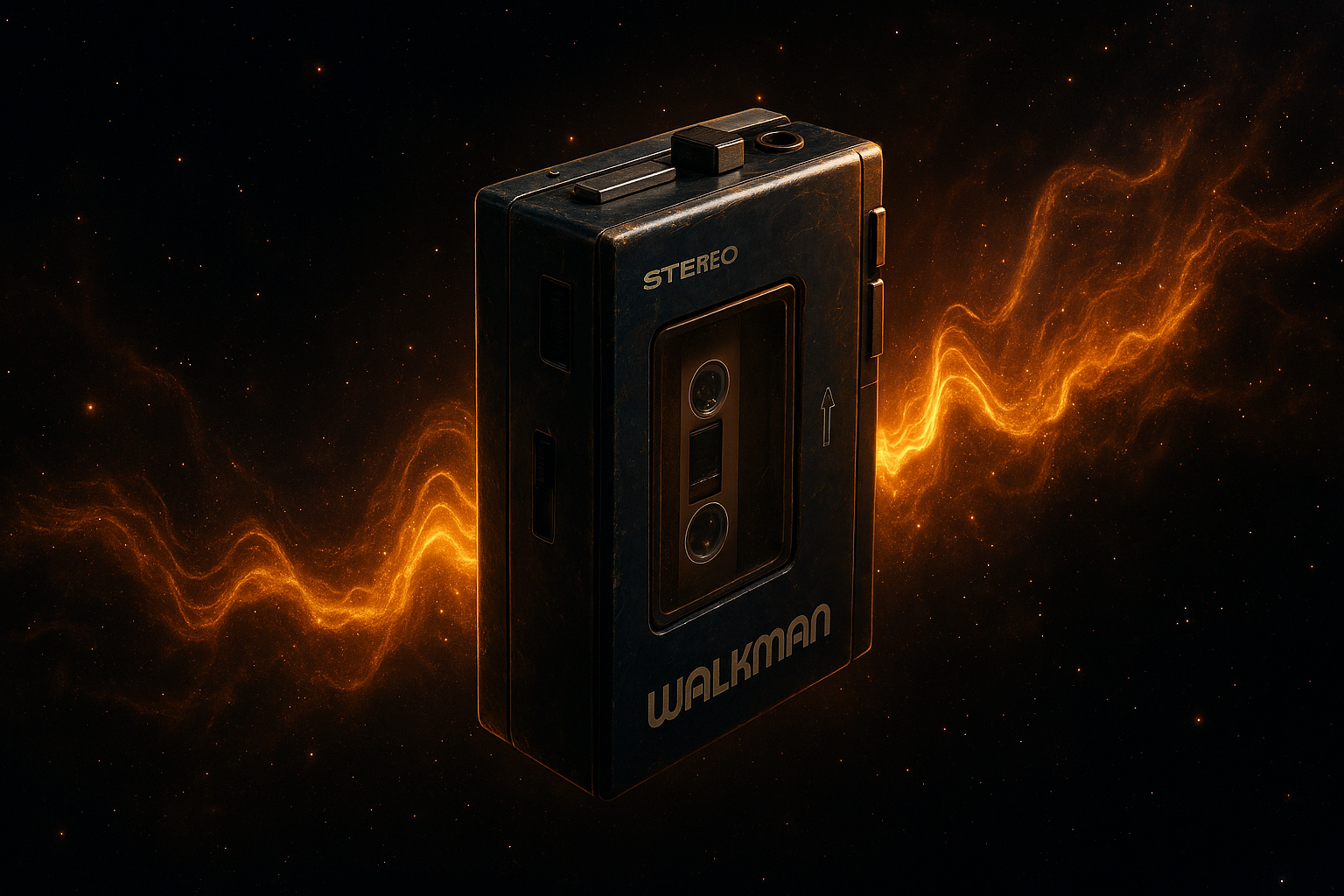
The Walkman was the first invention that freed music from fixed spaces and placed it next to the individual.
Before 1979, music was:
At home
Tied to a room
Shared with everyone
After the Walkman, music became:
In your pocket
Yours alone
Free from explanations
Walkman = the courage to say, “Only I will hear this song.”
This was not just a technological shift, but a cultural rupture.
🕰️ How Did the Walkman Come Into Existence?
🇯🇵 Sony and 1979: An Idea No One Believed In
One of Sony’s founders, Akio Morita, wanted to listen to music on long flights.
But the devices of the time were:
Large
Heavy
Speaker-based
Socially disruptive
Morita proposed something simple yet revolutionary:
“Let’s make a lightweight music player that works only with headphones.”
Internal reactions at the company:
“It can’t record—no one will buy it.”
“People won’t listen to music alone.”
But Morita saw something else:
Sometimes people don’t want to hear the world—they want to hear themselves.
And so, the Walkman was born.
👤 Who Was Akio Morita?
(The Man Who Understood People Before Technology)
Akio Morita was not just an engineer.
He was:
An observer of human behavior
A reader of culture
Someone who centered people, not technology
The success of the Walkman came from this insight:
People want to be alone, but they don’t want to feel lonely.
Music filled that gap.
🎶 Headphones: A Small Object, A Huge Psychology
Headphones don’t manage sound—
they manage boundaries.
When you put on headphones:
The world quiets down
Your inner voice gets louder
Control shifts to you
Psychological effects:
Increased focus
Reduced anxiety
Regulated mood
Headphones = an invisible “do not disturb” sign.
🚇 The Silent Revolution in Public Transportation
Before the Walkman:
Loud environments
Unwanted conversations
Noise chaos
After the Walkman:
A personal movie scene
A city flowing past the window
A soundtrack you choose
Same journey, completely different experience.
🧠 Why Do Humans Want to Silence the World?
Because modern life is:
Too fast
Too noisy
Too demanding
Headphones offer this:
“You choose what you hear.”
This is a small but extremely powerful zone of freedom.
⚙️ What Are the Walkman and Headphones Good For?
Practical benefits in daily life:
🧠 Improved focus (work, reading)
🎶 Emotional balance
🚶♂️ Motivation for walking and exercise
🚇 Making public transport bearable
Life doesn’t change—perception does.
🧪 Tips for More Conscious Headphone Use
Long periods at high volume = mental fatigue
Use noise-canceling headphones carefully outdoors
Sometimes, listen to silence too
Music shouldn’t be an escape, but a tool for balance.
🌍 What If the Walkman Never Existed?
Playlist culture wouldn’t exist
Public transport would be more chaotic
Music wouldn’t feel this personal
Maybe:
We wouldn’t be this comfortable being alone with ourselves.
🎧 The Journey from Walkman to Today
Walkman
Discman
MP3 players
iPod
Smartphones
Wireless headphones
At the core of all of them lies one idea:
“This world is too noisy.”
☕ Final Note
The Walkman and headphones:
Personalized music
Gave us control over noise
Made silence a choice
When you put on your headphones, remember:
This isn’t just music,
it’s your right to create your own space.