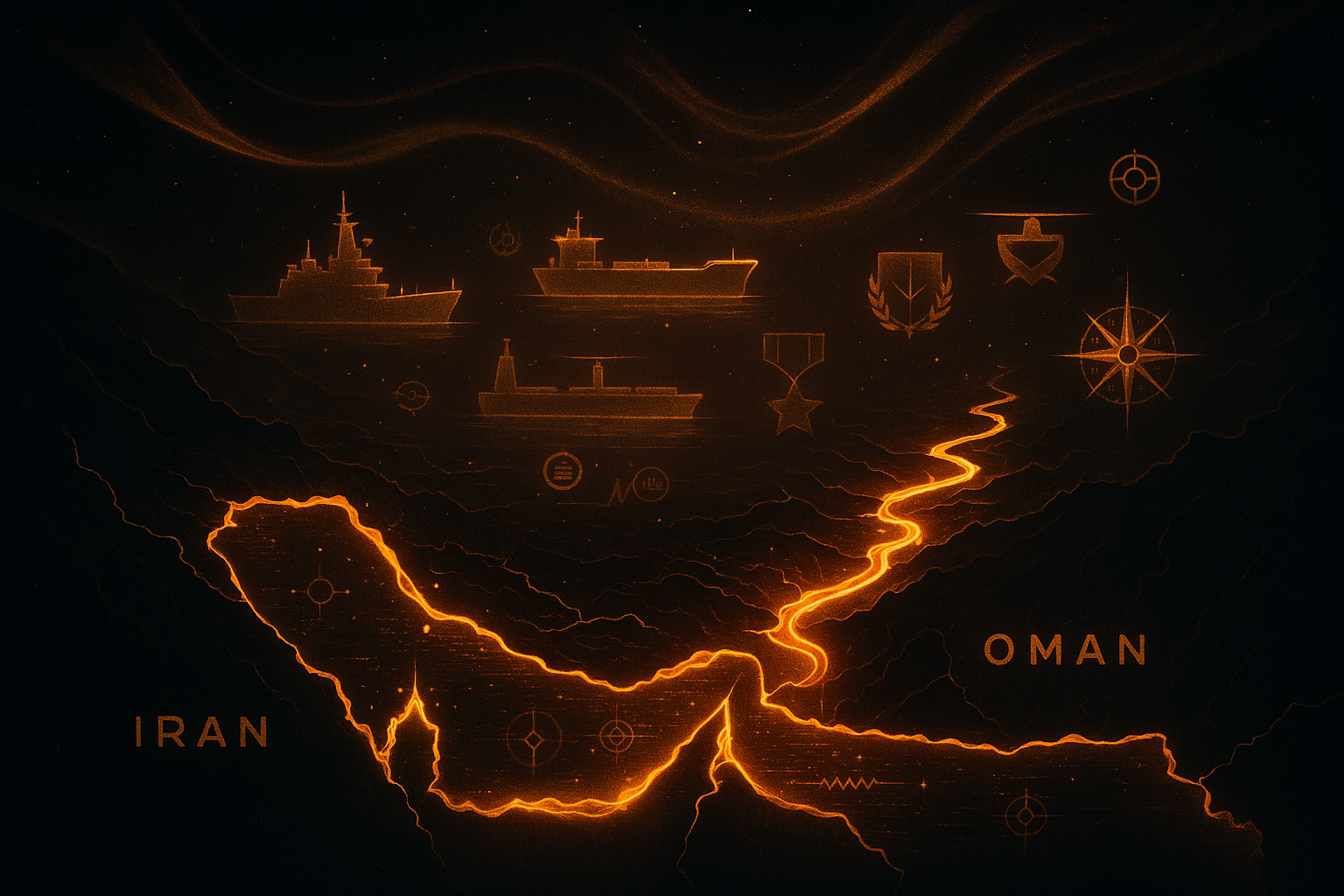
Imagine this: a narrow strait… so narrow that maritime traffic flows almost like a single-lane road. But this is the Strait of Hormuz. Small, yet hugely influential.
Length: ~50 km
Narrowest point: ~33 km
Location: Strait of Hormuz
Over 20% of the world’s oil passes through here every year. One wrong move, one miscalculation = global economic shock.
Hormuz isn’t just a geographic location; it’s an arena where history, politics, trade, and strategy all collide.
🏛️ History: The Strait, Empires, and Strategic Games
Throughout history, the Strait of Hormuz has always been a coveted prize for those wanting control:
1. The Portuguese (16th century)
Sought control over maritime trade and the spice route.
At the time, Hormuz was the gateway to the Persian Gulf.
2. Persians and Safavids
Sought to protect their territories and control port trade.
Built small forts and garrisons along the strait.
3. The British (19th century)
Strategically important for protecting routes to India.
4. Modern Era (20th–21st centuries)
The U.S. and other global powers view it as central to energy security.
Iran’s regional control and oil transit here directly affect global political balance.
💡 Fun fact: Hormuz is basically “the world’s most expensive waterway.” Whoever controls it keeps other nations on edge 😄
🌐 Geographic and Strategic Importance
What makes the Strait of Hormuz so special:
Energy Security
Oil from Saudi Arabia, UAE, Iran, and Iraq passes through here.
Trade & Shipping
The gateway from Persian Gulf ports to the open ocean.
Military Strategy
Its narrowness provides a natural choke point for tankers and warships.
💡 Tip: Closing Hormuz could disrupt global oil markets. A single tanker passes at a time; blockages = economic traffic jam.
🏗️ Physical and Geographic Features
Northern shore: Iran
Southern shore: Oman, with a small part of UAE
Depth: 60–120 meters on average
Narrowest point: ~33 km
Maritime traffic: Tankers, cargo ships, and military vessels
💡 Tip: Hormuz’s strategic value isn’t just its narrowness—it’s the only passage from the Persian Gulf to the open ocean.
🇮🇷 Iran’s Role and Benefits
For Iran, the Strait of Hormuz is:
A critical gateway for oil exports
A symbol of military and diplomatic power
A bargaining tool in regional politics
💡 Practical info:
Iran sometimes makes statements about “closing the strait,” instantly grabbing global attention. This can affect oil prices and the world economy immediately.
⚡ Trade, Oil, and Economics
Hormuz isn’t just a waterway; it’s a global energy and economic engine:
Over 20% of the world’s oil passes through it
Persian Gulf countries’ exports depend on the strait
Global oil prices, tanker transit, and strait security are closely linked
💡 Tip: A crisis in the strait affects not only the region but the entire world. The 1970s oil crises are a prime example.
⚖️ Modern Political and Military Impact
USA: Maintains military presence and diplomatic influence to secure the strait
Iran: Shows regional power, controls oil and security
Regional countries: Saudi Arabia, UAE, and Kuwait collaborate strategically to secure oil exports and energy prices
💡 Fun tip: The Strait of Hormuz is basically a “global stress barometer.” One threat, and oil prices spike while the world holds its breath 😅
🏛️ Historical Events and Crises
1980s: Iran-Iraq War
Tankers were targeted
Maritime trade faced huge risks
2000s: U.S.-Iran Tensions
Military exercises and transit threats
Sudden oil price fluctuations
Today
The strait remains a strategic control point
Energy and maritime security debates center here
🌍 Gains and Risks
✅ Gains
Ensures global energy flow
Secures Persian Gulf exports
Establishes regional strategic balance
❌ Risks
Political crises could disrupt energy supply
High risk of military conflict
Oil prices and economic stability can be affected
🎯 Conclusion: Small Strait, Big Game
The Strait of Hormuz is like a miniature stage that has shifted power balances throughout history. Small, yet everyone keeps an eye on this “king road of energy.”
Lessons to learn:
Geography shapes strategy
Energy security and global economy are interlinked
Sometimes a narrow waterway can change the fate of the world 😄
💡 Bonus tip: Whoever controls Hormuz isn’t just sending a message to their country—they’re signaling the entire global market: “I’m here.”