
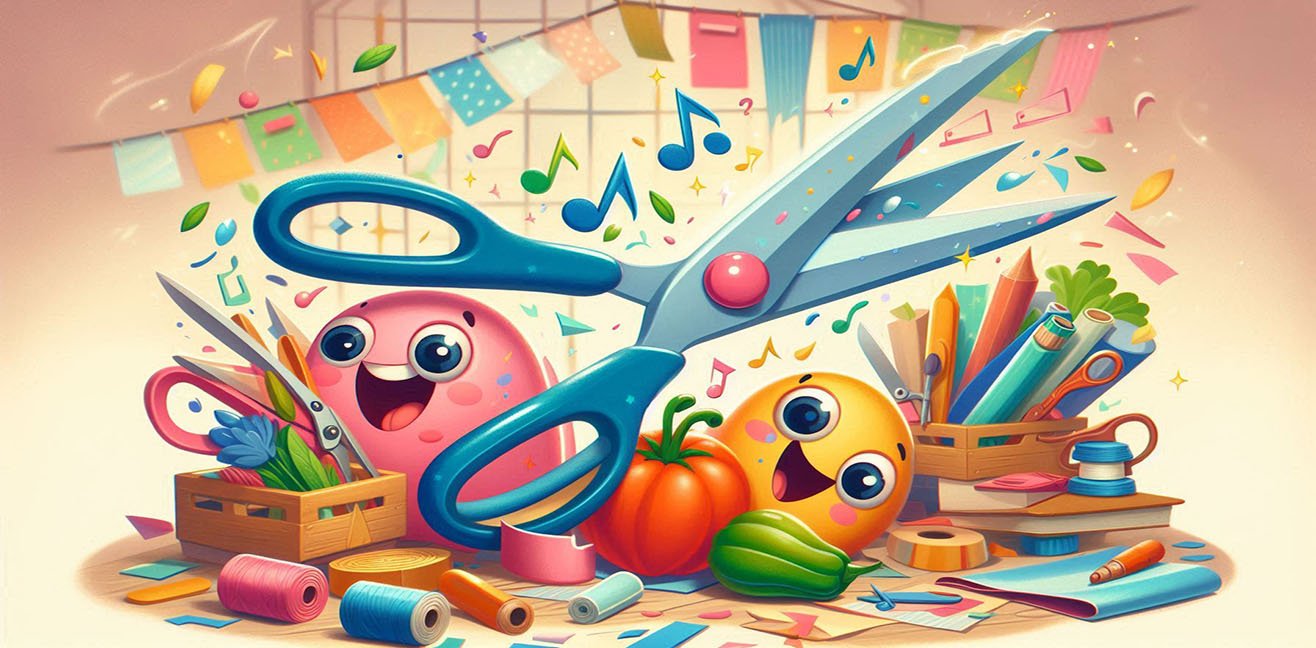
Imagine this: you’re trying to open an egg carton at breakfast, trim your nails, or cut fabric like a tailor. That’s exactly when scissors step in. Simple, yet life-changing and useful in almost every field: scissors! But don’t think of them as an ordinary tool; the story of scissors is filled with history, art, music, and technology. 😄
1. The Birth of Scissors: The Art and Evolution of Cutting 🏺✂️🎶
The history of scissors dates back thousands of years. Around 1500 BC, the first scissors were made from a single piece of bronze or copper in a spring-style design. There was no pivot to open and close them easily — they relied entirely on hand pressure and precision.
In Ancient Egypt and Rome, craftsmen used scissors to cut paper, thread, and fabric, almost like performing a small ritual or artistic act.
Some historians even suggest that artisans made light rhythmic taps and soft humming sounds while cutting. In a way, cutting blended with music! 🎶
Practical Tip:
- Using old-style scissors required patience; a single smooth cut was nearly impossible.
- If you’re into collecting antique scissors, think of it as participating in a historical art performance. 😅
2. Pivoted Scissors: A Small but Revolutionary Innovation 🛠️✨
During the Middle Ages in Europe, pivoted scissors were invented. Two blades joined by a central pivot made opening and closing much easier.
It may look like a simple mechanism, but it made cutting safer, faster, and more efficient. Craftsmen, artists, and tailors could now complete their work in minutes instead of hours.
Fun Fact:
Thanks to the pivot, scissors could create rhythm — the soft “snip” sound while cutting paper is like a tiny drumbeat. Some artists even found inspiration in that sound! 🎨🥁
Practical Tip:
- When buying modern scissors, check the pivot strength and handle ergonomics.
- Use long-bladed tailor scissors for fabric and smaller sharp scissors for paper.
3. Functions of Scissors in Daily Life and Unusual Uses ✂️💡
Scissors aren’t just for cutting paper; they’re useful almost everywhere.
- Tailoring & Fashion: Cutting fabric, shaping patterns, creating designs.
- Kitchen: Special kitchen scissors for herbs, vegetables, chicken, or fish.
- Home & Office: Opening packages, cutting cardboard or wrapping.
- Arts & Crafts: Origami, scrapbooking, sculpture, model-making.
- Music & Artistic Inspiration: Some performers even use scissors to create rhythmic sounds.
- Health & First Aid: Cutting bandages and medical supplies.
Fun Note:
Scissors are like a silent hero — often unnoticed, but hard to live without even for a day. 😄
Practical Tips:
- Slightly tilt the scissors when cutting paper for a cleaner cut.
- Cut fabric in one steady direction to extend blade life.
- When trimming nails, use gentle rounded movements to prevent cracking.
4. Art, Music, and Scissors 🎨🎵
Scissors are not just practical tools; they inspire artists too.
- In Art: The shapes and shadows of scissors appear in paintings and collages.
- In Music: The “snip” sound of cutting paper has been used as a rhythmic element in minimalist music.
- Performance Art: Some performers treat the cutting and slicing sounds of scissors as musical instruments.
Fun Thought:
Imagine a band performing a mini concert using only scissors — rhythm and sound effects combined! 😄
5. The Benefits of Scissors: Simple Yet Life-Saving 🌟✂️
- Saves Time: Cutting tasks take seconds instead of minutes.
- Provides Precision & Control: Safer and more accurate cutting.
- Boosts Creativity: Makes hobbies and crafts more enjoyable.
- Versatile Use: Home, office, kitchen, art, and healthcare.
Practical Tips:
- Keep scissors clean and dry to prevent rust.
- Choose ergonomic handles for long-term use.
- Match scissors to the material (paper, fabric, kitchen, etc.).
6. The Inventors and Evolution of Scissors 👨🔧✂️
- First Users: Ancient Egyptian and Roman craftsmen who refined cutting techniques.
- Pivoted Scissors Innovators: Medieval European artisans.
- Modern Designers: Today’s manufacturers who developed ergonomic handles, stainless steel blades, and specialized designs.
Each contributed to making scissors an indispensable part of daily life.
7. Conclusion: A Small Tool, A Big Revolution ✂️🔥
Scissors may look like a simple tool, but throughout history they have saved time, increased creativity, and even inspired art and music.
From tiny everyday tasks to major design projects, scissors remain everywhere.
Next time you pick up a pair of scissors, remember: this simple yet magical tool is one of humanity’s quiet but revolutionary heroes. 😄


