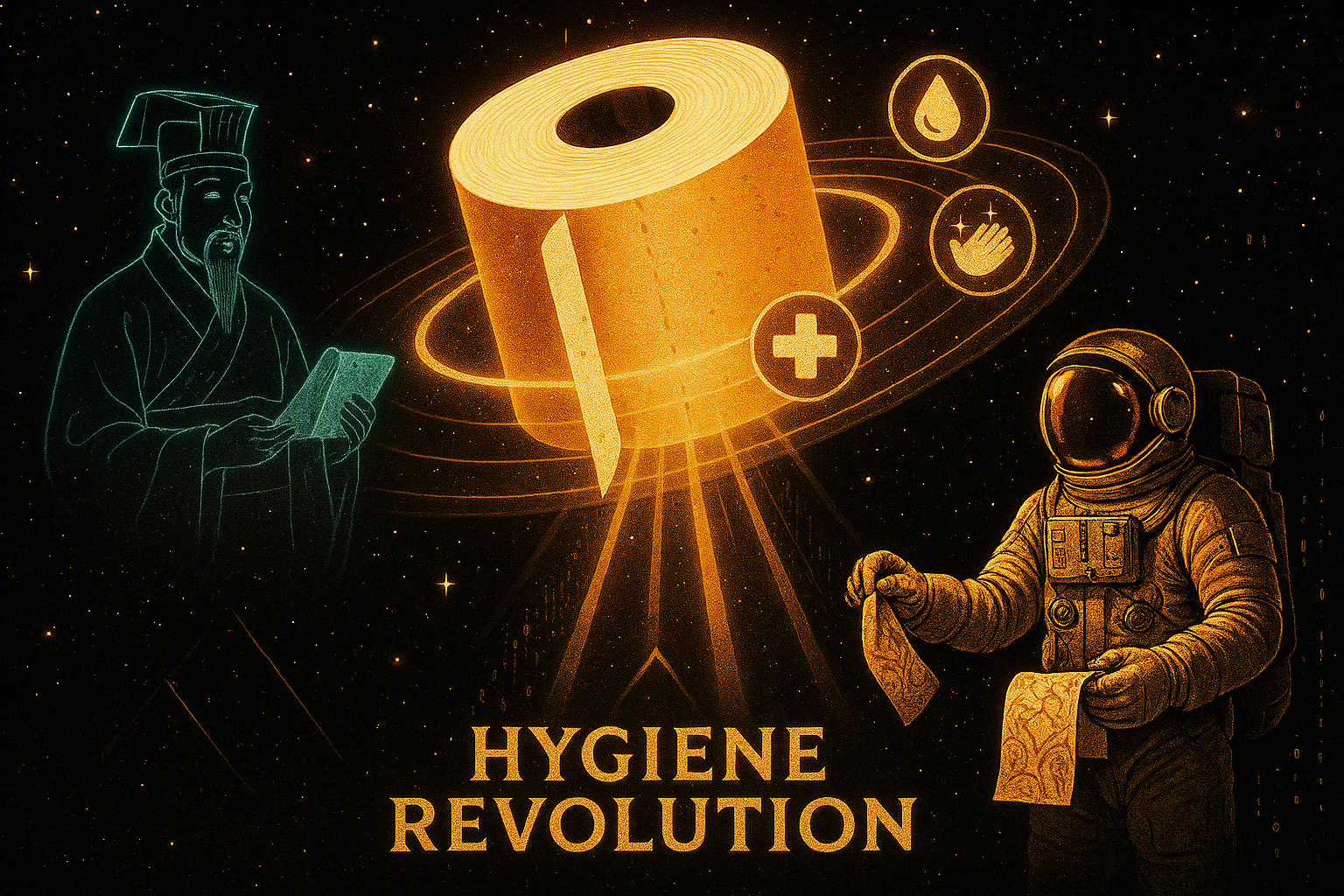
Imagine a world without toilet paper.
No soft rolls in the bathroom. No convenient packaging. No easy way to maintain personal hygiene.
Today, toilet paper is one of the most ordinary objects in our homes. We use it every day, rarely thinking about its history. Yet behind this simple paper roll is a fascinating story filled with ancient civilizations, unexpected inventions, business struggles, scientific discoveries, and a surprising transformation in human hygiene.
Toilet paper may seem like a small invention, but it changed the way billions of people live.
So, who invented toilet paper? How did humans clean themselves before it existed? And how did a simple paper product become an essential part of modern life?
Let’s discover the surprising journey of toilet paper.
🌿 Before Toilet Paper: How Did Ancient People Clean Themselves?
Long before toilet paper existed, humans had to find creative solutions for personal hygiene.
Different cultures used whatever materials were available in their environment.
Some historical examples include:
Leaves
Grass
Corn husks
Wool
Cloth pieces
Water
Sand
Stones
Wooden sticks
The methods varied greatly depending on geography, culture, and social status.
For wealthy people, hygiene materials were sometimes surprisingly luxurious.
Ancient Romans, for example, used a tool called a tersorium—a sea sponge attached to a wooden stick. It was used in public toilets and cleaned with water and vinegar.
Although this method seems unusual today, it was an advanced hygiene system for its time.
🇨🇳 Ancient China: The Birthplace of Toilet Paper
While many civilizations used different cleaning methods, the first known use of paper specifically for bathroom purposes appeared in ancient China.
China was already famous for inventing paper around the 2nd century BC.
During the following centuries, paper became cheaper and more widely available.
By the 6th century AD, Chinese people began using paper for personal hygiene.
Historical records from the Tang Dynasty mention the use of paper in bathrooms.
However, this was not ordinary paper.
The Chinese imperial family used specially produced sheets made for comfort and cleanliness.
👑 The Emperor’s Toilet Paper: A Luxury Invention
One of the most interesting stories comes from the Ming Dynasty.
During the 14th century, the Chinese imperial court produced large quantities of toilet paper for the royal family.
According to historical records, the imperial toilet paper was:
Large in size
Softened for comfort
Sometimes scented
Made especially for the emperor
This shows something important:
Toilet paper was not originally a common household product.
It began as a luxury item available mainly to the wealthy and powerful.
🏭 Who Invented Modern Toilet Paper?
Unlike inventions such as the telephone or light bulb, toilet paper does not have a single inventor.
Instead, it developed gradually over centuries.
However, one person is often credited with creating the first commercially successful toilet paper product in the modern world.
His name was Joseph Gayetty.
👨💼 Joseph Gayetty: The Man Who Turned Paper Into a Hygiene Product
In 1857, American businessman Joseph Gayetty introduced what became one of the first commercially available toilet paper products in the United States.
At that time, most Americans did not use toilet paper.
Instead, many people used newspapers, magazines, or whatever paper was available.
Gayetty believed there was a better solution.
He created a product called:
“Gayetty’s Medicated Paper for the Water-Closet”
It was sold as a medical hygiene product.
The paper contained aloe, which was believed to provide comfort and help prevent irritation.
Each sheet was individually packaged and printed with Gayetty’s name.
His product was innovative, but it was not immediately successful.
Why?
Because many people considered buying toilet paper embarrassing.
They preferred to use cheaper alternatives that were already available.
📜 The Rise of Toilet Paper Rolls
The biggest transformation came in the late 19th century.
In 1890, the Scott Paper Company introduced toilet paper sold on rolls.
This was a revolutionary change.
Instead of buying individual sheets, customers could easily purchase a continuous roll.
The roll design was:
More convenient
Easier to store
More affordable
More practical for families
This format eventually became the worldwide standard.
🧻 Why Was Toilet Paper Slow to Become Popular?
It may seem strange today, but people were uncomfortable discussing bathroom habits.
In the 1800s:
Advertising toilet paper was considered embarrassing.
Companies avoided showing the product openly.
Many stores kept it hidden behind counters.
Marketing teams had a difficult challenge:
How do you sell a product that people need but do not want to talk about?
The solution was education.
Companies began explaining the importance of hygiene and cleanliness.
Slowly, society accepted toilet paper as a normal household necessity.
🌎 How Toilet Paper Changed Human Health
Toilet paper is more than a convenience.
It played an important role in improving sanitation.
Better Personal Hygiene
Regular cleaning helps remove:
Waste particles
Bacteria
Unpleasant odors
This supports better personal cleanliness.
Improved Public Health
As cities grew during the Industrial Revolution, sanitation became increasingly important.
Clean bathrooms and proper hygiene practices helped reduce the spread of diseases.
Toilet paper became part of a larger movement toward:
Cleaner homes
Better sanitation systems
Improved public health
🚽 The Evolution of Toilet Paper Technology
Modern toilet paper is the result of many improvements.
Early versions were often rough and uncomfortable.
Today, manufacturers focus on:
Softness
Modern toilet paper uses specially processed fibers to create a smoother texture.
Strength
Wet strength technology allows paper to remain durable during use.
Sustainability
Many companies now produce toilet paper using:
Recycled paper
Bamboo fibers
Environmentally responsible materials
Comfort Design
Modern products include:
Multiple layers
Embossed patterns
Added softness
Improved absorbency
🌱 The Environmental Impact of Toilet Paper
Although toilet paper improved hygiene, it also created environmental challenges.
Millions of trees are used every year to produce paper products.
Today, many people are choosing more sustainable options:
✅ Recycled toilet paper
✅ Bamboo toilet paper
✅ Reduced packaging
✅ Responsible manufacturing
Small choices in everyday life can help reduce environmental impact.
🤯 Interesting Facts About Toilet Paper
🧻 Toilet paper was once considered a luxury product.
🏛️ Ancient Chinese royalty used specially made paper for bathroom purposes.
📜 Before toilet paper became common, newspapers were often used in many households.
🌎 Different cultures around the world still use different hygiene methods.
🚀 Astronauts use specially designed toilet paper because space environments require unique solutions.
🏠 The average household uses thousands of sheets of toilet paper every year.
💡 Practical Toilet Paper Tips
Using toilet paper correctly can improve comfort and hygiene.
Here are some useful tips:
✔ Choose a softness level that works for your skin.
✔ Avoid flushing excessive amounts at once to prevent plumbing problems.
✔ Store toilet paper in a dry place.
✔ Consider environmentally friendly options.
✔ Wash your hands thoroughly after using the bathroom.
✔ If you experience irritation, consider changing the type of toilet paper you use.
🔮 The Future of Toilet Paper
Even a simple invention like toilet paper continues to evolve.
Future developments may include:
More sustainable materials
Plastic-free packaging
Smart bathroom technology
Water-saving hygiene solutions
Biodegradable alternatives
Some experts believe the future may combine traditional toilet paper with advanced bathroom technologies.
The goal remains the same:
A cleaner, healthier, and more sustainable world.
🏁 Final Thoughts: A Small Invention With a Huge Impact
Toilet paper is one of those inventions we rarely appreciate because it has become part of everyday life.
But its history tells an incredible story.
From ancient Chinese royal courts to modern environmentally friendly products, toilet paper represents humanity’s constant search for comfort, cleanliness, and better living conditions.
It reminds us that important inventions are not always machines, computers, or giant discoveries.
Sometimes, the inventions that change the world are the simple objects we use every single day.
A small roll of paper may seem ordinary—but it represents centuries of innovation, cultural change, and progress in human hygiene.