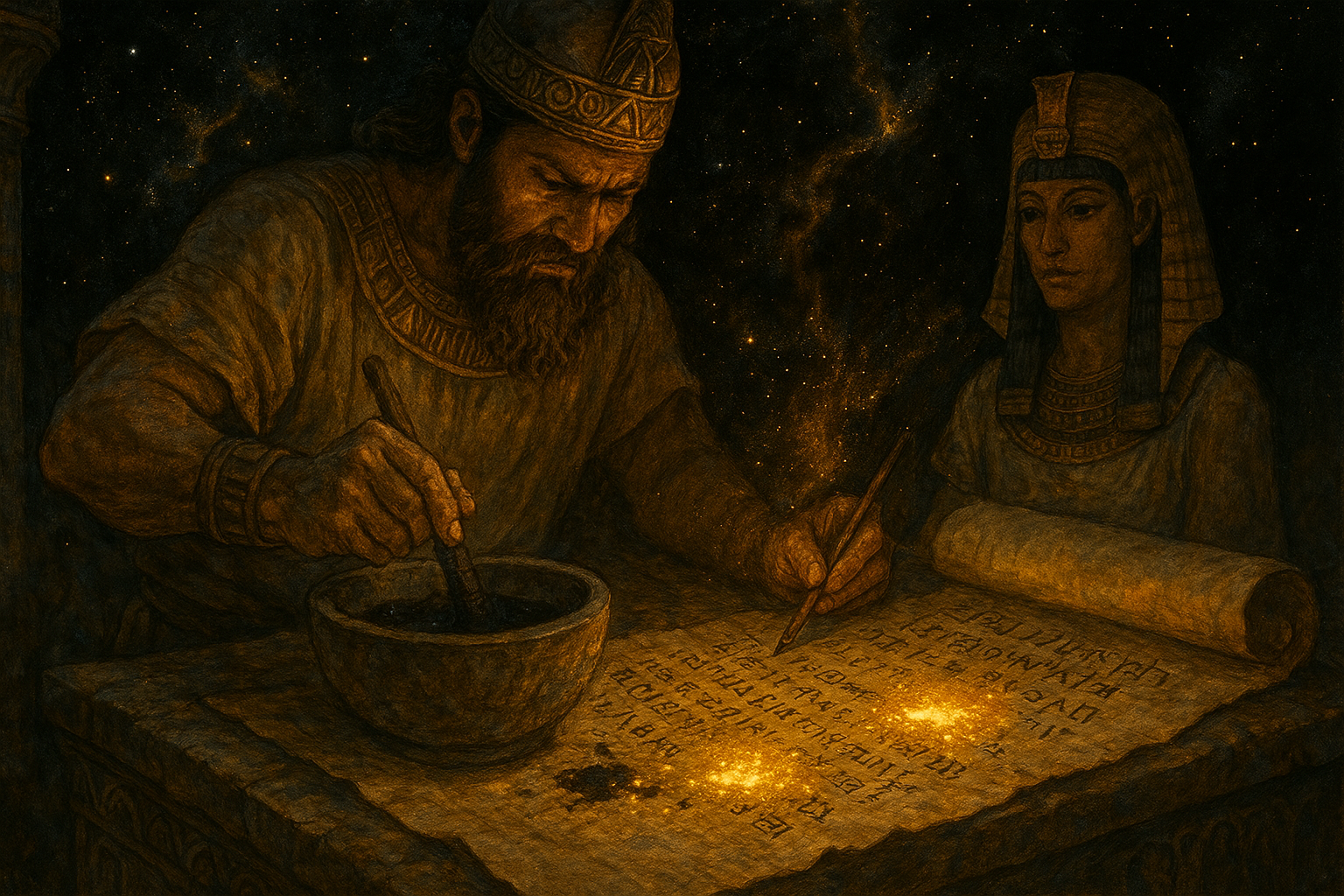
Imagine this… For thousands of years, humanity had to store its thoughts in memory alone. Memory was the only “information bank.” But then someone said: “Wait… maybe we can put our thoughts on paper.”
And just like that, pen and ink were born!
In this article, you’ll learn about the invention of the pen and ink, their history, benefits, practical tips, the lives of the people behind them, and their impact on humanity. And yes—you’ll laugh and be amazed along the way. 😄
✨ The First Ink Stains in History: How Ink Was Born
Around 2500 B.C., people in Mesopotamia were writing on clay tablets. But this was cumbersome: heavy, fragile, and difficult to carry! 😅
Then the Egyptians started writing on papyrus. But there was no ink yet. The first ink formulas were made from:
Carbon (soot)
Water
Animal glue
This mixture created the first miracle of writing. The first ink stains were probably messy and smelly… but they worked!
📌 Fun Fact:
The first ink did not forgive mistakes. A wrong word could very well erase a part of history. 😄
🖋️ The Birth and Evolution of the Pen
Ink alone wasn’t enough. People needed a tool to write with. Here are the earliest pens in history:
Reed pens (Egypt): Used to write on papyrus. Light and natural, but fragile.
Brushes (China): Ideal for paper and silk, perfect for art and writing.
Quill pens (Roman era): Bird feathers cut into points to hold ink and transfer it to paper.
Metal-nib pens (19th century): More durable, long-lasting writing.
📌 Practical Tip:
When using a quill, take just a small amount of ink. Too much ink will soak the paper and create big blotches. 😄
🧑🎨 People Who Developed the Pen
The pen and ink didn’t evolve thanks to a single inventor. Many contributed across centuries:
Ancient Egyptian scribes: Developed the first ink formulas.
Chinese inventors (c. 300 AD): Developed brushes and inkstones.
European scribes (Middle Ages): Popularized the quill pen.
Lewis Edson Waterman (19th century): Patented the fountain pen, solved ink flow problems.
Each contribution was small but revolutionary. Humanity could safely transmit its ideas thanks to them.
🔬 The Science and Practical Side of Pen and Ink
A pen may seem simple, but there’s physics and chemistry behind it:
Ink flow: Capillary action spreads the ink on the paper.
Drying time: Solvents in the ink evaporate quickly, reducing smudges.
Paper compatibility: Rough paper absorbs ink; smooth paper gives a slick writing experience.
🖊️ Tips:
Use a capped pen to preserve the ink.
Paper type changes the writing experience.
Keep fountain pens clean to improve ink flow.
Press lightly and control your speed while writing.
📜 How the Pen Contributed to Humanity
Pen and ink are not just writing tools—they are transformers:
History: Preserved documents, written heritage, and cultural records.
Education: Books, notebooks, handwriting.
Art: Drawings, poems, novels.
Politics: Declarations, letters, contracts.
Science: Notes and discoveries recorded.
🎯 Fun Fact:
Thanks to the pen, people not only wrote history… but sometimes doodled wildly on exam papers! 😄
🌍 Modern Pens: Magic Evolves
Today we have:
Fountain pens → store ink in a reservoir
Ballpoint pens → ink flows under pressure
Gel and roller pens → smooth writing experience
Digital pens → write on tablets and screens
But remember: writing on paper with a classic pen is still the most magical feeling! ✨
🧠 Philosophical Yet Real Conclusion
Pen and ink remind us:
Small tools can create big change.
Thoughts become immortal once written on paper.
Creativity is nurtured not just by thinking, but by writing.
When you hold a pen in your hand:
You’re not just writing.
You’re carrying humanity’s curiosity, imagination, and knowledge across generations.
And who knows…
One day, a sentence you write might change the world. 🖋️✨