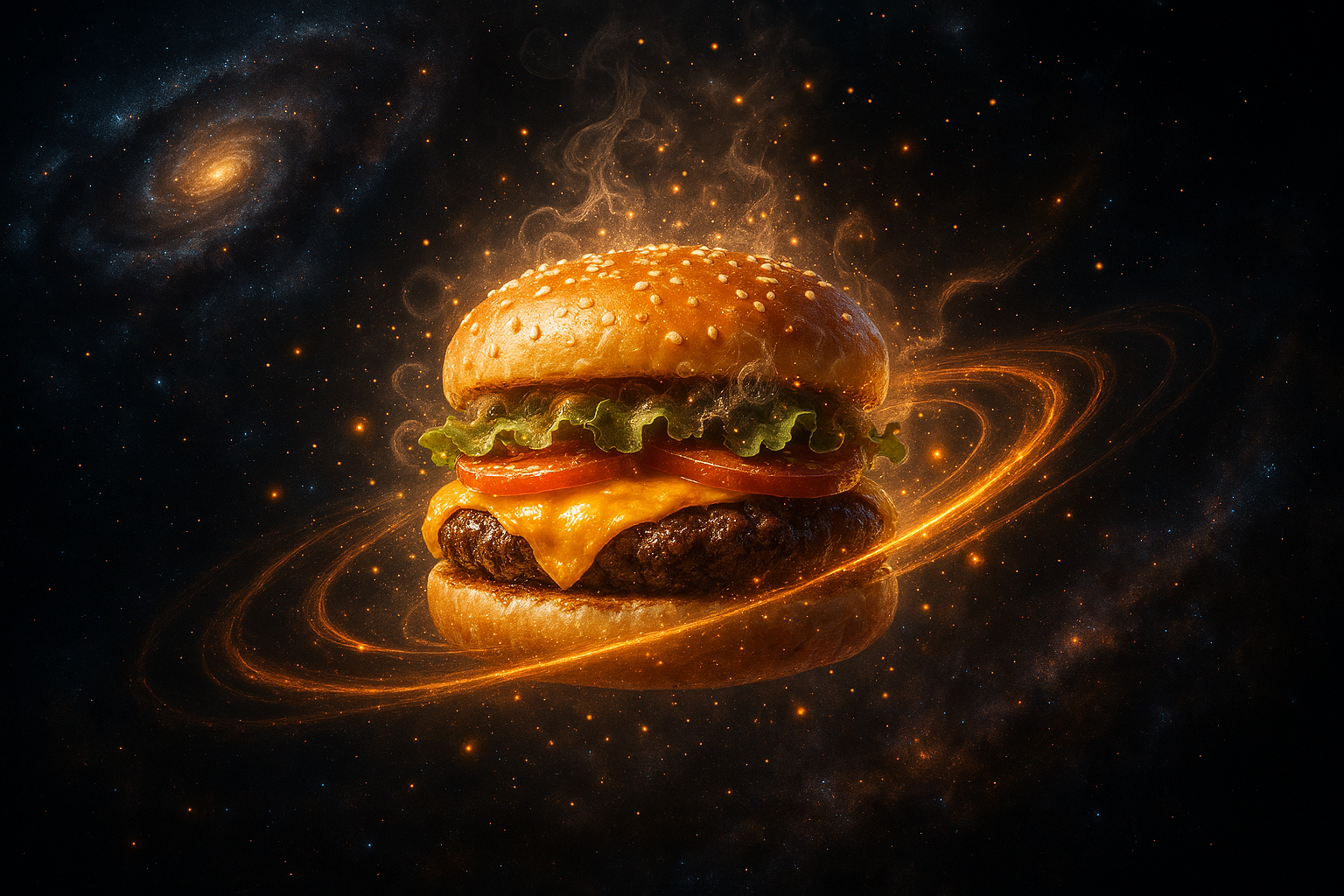
Some inventions change the world from above.
The hamburger changed it from below. From our stomachs. 😌
Simple?
Yes.
Ordinary?
Never.
Because the hamburger is the intersection of migration, the industrial revolution, mass production, marketing genius, and food science.
So before we take a bite, let’s unwrap the story.
🐄 1️⃣ From Hamburg to the World: A Flavor Carried by Migration
The story begins in the 19th century in the German port city of Hamburg.
At the time, a popular dish was:
Hamburg steak — seasoned, minced beef patty.
Why minced meat?
🥩 A way to tenderize tougher cuts
⚡ Faster cooking
🚢 Practical for long sea voyages
German immigrants carried this recipe with them to America. Along with the people arriving at Ellis Island, the flavor entered a new continent.
In other words, the hamburger is an “immigrant food.”
And America has always known how to scale immigrant foods.
🇺🇸 2️⃣ The Genius Who Dressed a Patty in Bread
Late 19th-century America…
The industrial revolution was accelerating.
Factories were full.
People needed fast meals.
A street vendor placed the patty between two pieces of bread instead of serving it on a plate.
And that was the revolution.
Why was it brilliant?
✔️ Portable
✔️ One-hand friendly
✔️ No fork or knife needed
✔️ Perfect for street culture
The hamburger is the food of urbanization.
⚙️ 3️⃣ The Mass Production Revolution: How the Hamburger Went Global
In the mid-20th century, a system took the stage:
McDonald’s
Ray Kroc’s vision:
“The same taste. The same speed. The same system. Everywhere.”
This wasn’t just a food invention.
It was an operational invention.
What does standardization mean?
📏 Exact patty weight
⏱️ Precise cooking time
🌡️ Controlled grill temperature
🧑🍳 Even employee movements planned
This was the Ford assembly line logic applied to gastronomy.
The hamburger was no longer just a product.
It was an algorithm.
🔬 4️⃣ The Scientific Anatomy of a Hamburger
Now we enter the kitchen laboratory.
🧪 What Is the Maillard Reaction?
When meat cooks between 140–165°C (285–330°F), proteins and sugars react.
The result:
✨ Brown crust
✨ Deep aroma
✨ Toasted, savory smell
Without this reaction, a burger would just taste like boiled meat.
🧈 Why Should Fat Content Be 20%?
10% fat → Dry and tough
30% fat → Excessively greasy and shrinking
20% fat → Juicy, balanced, aromatic
Fat = flavor carrier molecules.
Less fat means less flavor.
🧠 5️⃣ Why Does the Brain Say “Have One More”?
The hamburger combination:
🍞 Carbohydrates
🥩 Protein
🧀 Fat
🧂 Salt
These four elements together activate the brain’s reward center.
The sugar + fat combination is rare in nature.
The brain interprets it as an “energy treasure.”
That’s why a hamburger isn’t just food.
It’s biologically irresistible.
🏙️ 6️⃣ Urbanization and the Culture of Speed
Why did hamburgers explode in the 20th century?
Because:
People were rushing to work
Lunch breaks were shrinking
Women were entering the workforce
Home cooking time was decreasing
The hamburger became the fuel of modern life.
🌍 7️⃣ Cultural Evolution: When the Burger Travels the World
Today, the hamburger appears as:
🇯🇵 Teriyaki-style in Japan
🇮🇳 Meatless versions in India
🇩🇪 Thicker patties in Germany
🇺🇸 Triple-stacked giants in America
The invention didn’t stay fixed.
It adapted.
That’s the hallmark of great inventions: the ability to evolve.
🌱 8️⃣ Vegan Burgers, Lab-Grown Meat, and the Future
Hamburgers are no longer just beef.
Plant-based burgers have emerged.
Lab-grown meat research is advancing.
Why?
🌍 Environmental concerns
🐄 Livestock emissions
🧬 Scientific progress
In the future, the hamburger may become the showcase of protein technology.
👨🍳 9️⃣ The Master Secrets to Making a Legendary Burger at Home
Now the critical part.
🥩 Choosing the Meat
A mix of chuck and rib cuts is ideal.
Ask your butcher for a single grind.
🧂 When to Salt
Salt right before cooking.
If added too early, it tightens the protein structure.
🔥 Grill or Cast Iron?
Cast iron = Stronger Maillard reaction.
Grill = Smokier aroma.
🕳️ Make a Small Indent
Press a small dimple in the center.
Prevents puffing during cooking.
🛑 Don’t Press the Patty!
Pressing it squeezes out the juices.
🕰️ Let It Rest
Wait 2–3 minutes.
The juices redistribute inside the meat.
Professional secret:
Lightly butter and toast the inside of the bun.
Small detail = massive difference.
🎬 10️⃣ Hamburger in Pop Culture
Hamburgers appear in:
🎥 Teen movies
📺 Commercials
🎵 Song lyrics
They became a symbol of the American Dream.
A burger scene often represents freedom, youth, and the open road.
📈 11️⃣ Economic Power
The hamburger:
💰 Is the backbone of a trillion-dollar fast-food industry
📦 Drives global supply chains
🚜 Influences agriculture, logistics, and packaging industries
One patty can mean global economics.
🎓 12️⃣ What Does the Hamburger Teach Us?
Invention isn’t always about creating from scratch.
Sometimes:
Combining what already exists
Recognizing the needs of the time
Offering a practical solution is more powerful.
Hamburger =
Simple idea + right timing + right system = global success.
🍔 Final Bite: Civilization Sometimes Fits Between Two Buns
The hamburger didn’t split the atom.
But it shaped the rhythm of modern life.
A story of migration.
A product of industrialization.
A triumph of marketing.
A meeting point of science and flavor.
The next time you take a bite, remember:
You’re not just eating.
You’re continuing the final link in a cultural chain.
And yes…
Sometimes the world really does fit between two buns. 😌🍔