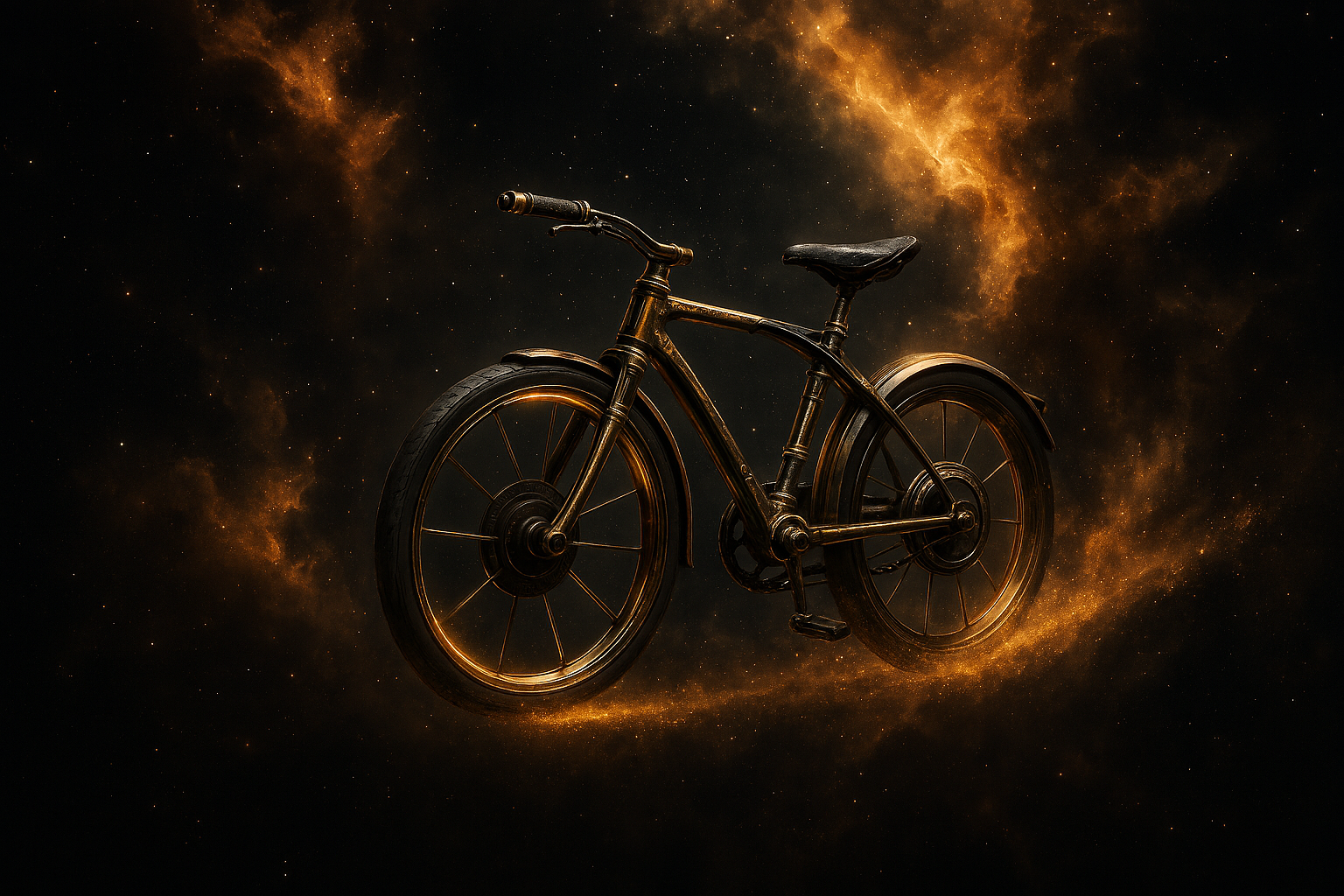
(An invention that changes the world, cities, and our minds—one pedal at a time)
Pause for a moment and think:
No fuel required,
No charging cable,
No app updates,
No stress about “Will I find parking?”
Just two wheels,
A chain,
A saddle,
And you.
The bicycle is humanity’s most polite yet most determined response to the noise of motorized vehicles.
🚲 What Is a Bicycle? (But What Is It Really?)
Anyone can give the technical definition:
Two wheels
A frame
Pedals
A chain
Handlebars
But the philosophical definition is far more beautiful:
👉 “The courage to gain distance using your own power.”
A bicycle:
Doesn’t rush
Doesn’t force
But always moves you forward
That’s why when you ride a bike, you don’t just travel through space—you spend time with yourself.
🕰️ The Birth of the Bicycle: A Revolution That Started Without Pedals
The bicycle’s story didn’t begin perfectly.
On the contrary—it was a bit clumsy and very experimental 😄
🪵 Karl von Drais (1817)
The first invention: The Draisienne
No pedals
No chain
Feet on the ground
It basically looked like this:
“Let me sit down while I’m running.”
But Drais’s real revolution was this:
👉 The idea of individual transportation
A serious challenge to horse carriages and walking culture.
👤 Who Invented the Bicycle? (Not One Person, but an Era)
The bicycle doesn’t have a single inventor.
It is the product of collective human intelligence.
🔩 Key Development Stages:
1860s → Pedals are added
1885 → Chain-driven rear wheel
1888 → Pneumatic tires (the comfort explosion)
Each improvement whispered the same idea:
“Let humans get less tired and go farther.”
And yes…
The greatest revolution in bicycle history was:
👉 Comfort + Speed + Balance
⚙️ How Does a Bicycle Work? (Scientifically Brilliant)
A bicycle is the human body transformed into its most efficient machine.
Pedals → muscle power
Chain → energy transfer
Wheels → speed
Balance → physics + reflexes
Scientific fact:
A human can travel faster while using less energy on a bicycle than by walking.
So the bicycle is:
👉 Nature’s life hack for humans.
🌍 What Is a Bicycle For? (Not Just Getting from A to B)
Calling it “just transportation” is a huge understatement.
A bicycle is:
🚲 An escape plan from traffic
🚲 A way to connect with the city
🚲 A stress-release tool
🚲 A method for slowing down your thoughts
When you ride a bike:
The mind goes quiet,
The body starts speaking.
🌱 The Benefits of the Bicycle (The Planet Says Thank You)
💚 Environment
Zero carbon
Zero noise
Zero emissions
❤️ Health
Strengthens the cardiovascular system
Improves muscle–joint balance
Reduces the risk of depression
💸 Economy
No fuel
No taxes
No parking fees
In short:
Bicycle = healthy people + livable cities
🧠 The Bicycle and Freedom (A Social Revolution)
The bicycle played a revolutionary role especially in:
Women’s freedom
Working-class mobility
Student life
🚺 Women and the Bicycle
In the early 1900s, the bicycle meant:
“Women can go out alone.”
That’s why the bicycle is:
👉 Not just a vehicle, but a social manifesto.
🎨 Bicycle, Art, and Culture
🎬 Cinema
The bicycle = the freedom scene
A symbol of childhood, escape, and innocence
🎨 Painting
Modern art → motion and balance
Street scenes → urban aesthetics
🎵 Music
The bicycle as a road metaphor
Freedom, escape, rhythm
The rhythm of pedaling is surprisingly in sync with music 🎶
🛠️ Practical Bicycle Tips (Pure Gold)
✔️ Saddle height should align with your hip bone
✔️ Knees should never fully lock
✔️ A helmet is non-negotiable
✔️ Clean the chain once a month
✔️ Lights and reflectors are essential in the city
For beginners:
Week one: “I’m never riding again.”
Week two: “I can’t live without it.” 😄
🚴♂️ Conclusion: Small Pedals, Big Revolution
The bicycle:
Doesn’t make noise
Doesn’t pollute nature
Doesn’t rush you—it frees you
And maybe that’s why, if the world is going to change:
It will happen
One pedal stroke at a time 🚲🌍