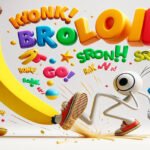
The Man Who Wrote the Philosophy of Sniffles 🤧 and the Mathematics of “BONK!” 🧠
CHAPTER 1: Portrait of the Artist – The Extraordinary Life of a “Normal” Genius 🎨
- Date & Place of Birth: May 6, 1931, New York City 🗽. A child born in the midst of the Great Depression perhaps saw the world through humor as a defense mechanism 😅.
- Education: Attended the High School of Art and Design in New York 🏫. This place was like a bakery for artistically talented young people 🍞. Later, he graduated from the prestigious Cooper Union art school 🎓. This academic background shows how his “crude” lines were actually built upon a solid foundation of anatomy and perspective knowledge 🤓. He knew the rules so well that he could break them in a comedic way 💥.
- Breakthrough Point: He began selling his first drawings in the early 1950s ✏️. His real turning point came when he stepped into MAD magazine in 1956 📰. MAD was, at that time, a haven for “rule-breakers,” sharply satirizing American culture, politics, and consumer habits 🤘. Martin brought a perfect visual language to this rebellious spirit 🎭.
- Personal Traits: He was described in interviews as shy 😳, modest, and someone not quite aware of his own genius. A calm man on the outside, but a hurricane on paper 🌪️. He left us in 2000, but the sounds he left behind still echo 🔈.
CHAPTER 2: Deconstruction of His Cartoons and Humor – A “How-To” Guide 🛠️
Let’s take apart and examine Don Martin’s art, just like his characters 🔍:
1. Reinvention of the Human Form:
- Feet: “Tripod Feet” or “Container Feet” 👣. Nearly every character’s foot was about one-third the size of their body. Angular, enormous, and designed not for balance but for comical stances and spectacular falls 🤸.
- Noses: Usually large, hooked, and an element that completed the expression 👃.
- Hair: Depicted with just a few lines. Sometimes they would move in the wind with a “FWIP!” 💨.
- Facial Expressions: A masterpiece of minimalism 🎭. With a small change in the eyebrows and mouth, he could create a deep expression of astonishment, foolishness, or dull acceptance 😐.
2. The Science of Sound Effects – The Nuances of Creating a “SCRONCH”:
Martin’s sounds were not random. They were a form of visual onomatopoeia art 🔊. Here are a few categories:
- Hard, Short & Sharp: BONK! 👊 (light head hit), KLONK! 🔨 (harder head hit), POW! 💥 (punch), CRACK! 🦴 (break).
- Elongated & Swooshing: SKROOOOOİNNNK! 🎈 (something stretching), FWOOOOOOSH! 🚀 (speeding by), RİİİİİİP! 👖 (tearing).
- Wet & Sticky: GLORP! 🍦 (mud sound), SPLAT! 🥞 (something sticking to the ground), BLORT! 🧃 (a strange liquid sound).
- Mechanical & Absurd: SPRONGGG! 🦘 (springing), KER-THUNK! ⚙️ (machine malfunction), BOİİİİNG! 🤸 (bouncing).
- Practical Tip: Want to create your own sound effects? When transcribing a sound into letters, think not only about what you hear, but also what you feel 🤔. Is it “BAM” or “BADABOOM”? The second one feels more violent and dramatic, doesn’t it? 😏
3. The Suspension of Physics:
In Martin’s world, the laws of physics were servants to comedy 🤹.
- Elasticity: Bones were made of rubber, skulls like ping-pong balls 🏓. A character could bend, be compressed, and spring back to their original shape with a “SPROİNG!” 🤸.
- Gravity: Falls were never simple. A character would tumble down a hill “TUM-TUM-TUM-TUM,” then float through the air with an “AAAAAAA…” written above them before crashing to the ground with a “SCRUNCH!” 🏔️. The humor was not in the fall itself, but in its rhythmic and exaggerated presentation 🎬.
- Logic: An idea could be represented by a literal lightbulb above the head 💡. This bulb would light up with a “PING!” and then fade out with a “TİNGGG…” Abstract concepts turned into concrete and comical objects 🧠.
CHAPTER 3: Historical Context and Impact – Why Was He So Important? 📜
- The Golden Age of MAD Magazine: In the 1950s and 60s, MAD was a phenomenon that criticized the rise of television and consumer culture, holding nothing sacred 📺. Martin was the visual partner to this written word 👯. He worked with legendary editors like Harvey Kurtzman and later Al Feldstein ✍️.
- A Revolution in Comics: At that time, comics were filled either with superhero action or Disney-style family humor 🦸. Martin offered an alternative aimed at adults: clever, visually-focused, elevating slapstick to absurdism 🤪. His work may not have been seen as “high art,” but it was certainly an example of “high craft” 🏆.
- Cultural Legacy:
- Animation: His work is the direct inspiration for shows like Ren & Stimpy 🐶, Rocko’s Modern Life 🦘, SpongeBob SquarePants 🧽 (especially Squidward’s flexible nose and leg scenes), and Dexter’s Laboratory 🧪.
- Video Games: His influence can be seen in the elasticity and sound effects of the “Mario” series, especially in the craziness of older “Wario Ware” games 🎮.
- Internet Culture: His spirit lives on in today’s memes, especially in animations and drawings where physics are distorted and reactions are exaggerated 🌐.
CHAPTER 4: Practical Workshop: How to Draw a “Don Martin Cartoon” (Step by Step) ✏️
- Character Design: Draw a matchstick 🚶. Add two large, nearly rectangular shoes underneath 👞. That’s the basic body! Make the head a small oval. Put two dots inside (eyes 👀) and either a line (mouth) or a small “o” (surprise 😮).
- Set the Scene: Put your character in an ordinary situation: reading a newspaper 📰, walking 🚶, opening a door 🚪.
- Break the Physics: Now add the magic ✨. Could the newspaper slam into their face with a “FWOOP!”? Could their foot catch on something with a “KLONK!” and propel their body forward with a “SPROİİNG!”? Could the doorknob come off in their hand with a “KRİK!”?
- Integrate the Sound Effect: What would the SOUND of this action be? Choose the letters 🔤. Write them in big, bold, dynamic letters. The effect should be part of the drawing, seeming to leap off the page 💥.
- Maintain the Expression: Your character’s facial expression should be dull 😐, astonished 😳, or mildly annoyed 😒 in response to what’s happening. They never overreact. The reaction is yours, the reader’s 😂.
CHAPTER 5: The Hidden Philosophy: What Does Don Martin Teach Us? 🧠
Don Martin’s work is not only funny but also deeply humane ❤️. It reminds us that:
- Life is a series of comical mishaps 😅. Nothing goes as planned, our bodies sometimes betray us, technology lets us down halfway 🤖. Martin transformed these little tragedies into a universal, comical language we can all understand 🌍.
- Freedom is knowing the rules and breaking them in a funny way 🎭. He knew perspective and anatomy perfectly. That’s why he could distort them so beautifully 💪.
- There is no silence, only undiscovered sound effects 🔇➡️🔊. Look around you. The sound of your keyboard keys clicking (“CLACK CLACK” ⌨️), water boiling (“BLUB BLUB” 🫖), your stomach rumbling (“GRRRROWL” 🤤)… The world is full of sounds, just like a Don Martin cartoon 🌎.
Final Word and Salutations with a “BOİİİİNG!”: 🎉
Don Martin was the “fifth element” of comics. Earth, air, fire, water, and… “SCRONCH!” 🌍🔥💧💨💥 He proved that humor could be achieved not only with words or situations, but with the physical comedy of line and letter 🎨. Reading his cartoons is like watching a silent film; but you see all the sounds of that film in their most perfect form 🎬🔊.
The next time you trip, don’t just say “oof” 😖. Pause for a moment and think: Was that a “FLUMP!” or more of a “SPLAT!”? In that moment, Don Martin is winking at you 😉.
Rest in light, great master ✨. Thanks to you, the world is a little more “BONK!” 👊, a little more “BOİİİİNG!” 🤸, and a much funnier place 😄.