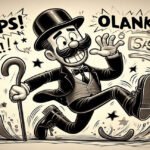
The master of telling without speaking, making people laugh with lines, and making them think through sorrow.
Imagine this:
There is a man… He doesn’t speak.
Yet millions understand him.
He falls, but he gets back up.
He smiles, but his heart aches.
Now imagine this man drawn by cartoonists.
That’s when the line itself begins to speak.
🎩 Who Is Charlie Chaplin? The “Perfect Flaw” Cartoons Are Looking For
Charlie Chaplin is not just an actor in film history;
he is a language of storytelling.
Why is he such a perfect subject for caricature?
Because Chaplin is:
- Physically open to exaggeration
- Emotionally multi-layered
- Socially universal
- Politically readable
🎯 Cartoonist’s Note:
Cartoon art does not love flawless heroes.
Chaplin’s strength lies precisely in his flaws:
clumsiness, poverty, loneliness, helplessness…
And all of these can be told with a single line.
🧠 Chaplin’s “Little Tramp”: A Caricature Archetype
Chaplin’s iconic character, The Tramp,
is a true archetype in the world of caricature.
What Does This Archetype Represent?
- The little man
- The big system
- A person who is oppressed but never gives up
📌 Practical Reading Tip:
When you see Chaplin in a cartoon, ask yourself:
“Which system is this drawing standing against?”
The answer is usually the same:
injustice.
✍️ The Hidden Kinship Between Silent Cinema and Caricature
Silent cinema and caricature come from the same family:
| Silent Cinema | Caricature |
|---|---|
| Mime | Exaggeration |
| Gesture | Body language |
| Timing | Single frame |
| Silence | Wordless message |
Chaplin’s films are essentially moving cartoons.
🎓 Educational Tip:
Pause a Chaplin scene.
Look at a single frame.
That frame alone is already a caricature.
🖌️ How to Draw Chaplin? (A Master’s Guide)
Drawing Chaplin is not about drawing more;
it’s about drawing the right things.
7 Essential Golden Details:
- Bowler hat (symbol of balance)
- Small mustache (identity signature)
- Oversized shoes (a body that doesn’t fit the world)
- Thin cane (elegance + self-defense)
- Slightly forward-leaning posture
- Sideways glance
- The constant feeling that he’s about to fall
🎯 Artist’s Tip:
Don’t over-detail the face.
The body already tells the story.
😂 Where Does the Laughter Come From? The Mathematics of Humor
Why do Chaplin cartoons make us laugh?
Because:
- There is a gap between expectation and reality
- The weak, not the strong, wins
- Tragedy turns into comedy
📚 Humor Technique:
This is called empathetic reversal.
The reader puts themselves in Chaplin’s place
and accepts pain through laughter.
😢 Making You Laugh with Sadness: A Contradiction Cartoons Love
Chaplin cartoons carry two emotions at once:
- A smile
- A lump in the throat
🎭 Subtext Analysis:
Many cartoonists use Chaplin as a symbol for:
- The working class
- Immigrants
- The poor
- The excluded
Chaplin = Human dignity.
🏭 Modern Times and System Criticism in Caricature
Modern Times is a goldmine for cartoonists.
- Gears
- Assembly lines
- Humans turned into machines
📰 Historical Context:
After the Industrial Revolution, the transformation of humans into machines
is told in cartoons through the Chaplin figure.
🎯 Practical Cartoon Tip:
If you want to criticize a system:
Draw a machine.
Put Chaplin inside it.
Message delivered.
🗣️ The Great Dictator: When the Silent Man Speaks
One of the rare films where Chaplin speaks—
and the most political one.
In cartoons, this appears as:
- Hitler-like figures
- Metaphors of global power
- A small man with a big voice
🎓 Educational Note:
Caricature diminishes power.
Chaplin did it in cinema;
cartoonists continued it on paper.
🖍️ What Do Cartoonists Learn from Chaplin? (Workshop Style)
✔️ Silence is a storytelling tool
✔️ Exaggeration does not hide truth; it reveals it
✔️ Universality is independent of language
✔️ Humor becomes timeless when paired with conscience
✔️ One character can represent an entire era
🌍 Why Is Chaplin Still Being Drawn Today?
Because Chaplin is:
- The poor of every age
- The dissenter of every era
- The inner voice of every human
If we still see Chaplin in cartoons today,
it means there is still an unresolved issue.
🏁 Final Words: A Conscience Walking on a Line
In cartoons, Charlie Chaplin is:
- Not a face
- Not a body
- Not just a figure
but a stance.
He doesn’t speak, yet he tells everything.
He falls, yet he resists.
He is drawn, but never erased.
And even when the lines fall silent,
Chaplin keeps walking… 🎩✨