AD 79… Pompeii was brimming with art, commerce, and life. The city was a full Roman spectacle: people shopping in the forum, children running through the streets, citizens joking in cafés… But on the morning of August 24, Mount Vesuvius broke its silence. Unfortunately, the city’s residents didn’t realize that this silence was a “whisper of death.”
As hours passed, the sky turned a strange gray-black, birds fell silent, and the air grew warmer. Now, let’s explore this disaster step by step, in detail.
🏛️ The Eruption: The Moment the City Froze
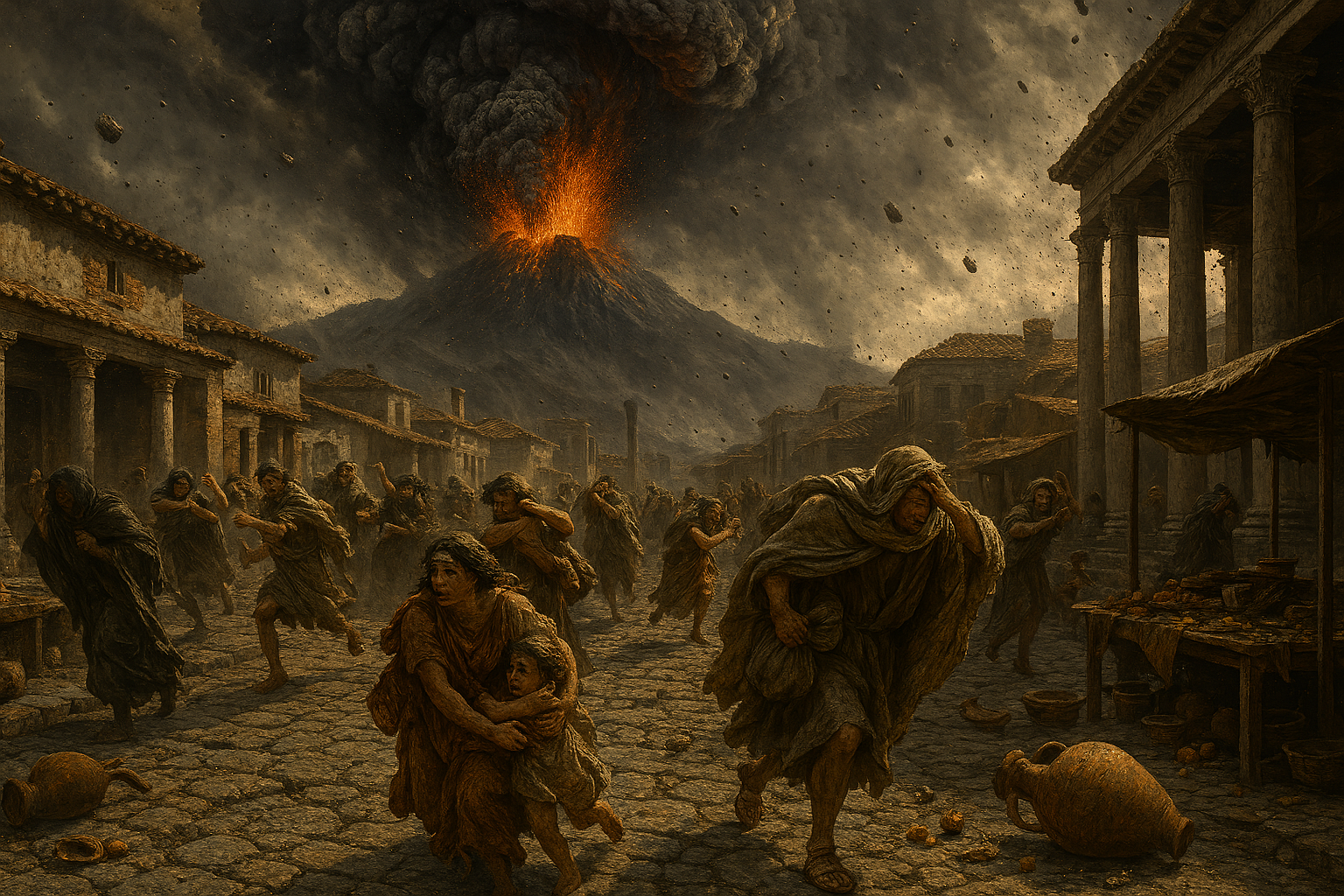
That morning, Vesuvius seemed to say, “I am here!” The eruption began with clouds of lava, rocks, and scorching ash. The people of Pompeii panicked and tried to escape, but the narrow streets and sudden explosions trapped them.
- Rain of ash and rocks: Stones and lava fell from the sky, sometimes small, sometimes larger than a person. People used their hands to protect their heads and faces while fleeing.
- Poisonous gases and smoke: Hot clouds made it almost impossible to breathe. Many collapsed within a few meters of movement.
- Time stood still: In the disaster, the people of Pompeii were almost frozen like statues. Homes, animals, and humans became a momentary tableau.
💡 Tip: Archaeologists learned incredible details about daily Roman life from this disaster. Tables, stoves, even everyday objects were found exactly where they had been left at the moment of the eruption.
📚 Daily Life in Pompeii: The World Before the Catastrophe
Pompeii was not just a city; it was a miniature example of Roman life.
- Houses and mosaics: Wealthy homes were decorated with colorful mosaics. Even food being prepared in kitchens has survived to this day.
- Markets and commerce: The forum was the heart of the city’s economy; people visited every morning to buy fresh goods, trade, and gossip.
- Theaters and entertainment: Art and leisure were central to life; when the disaster struck, some people were caught mid-performance.
💡 Practical tip: Pompeii’s preserved daily life provides historians with invaluable insights into city planning and social structure. Modern cities can learn lessons from narrow streets, escape routes, and densely populated areas.
⚠️ Scale of the Disaster: Damage and Death
- Loss of life: Thousands of people died; the exact number is unknown.
- City destroyed: Homes, streets, and temples were buried under lava and ash.
- Cultural loss and gain: Most written records were lost, but mosaics and wall paintings survived, turning Pompeii into a living history museum.
💡 Tip: Every disaster is like a lesson book. Pompeii shows how cities are vulnerable to natural hazards and how precious historical heritage is.
🔍 Interesting Details and Humorous Notes
- Some people tried to save their animals while fleeing, often putting themselves in danger. 🐕
- Archaeologists note that seeing frozen figures at dining tables is almost like everyone took a “selfie” at the moment of disaster. 😅
- The city buried under lava and ash reveals ancient Roman life even thousands of years later. Plates, chairs, and door handles—all serve as a kind of time capsule.
💡 Fun fact: If you had to rebuild Pompeii, it would be like a mega city simulation game. Streets, homes, temples, and markets would all be arranged like game tiles.
🌟 Lessons and Benefits
Pompeii didn’t just leave us with tragedy—it left knowledge and lessons:
- Living in harmony with nature: Understanding volcanic risks and planning accordingly is crucial.
- History and archaeology: Pompeii serves as a time machine transporting us directly into ancient Rome.
- Art and culture: Wall paintings and mosaics show the richness of human life throughout history.
✅ Conclusion
The destruction of Pompeii highlights both the tragic and instructive aspects of disaster. No matter how cruel nature may be, history reminds us that humans can learn, rebuild, and pass on cultural heritage to future generations.
The fury of Vesuvius shows us both the terror and the value of history, revealing the details of life even thousands of years later. Disasters shape the past, present, and future—and Pompeii remains one of the most striking examples.