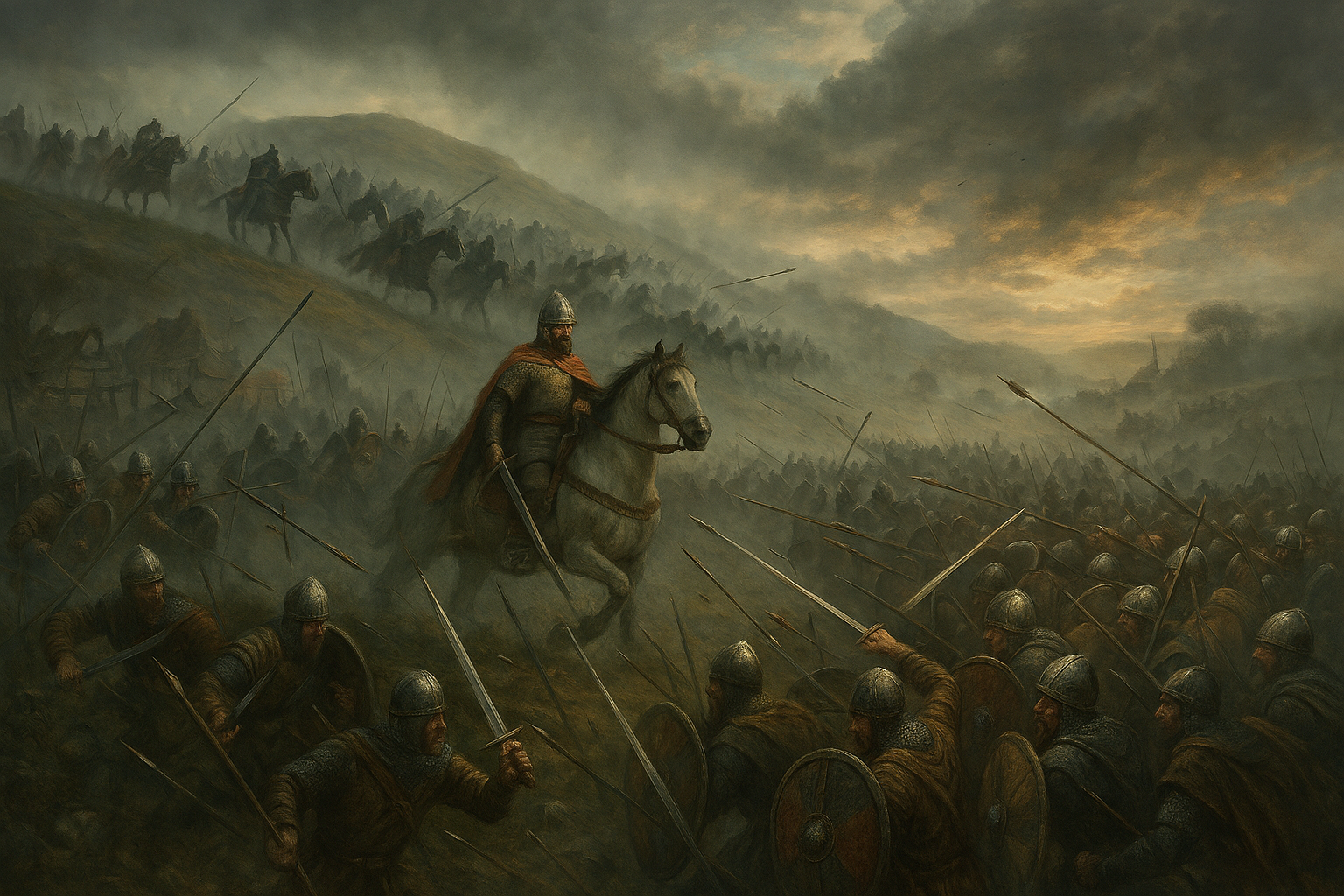
Let’s take a journey through time! ⏳ We don’t have a time machine, but we’ll step by step travel to 11th-century southern England. The small villages of London, the barren hills of Hastings, the clash of swords, and the pounding of horse hooves… all of it will show us the atmosphere of the year that changed England’s destiny.
The year is 1066… England is shaken by a succession crisis and the clash of three claimants. And there’s a war that will not only decide who wins and loses but will also completely reshape English culture, language, and society.
Throne Vacancy and the Great Rivalry 👑
When King Edward the Confessor died in January 1066, it hit England like a bomb 💥. The throne was empty, and chaos spread across the country… Three brave (and slightly ambitious) claimants stepped onto the stage:
- Harold Godwinson – English-born, strong, and beloved by the people. He wanted the throne immediately. 🏹
- William, Duke of Normandy – French noble, bold and ambitious; saying “The throne is mine!” and ready to cross the seas on horseback. 🌊🐴
- Harald Hardrada – King of Norway, with Viking blood and a passion for war, shouting “The throne belongs to me!” 🛡️
Tip: At that time, becoming king wasn’t just about wearing a crown; you needed a strong army, strategy, courage, and sometimes a bit of luck. Harold’s army, recently returned to England, was already exhausted from repelling the Viking attack. ⚔️
Pre-Battle Strategy and Preparations 🗺️🛡️
The road to Hastings was not just geographical but also psychological:
- Normans: Archers, heavy cavalry, and tactical geniuses. William planned to start the attack with long-range archers. 🎯
- English: Standing firm, locked together with shields. Their battle line was known as the “shield wall.” 🛡️
- Intelligence: Both sides observed enemy movements. Spies and local informants played a critical role. 🕵️♂️
Practical tip: Medieval battles were won not only with strength but also with psychology and tactics. A line of archers, a cavalry charge, or a sudden collapse of morale could decide the fate of a war.
Battle of Hastings Day: Arrows, Swords, and Tactical Brilliance 🏹⚔️
Morning of October 14, 1066… A foggy English morning, history unfolds on the hills of Hastings.
- Normans: From the start, they opened fire with archers. Then cavalry and heavily armored troops gradually encircled the enemy. 🐴
- English: Harold led the shield wall, repelling cavalry attacks. Their resistance was remarkable. 🛡️
And then the famous moment: Harold is struck by arrows and falls to the ground 🏹. According to legend, this broke the English resistance. William wins, and England’s fate is now in the hands of the Normans.
Tip: A small detail can change all of history. One arrow, one man, one moment… and the whole country shifts. 🌍
Social and Cultural Impacts of the Battle 📜🎨
The Battle of Hastings was not just a victory; it fundamentally changed England’s social structure:
- Feudal system: William distributed land to his loyal nobles. The English were no longer ruled by their own leaders. 🏰
- Language and culture: French became dominant in aristocracy and administration. English merged with French, laying the foundation for modern English. 🗣️
- Daily life: Villages were destroyed, taxes increased, and local leaders lost power. But in the long term, a governance system and cultural enrichment emerged. 📚
Benefits and Damages ✅❌
Benefits:
- England gained a centralized and organized system of governance. 🏛️
- French culture, language, and legal systems were integrated into England, laying the foundations for modern England. 🌟
Damages:
- Thousands of deaths and widespread destruction. 💔
- Local English nobles lost power, and common people became impoverished. 🏚️
- Villages and farmland were plundered, severely affecting daily life. 🌾
Lessons from the Battle of Hastings 🎓💡
- Strategy and planning matter: Great powers cannot make history without strategy. 🗺️
- Small details make a big difference: One arrow can change the fate of a leader. 🏹
- Leadership and charisma: William’s vision and determination, combined with Harold’s exhaustion and lack of preparation, determined the outcome. 👑
- Cultural change is inevitable: War affects not only land but also language and culture. 🏰
Conclusion: Beyond History Books 📖🌌
The Battle of Hastings in 1066 was not just a conflict; it was a turning point that left deep marks on England’s language, culture, social structure, and history. ⚔️🐴
The Normans arrived, England was reshaped, and history once again showed that a small detail can trigger a massive change. 🌍✨